



 Verified by shop




Why Is My Hair Dry and Dull Despite Using Masks and Oils?

You use hair masks twice a week. You apply oils to the lengths. You bought the products everyone said would work. And your hair still looks dry, dull, and lifeless. If this is familiar, the problem is rarely the products you are using — it is the way they are being absorbed (or not), the state of your scalp underneath, or what is happening to the hair shaft between treatments.
This article is part of our Sensitive Skin pillar cluster (with secondary fit into Skin Barrier). For the foundational read, see our cornerstone on sensitive skin: causes, triggers and how to restore balance, then continue here for the hair-specific application. The skin barrier cornerstone applies directly to the scalp too.
The four real causes of persistent hair dryness
Despite the wide variety of hair masks and oils on the market, most cases of stubborn dryness trace to one of four root causes. Identifying which one applies to you is the difference between cycling through expensive products and actually solving the problem.
Cause 1: A barrier-disrupted scalp
Healthy hair starts at a healthy scalp. If the scalp barrier is compromised — through harsh shampoos, frequent washing, over-use of actives — the follicles produce weaker hair shafts from the root. No conditioner applied to the length can fix structural weakness that began at the bulb. Our work on dry vs dehydrated skin and the barrier applies directly to scalp here.
Cause 2: Cuticle damage outpacing repair
The hair cuticle is the outermost layer, made of overlapping plates that lie flat on healthy hair (giving it shine) and lift on damaged hair (giving it dullness). Heat styling, chemical treatments, friction, and UV cumulatively raise the cuticle. Once raised, the hair loses moisture faster than masks can put it back. Masks can only smooth a cuticle, not restore one that is structurally damaged.
Cause 3: Product buildup blocking absorption
This is the most counterintuitive cause. Using too many products — masks, oils, leave-ins, silicones — leaves a film on hair that prevents future products from absorbing. The hair sits inside a coating that water cannot penetrate. This is the pattern explained in can too many hair products slow growth or cause shedding: more is often the problem, not the solution.
Cause 4: Wrong product for the actual issue
Most "hydrating" hair masks contain humectants (glycerin, hyaluronic acid) that pull moisture from the air. In dry winter air or air-conditioned environments, these humectants pull moisture FROM the hair OUTWARDS. So a hydrating mask in dry air can make hair drier. Conversely, oil-heavy products on already-greasy scalps add weight without addressing the underlying barrier issue.
How to diagnose which cause is yours
Five-minute self-diagnostic:
- Tight, itchy or flaky scalp? → Cause 1 (barrier-disrupted scalp). Address scalp first before adding more length products. See itchy flaky scalp guide for the differential.
- Hair looks dull and frayed at ends, splits visible? → Cause 2 (cuticle damage). Stop heat tools, reduce washing, accept that visible damage requires growing it out.
- Hair feels coated, products no longer seem to do anything? → Cause 3 (buildup). Clarifying shampoo once a month, then strip routine back.
- Hair worse in winter or AC, better in humid summer? → Cause 4 (humectant mismatch). Switch to emollient-based masks for dry months, water-based for humid months.
- Multiple symptoms above? → Multiple causes compound. Address scalp first (cause 1), then strip back (cause 3), then re-evaluate.
What actually works for each cause
For barrier-disrupted scalp (cause 1)
- Switch to a gentle, sulfate-free shampoo
- Reduce wash frequency to 2-3 times per week
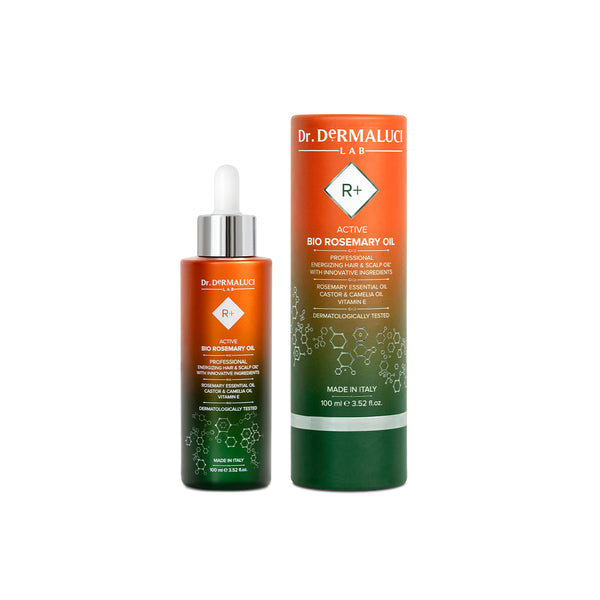
- Apply a botanical scalp oil 1-2 times per week before washing — see rosemary and castor oil for hair and scalp for the protocol
- Avoid hot water on the scalp; rinse with lukewarm
- Patience — scalp barrier repair takes 3-6 weeks
For cuticle damage (cause 2)
Cuticle damage is mostly mechanical and chemical history that masks cannot reverse. Real action:
- Cut your hot tool use in half
- Always use heat protectant when you do style
- Sleep on a silk or satin pillowcase to reduce friction
- Accept that visibly damaged ends should be trimmed (4-6 weeks growth + small trim quarterly)
- Focus masks on the mid-shaft, not the cuticle-stripped ends
For product buildup (cause 3)
- Use a clarifying shampoo once a month (not more, it can strip too much)
- Cut your routine down to 3 products: shampoo, conditioner, one weekly mask OR one oil
- Reintroduce one new product at a time after 4 weeks to identify what works
- If hair feels "coated" again within weeks, the new product was the issue
For humectant mismatch (cause 4)
- Check your current mask ingredients — if glycerin or hyaluronic acid is in the top 5, it is a humectant-heavy formula
- For dry climates: use emollient-heavy masks (shea butter, oils) instead of humectant-heavy
- For humid climates: humectants work as intended, keep using them
- Layer: humectant-heavy product applied to damp hair, sealed with emollient on top
Why oils alone do not fix dry hair
Oils on the lengths provide temporary shine and softness. They do not address scalp barrier issues, do not repair cuticle damage, and do not penetrate hair that is already coated with other products. Oil is a finisher, not a treatment. The most useful oil application is on the scalp BEFORE washing (where it nourishes the scalp barrier and gets washed out), not on the lengths after.
If your routine is "shampoo, conditioner, oil on the lengths" and hair is still dry, oil on the lengths is the wrong intervention. Switch to oil on the scalp pre-wash and skip the lengths application entirely. The deeper rationale is in our piece on how skincare science is redefining hair health.
Quick action checklist
- ✓ Check scalp FIRST — tight, itchy, flaky? That's the real problem, fix it before adding length products
- ✓ Cut your routine to 3 products max: shampoo, conditioner, ONE weekly mask OR one oil
- ✓ Use a clarifying shampoo once a month to remove buildup
- ✓ Apply oil to the SCALP pre-wash, not the lengths after
- ✓ Match your mask to climate: emollients for dry/winter, humectants for humid/summer
- ✓ Cut heat-tool use in half + always use heat protectant
- ✓ Give changes 4-6 weeks before re-assessing — hair recovery is slow
- ✓ Trim visibly damaged ends quarterly — no mask can restore split cuticles
Frequently asked questions
Why does my hair feel dry even right after using a hair mask?
The most common cause is product buildup blocking absorption. Hair coated in silicones or previous product cannot absorb water-based or humectant masks. A clarifying shampoo once a month plus a stripped-down routine usually resolves this within 4-6 weeks.
Can I use too much oil on my hair?
Yes. Oil on the lengths sits on top of the cuticle and accumulates over time, blocking moisture from getting in. Oil on the scalp is useful pre-wash; oil on the lengths after washing should be minimal, just a few drops.
Is my scalp the real problem if my lengths feel dry?
Often, yes. A barrier-disrupted scalp produces weaker hair shafts from the root, which feel dry no matter what you put on them later. If your scalp feels tight, itchy, or flaky, address that first before assuming the length needs more product.
Do humectants like hyaluronic acid work on hair?
They work well in humid environments where they can pull moisture from the air into the hair. In dry environments (winter, air conditioning), they can pull moisture from the hair outwards, making hair drier. Match humectant use to the climate.
How long does it take to fix persistent dry hair?
Scalp barrier repair takes 3-6 weeks of consistent gentler routine. Cuticle damage cannot be fully reversed and requires growing out the damaged length over months. Product buildup clears within 1-2 wash cycles after clarifying. Be patient.
Should I just cut my hair to fix the dryness?
A trim of the most damaged ends often visibly improves overall hair appearance immediately and removes the most cuticle-damaged sections. It is not a magic fix, but it is faster than waiting for masks to repair what is already split.
Is dry hair always a moisture problem?
No. Dryness can be caused by lack of protein in damaged hair (protein loss leaves hair fragile and dull-looking but not technically "dehydrated"). If hair feels gummy when wet and breaks easily, it is a protein issue, not a moisture one — needs a protein treatment, not more hydration.
Why does my hair look great in summer and terrible in winter?
Humidity. Summer air provides moisture that humectant-heavy products can pull into hair. Winter air is dry, so the same products work against you. Switch to oil-and-butter-based formulas for winter months.
Related articles


