



 Verified by shop




Scalp Care: How Skincare Science Is Redefining Hair Health

The traditional approach to hair care treats the strands as the product: shampoo to clean them, conditioner to coat them, mask to repair them. The strands are dead protein. They cannot be repaired in any biological sense — they can only be coated, sealed and made to look smoother. The actual lever for hair density, growth speed and strand quality sits one layer deeper: the scalp, which is skin.
This article is part of our Holistic Skin Health pillar cluster. For the foundational framework, see our complete guide to holistic skin health.
Treating the scalp as skin is the central shift of modern hair science. This article explains why scalp health determines hair health, what the scalp microbiome and barrier have to do with shedding, which ingredients actually support follicle function, and how a skincare-grade approach changes what your hair can be.
The Scalp Is Skin, Not Hair
Hair follicles are embedded in the dermal layer of the scalp. Every hair you have is grown by a follicle, fed by blood vessels, signalled by hormones, and protected (or stressed) by the skin around it. The visible hair on your head is the product. The scalp is the factory.
When the scalp is healthy:
- Follicles produce thicker, stronger hair
- The growth phase of each hair (anagen) runs to full length
- Shedding stays in normal range (around 50-100 hairs daily)
- The barrier holds moisture and lipids, so the scalp stays comfortable
When the scalp is compromised:
- Follicles produce thinner, weaker hair
- The growth phase shortens, leading to faster shedding
- The scalp may itch, flake, feel tight, or be visibly inflamed
- Hair density visibly drops over months as the cycle compounds
This is why the most effective hair interventions work on the scalp first. Read our deeper companion article on treating the scalp as skin, not hair.
What Damages the Scalp (and Therefore Hair)
1. Sulfate Shampoos and Aggressive Cleansing
Sodium lauryl sulphate and similar harsh detergents strip the scalp's lipid layer along with the dirt. The first shower feels clean; the third week the scalp is dry, the barrier is compromised, and follicles are producing weaker hair. Cleansing should remove buildup without destroying the barrier.
2. Hard Water Mineral Buildup
Hard water leaves calcium and magnesium deposits on the scalp and hair shaft. Over time these block follicle openings, weigh hair down, and produce a coating that resists treatment products. A clarifying treatment once per month removes the buildup; a shower filter prevents it.
3. Product Buildup
Silicones, heavy oils and styling polymers accumulate on the scalp if not cleaned thoroughly. They give short-term softness but block follicle function long-term.
4. Chronic Inflammation
Eczema, psoriasis, seborrheic dermatitis and low-grade chronic scalp inflammation all slow follicle activity. The scalp may not feel obviously inflamed but the inflammatory signalling is enough to shorten the hair growth phase.
5. Stress and Cortisol
Sustained cortisol elevation shortens anagen across all follicles in the body. Scalp follicles are particularly responsive. Telogen effluvium (the diffuse shedding pattern many people experience after stressful periods or illness) is the visible result.
6. Nutritional Gaps
Iron deficiency, low ferritin, vitamin D deficiency and protein under-consumption all show up as hair thinning before they show up in standard blood markers. The hair follicle is one of the first tissues the body de-prioritises when resources are tight.
Skincare-Grade Ingredients for the Scalp
Niacinamide
The same niacinamide that supports skin barrier function works on the scalp. It calms inflammation, supports the lipid layer, and improves circulation at the follicle level. Look for scalp serums with 2-5% niacinamide.
Peptides
Specific peptide complexes (copper peptides, biotinyl tripeptide) signal follicle activity and have clinical evidence for hair density support. They work over months, not weeks, but consistently.
Caffeine
Topical caffeine stimulates follicle metabolism and is well-tolerated. Most evidence is for slowing pattern hair loss rather than reversing it, but it is a reasonable preventive in early-stage thinning.
Rosemary Oil
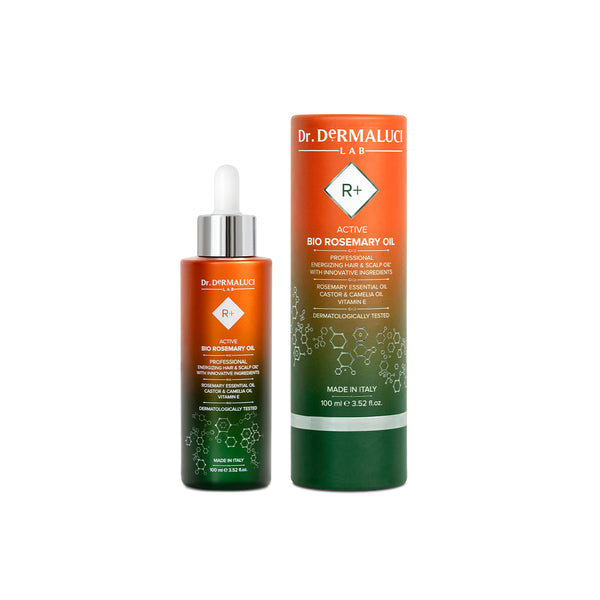
One of the few botanicals with peer-reviewed clinical evidence for hair density (2015 SKINmed trial showing comparable results to 2% minoxidil over six months). Best used as a pre-wash treatment, not left on dry scalp daily. See our companion article on rosemary and castor oil for hair.
Salicylic Acid
The same salicylic acid used for skin works on the scalp at low concentration (1-2%) to dissolve buildup and unclog follicle openings. Use in a clarifying shampoo monthly, not daily.
Prebiotics and Probiotics
The scalp microbiome is gaining research attention. A balanced microbiome supports scalp barrier function and reduces inflammation. Prebiotic and probiotic shampoos and serums are starting to show clinical support for scalp comfort and reduced shedding.
What Skincare-Grade Hair Care Looks Like in Practice
- Switch to a sulfate-free shampoo with gentle surfactants (coco-glucoside, decyl glucoside)
- Add a weekly clarifying treatment if you live with hard water or use heavy products
- Use a scalp serum 2-3 times weekly, applied to the scalp not the hair
- Pre-wash oil treatment once weekly (rosemary, castor, jojoba) for dry or thinning hair
- Avoid silicone-heavy conditioners and styling products that build up at the scalp
- Address the lifestyle factors (sleep, stress, iron status) that hair follicles are sensitive to
Quick Reference: Scalp-First Hair Health Checklist
- ✓ Sulfate-free shampoo with gentle surfactants — no SLS or SLES
- ✓ Scalp serum applied 2-3 times weekly directly to scalp (niacinamide, peptides, caffeine)
- ✓ Weekly pre-wash oil treatment for dry or thinning hair (rosemary + castor oil)
- ✓ Monthly clarifying treatment to remove buildup, especially if hard water is in use
- ✓ Avoid silicone-heavy conditioners on the scalp (lengths only)
- ✓ Address iron, ferritin, vitamin D and protein status in diet
- ✓ Manage stress — cortisol shortens hair growth phase faster than any topical can compensate
Frequently Asked Questions
Why does hair density change with age?
Two main mechanisms. Hair follicles miniaturise over decades, producing progressively thinner hair from the same follicle. And hormonal shifts (menopause, perimenopause, andropause) reduce follicle responsiveness directly. Both compound, which is why visible density loss usually accelerates from the mid-forties onward.
Can the scalp microbiome really affect hair growth?
Yes. A disrupted scalp microbiome correlates with seborrheic dermatitis, dandruff and increased shedding. Restoring microbial balance (through prebiotics, gentle cleansing, avoiding harsh antifungal overuse) reduces scalp inflammation and supports follicle function over months.
Is dandruff a scalp barrier problem?
Partially. Classic dandruff is a fungal overgrowth (Malassezia) interacting with sebum and a disrupted barrier. Treating it requires both antifungal action and barrier support — neither alone gives durable results.
How long until scalp changes show in hair density?
Three to six months. A new hair growing in response to improved scalp health takes that long to emerge visibly. This is why scalp interventions need consistency — the feedback loop is slow.
Can I use facial skincare on my scalp?
Yes for water-based serums (niacinamide, peptides, hyaluronic acid). No for oil-rich face creams (too heavy, will clog follicles). Look for products labelled for scalp or with light, scalp-friendly textures.
Is rosemary oil really as effective as minoxidil?
A 2015 randomised clinical trial showed comparable hair count increase between rosemary oil and 2% minoxidil over six months, with less scalp itching from the rosemary group. It is one of the few botanicals with this level of evidence. See our companion article on rosemary and castor oil for hair.
How often should I wash my hair for scalp health?
Depends on scalp type. Oily scalps benefit from gentle daily or every-other-day cleansing. Dry scalps do better with 2-3 washes per week. The goal is to keep follicles unblocked without stripping the lipid layer.
→ Want a deeper look at the science of the scalp barrier? Read our companion guide on scalp care, treating the scalp as skin.


