



 Verified by shop




Essential Oils on the Face: Safe Skincare Ingredient or Hidden Irritant?

Essential oils are sold as the gentle, natural alternative to "harsh" skincare. The marketing positioning is so strong that few people question whether putting concentrated plant extracts directly on the face is actually a good idea. In reality, many essential oils are among the top dermatologically-documented contact allergens. Some are safe at low concentrations; some should never go near sensitive facial skin. Here is the honest breakdown.
This article is part of our Sensitive Skin pillar cluster. For the foundational read, see our cornerstone sensitive skin: causes, triggers and how to restore balance. The deeper inflammation mechanism behind reactions is in skin inflammation: the root cause.
What essential oils actually are
Essential oils are concentrated plant extracts containing volatile aromatic compounds. The word "essential" refers to the plant's "essence" (its characteristic scent and active compounds), not to the oil being essential for skin. They are extremely concentrated — one drop can contain the active compounds from many cups of plant material.
This concentration is the problem. The exact compounds that give essential oils their scent and biological activity (terpenes, phenols, aldehydes, ketones) are also documented skin irritants and sensitizers at the concentrations used in cosmetics.
Which essential oils are the biggest problems for face skin
The top facial irritants based on dermatological patch testing:
- Cinnamon bark and leaf — strong irritant, can cause chemical burns
- Clove — eugenol is a known sensitizer
- Lemongrass — citral content is highly sensitizing
- Oregano and thyme — phenol content is too high for facial use
- Peppermint — menthol can cause irritation and capillary damage
- Eucalyptus — 1,8-cineole content irritates many people
- Citrus oils (lemon, bergamot, lime) — phototoxic, can cause burns when sun-exposed
- Cinnamon, clove, citrus are also among the most common contact allergens in dermatology clinics
These should not be in products you apply to facial skin daily, especially if you have any reactivity. The mechanism is the same one covered in our skin inflammation pillar — repeated low-grade irritation accumulates into chronic inflammation that visibly ages and reactives skin over months.
Which essential oils are generally safer (with caveats)
- Rose (rosa damascena) — usually well-tolerated at low concentrations, used in our own formulations
- Lavender — well-tolerated for most, but can be sensitizing for some
- Chamomile (German) — generally calming, low irritation profile
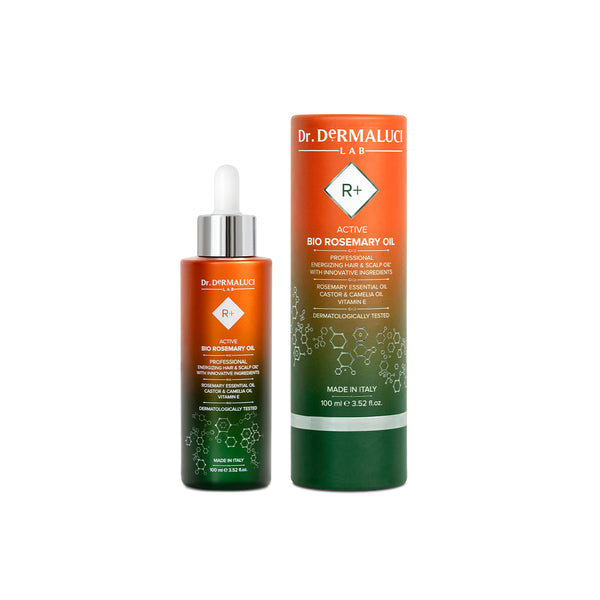
- Rosemary — used at low concentration in scalp formulas, see our rosemary and castor oil guide
- Tea tree — antimicrobial benefit, but must be diluted properly; pure tea tree on face is irritating
- Frankincense — well-tolerated, used in some traditional formulations
"Generally safer" does not mean "no reaction possible" — anyone with sensitive or reactive skin can react to any essential oil. Patch testing remains essential — see our niacinamide pillar for the calming actives we recommend alongside any new essential-oil-containing product.
The DIY essential oil problem
The biggest practical issue: DIY skincare using pure essential oils. Adding "a few drops" of pure essential oil to a moisturizer puts the concentration at 5-10%+ — far above the 0.5-1% range used in safely-formulated cosmetics. This causes the irritation, burns and sensitization that drive emergency room visits for some essential oil users.
Properly formulated cosmetic products use essential oils at controlled concentrations within tolerance ranges. DIY use bypasses this safety margin. The principle of consistency-over-experimentation also applies to the broader routine — see our retinol cornerstone for a parallel framework.
Phototoxicity — the often-missed risk
Some citrus essential oils (bergamot, lemon, lime, grapefruit) contain compounds that become phototoxic when skin is exposed to UV light. Apply them, go out in the sun, get permanent skin discoloration (berloque dermatitis). This is a real, documented reaction. If you are using any citrus-based skincare, apply only at night and always use SPF the next day.
Why "natural" does not equal "gentle"
The biggest misconception about essential oils is that being plant-derived makes them inherently safer than synthetic ingredients. The opposite is often true:
- Poison ivy is plant-derived. Plant origin does not equal safety.
- Many of dermatology's biggest contact allergens are botanical (Balsam of Peru, lemongrass, citrus oils)
- Modern synthetic preservatives have decades of safety data; many natural alternatives have less testing
- Plant compounds vary by harvest, season, processing — synthetic ingredients are more consistent
The framing covered in our clean, organic, non-toxic decoder applies: "natural" is a marketing word, not a safety claim.
Quick action checklist
- ✓ Read INCI labels for essential oils — they are usually listed as the Latin botanical name + "oil"
- ✓ Avoid cinnamon, clove, lemongrass, oregano, peppermint, eucalyptus on facial skin
- ✓ Avoid citrus essential oils in daytime products (phototoxicity)
- ✓ Patch test any new essential-oil-containing product on neck or behind ear for 48 hours before face
- ✓ Never apply pure essential oil directly to skin — always diluted in carrier or in a finished formula
- ✓ If your skin is reactive, choose products with no essential oils OR with only the safer ones (rose, chamomile, lavender) at low concentrations
- ✓ Stop any product that causes stinging, burning, redness or itching, regardless of how "natural" the formula is
Frequently asked questions
Are essential oils bad for the face?
Many are. Cinnamon, clove, lemongrass, oregano, peppermint, eucalyptus and citrus oils are documented facial irritants and sensitizers. Some essential oils (rose, chamomile, lavender) are safer at low concentrations but can still cause reactions in sensitive skin.
Can I add essential oils to my regular moisturizer to make it better?
No. DIY addition puts essential oils at concentrations far above safe cosmetic use levels, causing burns, sensitization and chronic irritation. Properly formulated cosmetics use essential oils at controlled concentrations with safety testing.
Which essential oils are safest for the face?
Rose (rosa damascena), German chamomile, and lavender are generally the most tolerated at low (0.5-1%) concentrations. Even these can cause reactions in reactive skin — patch test always.
Why does my skin burn when I apply citrus essential oil and go outside?
This is phototoxicity. Citrus oils contain compounds that react with UV light to cause skin damage, sometimes permanent discoloration. Apply citrus oils only at night and use SPF the next day. Or avoid them entirely.
Are natural ingredients always safer than synthetic?
No. Many of dermatology's most common contact allergens are botanical (essential oils, balsam of Peru, propolis). Plant origin does not equal safety. Look at the specific ingredient and its documented profile, not the natural/synthetic label.
Can essential oils cause acne?
Yes. Some essential oils (especially heavy ones used in undiluted DIY contexts) can clog pores. More commonly, the irritation they cause triggers inflammatory breakouts that look like acne but are actually contact dermatitis.
How do I know if I'm reacting to an essential oil?
Signs include: stinging or burning on application, redness that does not fade within 30 minutes, itching, small bumps, dryness that develops over days of use. Stop the product. The reaction can take 24-72 hours to fully develop.
What should I use instead of essential oils for fragrance?
Fragrance-free formulations exist if you are reactive. If you want a pleasant scent, look for products using small amounts of safer plant essences (rose, chamomile) rather than the irritant ones. Or accept that "scent" is a wear-experience trade-off some sensitive skin should skip.
Related articles


