



 Verified by shop




Vitamin C and Collagen: Why This Combination Matters for Skin

If you have ever wondered why vitamin C keeps appearing in every "must-have" anti-aging product, the answer goes deeper than antioxidant marketing. Vitamin C is not just a free-radical scavenger. It is one of the very few molecules without which the human body literally cannot make collagen. This means that vitamin C sits at the intersection of two of the most important conversations in modern skincare: antioxidant defence and structural skin support. Understanding the connection changes how you use vitamin C, how you choose between formulations, and what you can realistically expect from it.
This article spans several of our pillar clusters: Vitamin C and Skin Aging. For the foundational deep-dives, see our complete guide to vitamin C for skin and our complete guide to skin aging.
Why collagen is the structural protein your skin depends on
Collagen is the most abundant protein in the human body. In skin, it forms the underlying scaffold that gives the surface its firmness, elasticity, and resilience. Without sufficient collagen, the skin loses tone, sags, develops fine lines, and recovers more slowly from sun, stress, and physical trauma.
- Type I collagen is the dominant type in skin, making up about 80 percent of the dermal collagen network
- Type III collagen is more abundant in younger skin and helps with elasticity
- Type IV collagen forms the basement membrane that anchors the epidermis to the dermis
- Type V and VII collagen support fibre organisation and structural integrity
Collagen synthesis happens in specialised cells called fibroblasts. Fibroblasts assemble collagen from amino acids (especially proline and lysine), but they cannot complete the process without specific cofactors. Vitamin C is one of those cofactors.
From your mid-20s onward, collagen production declines by roughly 1 percent per year. By the time you reach your 40s and 50s, the cumulative loss starts showing as visible thinning of the skin, deepening fine lines, and a less elastic feel. Anything that supports the body's natural collagen-building biology has compounding value over decades. Our deep dive on why hydration matters more than anti-aging actives covers the related foundational layer.
Why vitamin C is essential for collagen biology
Vitamin C (ascorbic acid in its pure form) is not just one of many helpful skincare ingredients. It is biologically essential for collagen formation. The biochemistry is precise.
- Collagen synthesis requires the hydroxylation of two amino acids: proline and lysine
- The enzymes that perform hydroxylation (prolyl hydroxylase and lysyl hydroxylase) absolutely require vitamin C as a cofactor
- Without enough vitamin C, the hydroxylation step cannot proceed, and the body produces weak, unstable collagen
- The hydroxylated form is what gives collagen its triple-helix structure and tensile strength
- This is why severe vitamin C deficiency historically caused scurvy — the body literally could not maintain healthy collagen networks
Most modern diets prevent severe deficiency, but the skin's vitamin C levels are surprisingly variable. UV exposure, pollution, smoking, and chronic stress all deplete vitamin C in skin tissue. This is why topical vitamin C earns its place even when blood levels are adequate — the skin can use the locally delivered antioxidant boost.
For a comparison of the different vitamin C forms and how they perform, see our article on vitamin C derivatives compared: SAP vs Ascorbyl Glucoside vs L-Ascorbic Acid.
How vitamin C protects the collagen you already have
Supporting new collagen synthesis is only half of vitamin C's role. The other half is protecting existing collagen from degradation. This is arguably the more important function for adults who already have an established collagen network they want to preserve.
- UV exposure generates reactive oxygen species (ROS) that directly damage collagen fibres and activate enzymes called matrix metalloproteinases (MMPs) which break collagen down
- Pollution deposits oxidative compounds on skin that contribute to chronic low-grade inflammation
- Cigarette smoke produces ROS that accelerate collagen breakdown by roughly 2 to 4 times
- Chronic stress and high cortisol suppress collagen production and increase its breakdown
- Blue light and visible light exposure from devices contribute additional oxidative load
Vitamin C neutralises these reactive oxygen species before they can damage collagen. It also recycles vitamin E, the lipid-soluble antioxidant, keeping the skin's overall antioxidant network functioning. The protective role explains why vitamin C is most effective when applied in the morning — when daily oxidative exposure is highest.
Our piece on the science behind sunscreen as the most important anti-aging product covers how SPF and vitamin C work together. The companion article on antioxidants for skin health places vitamin C alongside the other major antioxidant actives.
Why pure ascorbic acid is not always the best choice
Skincare marketing often equates "vitamin C" with "L-ascorbic acid" — the pure form. The reality is that pure L-ascorbic acid has significant practical limitations.
- Low pH (around 3 to 3.5) can sting sensitive skin and disrupt the barrier
- Highly unstable in air and light, oxidising rapidly to dehydroascorbic acid then to inactive byproducts
- Brown discoloration in the bottle is the visible sign that the active fraction has degraded
- Difficult to formulate at concentrations that work without irritating
- Strong concentrations (15-20%) needed to deliver clinical benefit are often the most irritating
This is why modern formulations often choose stable vitamin C derivatives instead. These derivatives convert to active vitamin C in the skin, deliver the same biological function, and avoid the irritation and instability problems. The trade-off is slower onset — they take a few weeks longer to show effect.
- Sodium Ascorbyl Phosphate (SAP) — water-soluble, stable, pH-friendly, particularly good for acne-prone skin
- Ascorbyl Glucoside (AA-2G) — extremely stable, very gentle, excellent for sensitive skin
- Tetrahexyldecyl Ascorbate (THDA) — oil-soluble, penetrates lipid-rich skin layers well, very stable
- Magnesium Ascorbyl Phosphate (MAP) — water-soluble, stable, good for brightening
- 3-O-Ethyl Ascorbic Acid (EAA) — fast-acting, stable, well-tolerated
Formulations built around stable derivatives plus ferulic acid synergy reflect a clear philosophy: the goal is consistent daily use across years, not dramatic short-term effect at the cost of barrier compromise.
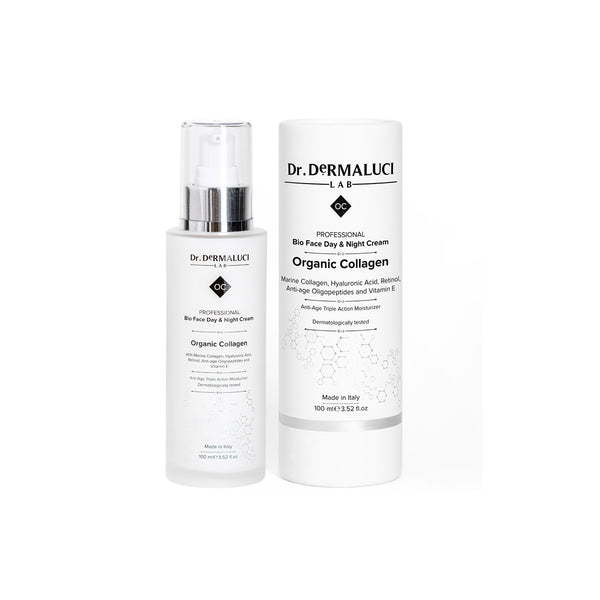
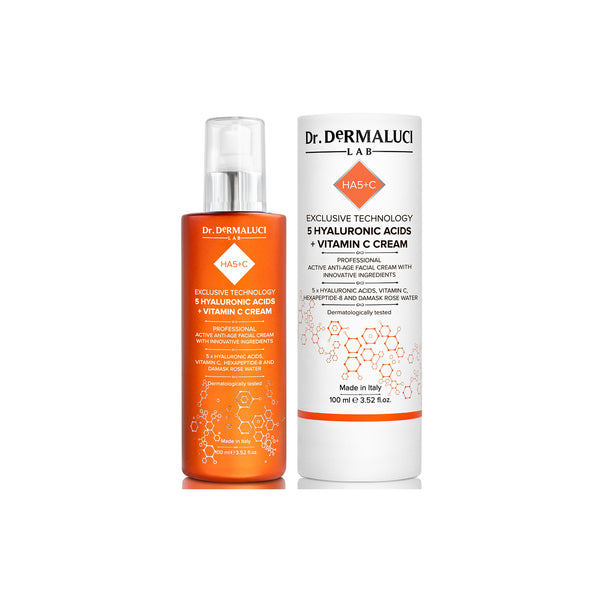
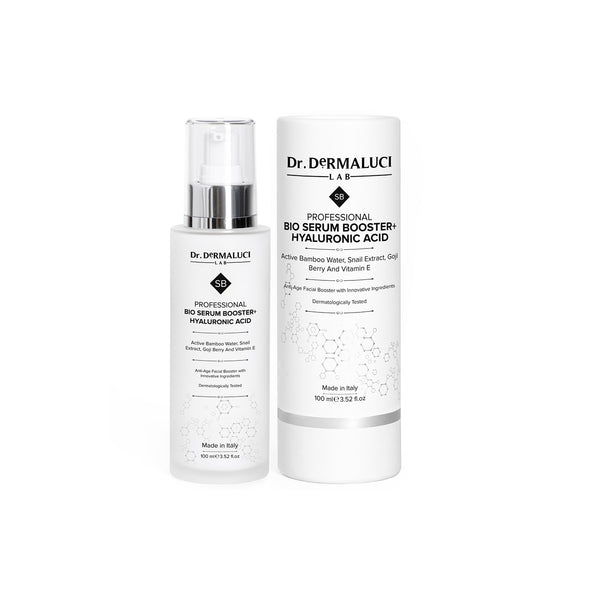
Why we pair vitamin C with marine collagen and peptides
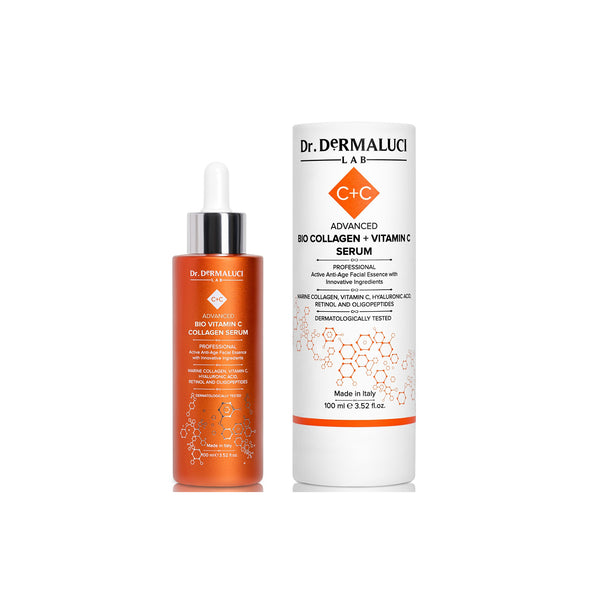
A formulation that combines vitamin C with collagen-supporting ingredients addresses the collagen story from multiple angles simultaneously. This is the rationale behind multi-ingredient serums that pair vitamin C with marine collagen peptides or hyaluronic acid.
- Vitamin C provides the cofactor the body needs to assemble its own collagen
- Marine collagen peptides deliver amino acid building blocks the skin can use as raw material, particularly proline, lysine, and glycine
- Signalling peptides communicate to fibroblasts to maintain collagen production at higher levels
- Hyaluronic acid creates the hydrated environment the collagen network needs to function properly
- Ferulic acid and vitamin E protect the vitamin C itself from oxidation, extending its functional lifespan
The combined approach respects the multi-step biology of collagen rather than relying on one ingredient to do everything. This is why thoughtful formulations are designed around synergy rather than single-ingredient hero claims.
For practical guidance on layering vitamin C with other active ingredients, our article on how to safely combine retinol, peptides and vitamin C covers the timing rules.
How to use vitamin C for maximum collagen benefit
The right application protocol multiplies the biological effect. Most people who do not see results from vitamin C are either using it inconsistently, layering it incorrectly, or using degraded product.
- Apply in the morning after cleansing, before moisturiser and SPF; this maximises the daytime antioxidant defence window
- Use on slightly damp skin for better absorption; avoid waiting until skin is fully dry
- Apply 3-4 drops to face and neck; more is not better and increases waste
- Follow with sunscreen within 5 minutes; vitamin C and SPF are physiologically complementary
- Use consistently, daily, for at least 8-12 weeks before judging effects
- Store away from light and heat; refrigeration extends shelf life of pure ascorbic acid formulas
- Replace every 3-6 months for L-ascorbic acid formulas, longer for derivative-based serums
The morning ritual is particularly important. Vitamin C + sunscreen is one of the most studied combinations in cosmetic dermatology, and the combined effect on photoprotection exceeds either alone by a measurable margin. Our deep dive on why vitamin C and sunscreen work well together covers the mechanism in detail.
What you should not expect from vitamin C alone
Setting realistic expectations protects against disappointment and the urge to layer ten products in search of dramatic results. Vitamin C delivers real but specific benefits — not all benefits.
- It will not erase deep wrinkles on its own; structural changes need retinoids and time
- It will not work overnight; visible brightening typically takes 8-12 weeks of consistent use
- It will not remove dark spots in a few weeks; pigmentation responds over 3-6 months
- It will not replace SPF; it is a partner to sun protection, not a substitute
- Pure L-ascorbic acid will not survive 2 years in your bathroom; expect to replace it
- It will not work the same on everyone; sensitive skin sometimes needs to start with derivatives at lower concentrations
The honest version of vitamin C's value is that it is one of the highest-leverage actives you can use, especially long-term, because it protects what you have while supporting what your body builds. The compounding effect over a decade is significant. The dramatic before-after photo from week 4 is not the story.
Choosing the right vitamin C product for your skin
The right product depends on skin type, sensitivity, goals, and the broader routine. There is no single best choice.
- Sensitive or reactive skin → start with Ascorbyl Glucoside or SAP at lower concentrations (5-10%)
- Acne-prone skin → SAP is a strong choice because it has additional anti-bacterial properties
- Mature or dry skin → THDA or MAP work well in oil-rich bases that support the barrier
- Pigmentation-focused → ascorbyl glucoside or ethyl ascorbic acid, paired with niacinamide for compounded effect
- Tolerance-tested skin → L-ascorbic acid at 10-15% can be used if barrier is robust and product is fresh
- Anti-age priority → multi-ingredient formula with vitamin C, ferulic acid, and supporting peptides
A measured formulation philosophy uses stable derivatives with synergistic actives (ferulic acid, vitamin E, peptides) at well-tolerated concentrations, designed for daily use over years rather than dramatic short bursts. This matches the brand's broader sensitive-skin-first formulation approach, which our pillar guide on sensitive skin causes, triggers and how to restore balance covers in detail.
Quick action checklist
- ✓ Apply vitamin C every morning after cleansing, on slightly damp skin, before moisturiser
- ✓ Always follow with broad-spectrum SPF 30-50; vitamin C and sunscreen are synergistic, not substitutes
- ✓ Choose a stable derivative (SAP, Ascorbyl Glucoside, THDA, MAP, EAA) if you have sensitive skin or want easier daily use
- ✓ Choose L-ascorbic acid (10-20%) only if your barrier is robust and you can replace the bottle every 3-6 months
- ✓ Pair with marine collagen peptides or signalling peptides for compounded collagen support
- ✓ Allow 8-12 weeks of consistent use before evaluating brightness or texture changes
- ✓ Allow 3-6 months for pigmentation effects
- ✓ Store away from light and heat; refrigeration extends shelf life
- ✓ Watch for colour change (clear to yellow to orange to brown) as the signal that your vitamin C is no longer active
Frequently asked questions
Does vitamin C really help with collagen production?
Yes, vitamin C plays a biologically essential role in collagen synthesis. The enzymes responsible for stabilising the collagen triple helix require vitamin C as a cofactor. Without it, the body cannot produce mature, structurally sound collagen. Topical vitamin C delivers a local concentration to skin tissue that supports the natural biochemical process. The effect is compounding over months and years.
Can vitamin C reduce fine lines?
Vitamin C may help improve the appearance of fine lines through two mechanisms: supporting collagen synthesis and protecting existing collagen from oxidative damage. The effect is gradual and best appreciated over 6-12 months of consistent use. For deeper structural wrinkles, vitamin C performs best when paired with retinoids and consistent SPF rather than as a standalone treatment.
Is vitamin C suitable for mature skin?
Vitamin C is particularly valuable for mature skin because the cumulative effects of UV exposure, hormonal shifts, and reduced collagen production all increase the value of antioxidant protection and collagen support. Mature skin often tolerates gentler vitamin C derivatives better than pure L-ascorbic acid, and these forms are equally effective when used consistently.
When should vitamin C be applied — morning or night?
Morning is the preferred timing for most users. Vitamin C provides antioxidant defence against the UV, pollution, and oxidative stress that skin encounters during the day. Pairing it with SPF doubles the photoprotection effect. Evening application is fine if it fits better with your routine — the antioxidant function still works — but morning application captures the protective window.
Can I use vitamin C with retinol?
Yes, but timing matters. The classic approach is vitamin C in the morning and retinol at night — this avoids any potential pH conflict and lets each ingredient work in its optimal window. Some modern formulations allow both in the same routine, but for sensitive skin separating them by 12 hours is safest. Our companion guide covers the protocol in detail.
How long does it take to see results from vitamin C?
Antioxidant effects start immediately at the cellular level. Visible changes — brightness, more even tone, improved texture — typically appear within 8-12 weeks of consistent daily use. Pigmentation improvements take 3-6 months. The collagen-supporting effects accumulate over 6-12 months and compound over years.
What is the difference between L-ascorbic acid and vitamin C derivatives?
L-ascorbic acid is the pure, biologically active form of vitamin C. It delivers immediate effect but is unstable, irritating at high concentrations, and degrades quickly. Vitamin C derivatives (SAP, ascorbyl glucoside, THDA, MAP, EAA) are stable, gentler on skin, and convert to active vitamin C once they enter skin tissue. They deliver the same biological function with better tolerability and shelf life — the trade-off is slower onset.
Can vitamin C help with dark spots and hyperpigmentation?
Yes, vitamin C inhibits the enzyme tyrosinase which is involved in melanin production. Consistent use over 3-6 months produces measurable reduction in dark spot intensity. The effect is enhanced when paired with niacinamide, alpha hydroxy acids, and daily SPF. Pure L-ascorbic acid at 15-20% delivers the strongest pigmentation effect, but derivatives at lower concentrations produce similar results over slightly longer timelines without the irritation risk.
Related articles


