



 Verified by shop


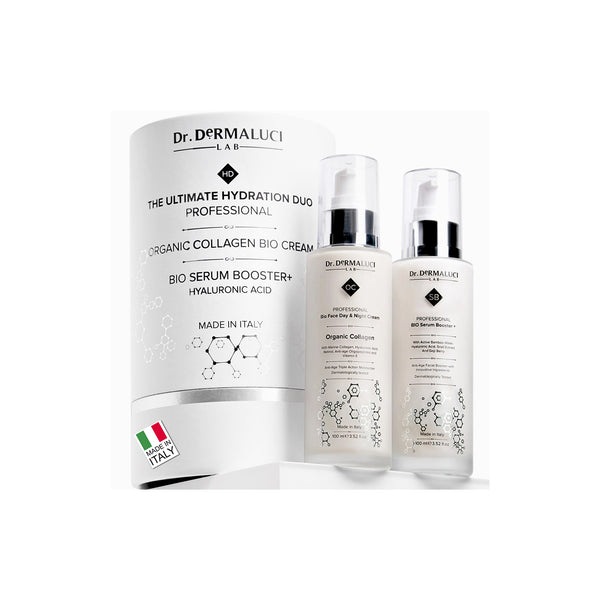


Transepidermal Water Loss (TEWL): Explained Without Marketing Myths

TEWL stands for transepidermal water loss, and it is one of the most misused phrases in skincare marketing. The honest definition is narrow: TEWL is the passive evaporation of water vapour through the stratum corneum, measured in grams per square metre per hour, used in dermatology as an objective marker of how well your barrier is functioning. It is not sweating, it is not "you should drink more water," and no cream "reduces TEWL by 47 percent" in a way that translates cleanly from a sealed cuvette to a real face on a windy morning.
This article is part of our Skin Barrier pillar cluster. For the foundational framework, see our complete guide to why skin barrier repair is the foundation of every skincare routine.
What TEWL actually is, in plain language
The stratum corneum is the outermost 15 to 20 microns of your skin. Imagine a brick wall where the bricks are flattened skin cells called corneocytes, and the mortar between them is a structured matrix of three lipid classes: ceramides, cholesterol, and free fatty acids. That mortar is the actual waterproofing of human skin. When it is intact and organised in the right ratios, water from the deeper layers diffuses outward only very slowly. When it is disorganised, the same water flux accelerates.
TEWL is literally the measurement of that flux. A research-grade probe called a Tewameter sits on the skin surface and detects the vapour pressure gradient just above the stratum corneum. The result is a number in g/m²/h. On healthy adult facial skin in a temperate room, you would expect roughly 6 to 14 g/m²/h. On an eczema patch, on acid-peeled skin, or on a lip in winter, the number climbs sharply.
- Healthy adult facial skin - roughly 6 to 14 g/m²/h depending on site and room conditions
- Forearm baseline - typically lower than facial skin, often 4 to 8 g/m²/h
- Lips and eyelids - structurally thinner stratum corneum, higher baseline TEWL
- Disrupted barrier (eczema, post-procedure, over-exfoliated) - can be 2 to 5 times higher
This is why TEWL matters as a concept rather than a number you need to memorise. It is the closest thing skin science has to an objective dial for "is the barrier working." If you understand the why dermatologists say fix the barrier first mindset, you already understand the practical use of TEWL.
What TEWL is not, and why the confusion matters
The most common consumer misunderstanding is treating TEWL as a hydration problem fixable by drinking more water. Drinking enough water matters for general physiology, but if the stratum corneum lipids are disorganised, no amount of internal hydration will slow the outward diffusion. The water gets to the surface; the surface simply does not hold it.
TEWL is also not sweating. Sweat is an active glandular process governed by the autonomic nervous system. TEWL is passive diffusion through the lipid matrix. The two coexist on the same skin but are measured and managed separately.
And TEWL is not the same as feeling thirsty-skinned. Skin can feel tight with normal TEWL if surface natural moisturising factor is depleted, and it can feel comfortable with elevated TEWL for a while before symptoms catch up. That lag is one reason people underestimate how much damage a routine is quietly doing. Our piece on dry versus dehydrated skin and why the barrier determines both covers this distinction.
What raises TEWL in everyday life
Elevated TEWL is rarely one single thing. It is usually the cumulative load of small daily insults the barrier cannot keep up with. The most consistent contributors in the literature are:
- Cold, dry, windy weather - low ambient humidity steepens the vapour gradient, pulling water out faster
- Central heating and air conditioning - indoor air in winter often runs at 20 to 30 percent humidity, well below the 50 percent comfort range
- Long hot showers - heat plus surfactant exposure strips surface lipids and disrupts the corneocyte envelope
- Harsh foaming cleansers - high-pH or sulphate-heavy formulas leave the skin tight and measurably barrier-impaired
- Over-exfoliation - daily AHA, BHA, or scrub use thins the stratum corneum faster than it can rebuild
- Aggressive retinoid starts - too concentrated, too frequent from day one elevates TEWL before the skin adapts
- In-office procedures - lasers, peels, microneedling all transiently spike TEWL by design
- Active eczema or dermatitis - chronic barrier dysfunction with filaggrin and ceramide deficits
- Cumulative UV exposure without daily SPF - photodamage degrades barrier lipids and the cornified envelope
- Age, illness, autoimmune flare - hormonal, immune, and metabolic shifts reduce ceramide synthesis
This is why barriers that felt stable for years can tip into reactivity after a move, a winter, or a new active. The threshold was always there. The load just crossed it. Our guide on whether skincare itself can cause inflammation covers the mechanism.
How TEWL is actually measured (and why your skin meter is not measuring it)
In a dermatology lab, TEWL is measured with an evaporimeter. The Tewameter TM 300, AquaFlux, and VapoMeter are the three you will see cited in published studies. Each detects water vapour density in the air immediately above the skin surface and computes the rate of evaporation. Readings are highly sensitive to ambient humidity, temperature, and airflow, which is why proper studies require 20 to 30 minutes of acclimatisation in a climate-controlled chamber.
What this means for consumers: the small handheld "skin moisture meters" sold for home use measure capacitance at the surface, not vapour evaporation. They report a number that loosely correlates with surface hydration of the outermost few microns but says nothing reliable about barrier function or true TEWL. The signal-to-noise ratio is poor and the reading drifts with skincare residue and room humidity.
There is no consumer device that gives you an honest TEWL number. The closest practical proxy is symptom literacy: tightness, flaking, stinging from products that did not used to sting, ambient redness, a barrier that feels reactive to weather changes. These are real signals. The handheld meter is not.
The marketing myths worth naming
Once you understand what TEWL actually measures, the typical marketing claims become easier to read critically.
- "Reduces TEWL by 47 percent." Usually a single in vitro test under sealed cuff conditions. The number rarely survives a real face in a real winter.
- "Deeply hydrating." Hydration is not barrier repair. A humectant can raise surface water content on a meter while the lipid matrix continues to leak.
- "Locks in moisture all day." Occlusion fades as the layer is rubbed off by pillows, makeup, and hands. Nothing locks for ten hours unless the layer is still there.
- "Restores the barrier in 24 hours." Lipid top-up gives overnight relief. Structural rebuild takes around 28 days at baseline, longer in older or compromised skin.
- "Just drink more water." Internal hydration matters for health but does not fix a disorganised lipid matrix.
- "Hyaluronic acid alone will do it." In a dry climate without an occlusive above it, a humectant can pull water out of deeper skin. Pairing matters. Our guide on how to use hyaluronic acid in a skincare routine covers the layering rule.
What actually reduces TEWL (mechanism by mechanism)
Three categories of ingredient act on TEWL by genuinely different routes. Knowing which is which lets you build a routine rather than collect products.
Occlusives - the strongest, the least glamorous
Occlusives form a hydrophobic film that physically slows evaporation. Petrolatum is still the benchmark. A thin layer can reduce TEWL by around 50 to 99 percent in occlusion studies depending on thickness. Dimethicone, lanolin, and microcrystalline wax are also strongly occlusive. The trade-off is feel. Most people will not wear a heavy occlusive under daytime makeup. Used overnight on lips, eyelid edges, and around the nose, occlusives are the most reliable spot intervention available.
Emollients - softening, smoothing, partial seal
Emollients fill the gaps between corneocytes and improve skin feel. Squalane, triglycerides, lightweight plant oils, and fatty alcohols sit here. They are pleasant on the skin and partially slow water loss, but they do not seal the way petrolatum does. They are the texture layer of a barrier-friendly cream, not the waterproofing layer.
Humectants - water magnets that need a partner
Glycerin, hyaluronic acid, urea, panthenol, and sodium PCA attract water. In humid air they pull water from the environment toward the skin. In dry air, with no occlusive cap above them, they can pull water from the deeper skin outward and accelerate water loss. This is why "I used a hyaluronic acid serum and my skin felt drier" is a real, mechanistic complaint. The fix is not to abandon humectants but to follow them with a cream that holds the captured water in place. Our deep dive on hyaluronic acid and skin barrier hydration covers the layering logic.
Barrier lipids - the structural repair
Ceramides, cholesterol, and free fatty acids in the right ratio (roughly 3:1:1) feed the mortar between corneocytes. Clinical work shows topical blends in that ratio accelerate barrier recovery faster than incomplete mixes. Niacinamide belongs here indirectly because it upregulates the skin's own ceramide synthesis over weeks of use, which is why it appears in so many barrier-recovery formulas. The complete guide to niacinamide for skin covers this in depth.
What to do if your TEWL is clearly elevated
You will not have a number, but you will have the symptom pattern: tightness after cleansing, products that used to be neutral now stinging, flaky surface, ambient redness, weather sensitivity, makeup pilling on patches. The action plan is almost always subtractive before it is additive.
Start by removing accelerants. Stop the acids and the retinoid for one to two weeks. Switch to a low-foam, neutral-pH cleanser and lukewarm water. Drop actives with alcohol denat high in the ingredient list. If you live in central heating, run a humidifier overnight at around 50 percent. Reduce the step count until you can identify what your skin tolerates.
Then rebuild quietly. Apply a humectant serum (glycerin, panthenol, or low-molecular-weight hyaluronic acid) to slightly damp skin, follow with a cream containing ceramides plus cholesterol plus fatty acids, and end with a thin occlusive layer on the driest zones overnight. Daily SPF in the morning protects what you are rebuilding. Our breakdown on layering serums, creams, and humectants for hydration shows the order in detail.
Be honest about the timeline. Symptomatic comfort can return in 48 to 72 hours of barrier rest. Structural repair tracks the corneocyte turnover cycle, which is roughly 28 days in young adult skin and longer with age. Expect four to six weeks for a clearly compromised barrier to feel stable again.
Why Dr. Dermaluci Lab cares about this distinction
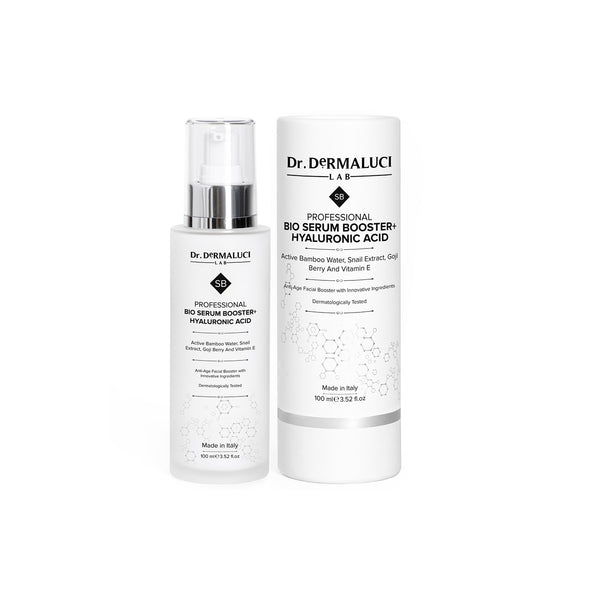
Valeria founded Dr. Dermaluci Lab while living with Graves' disease and Hashimoto's thyroiditis, two autoimmune conditions that make her own skin barrier reactive in ways most formulations ignore. From day one the brand has been built around low-concentration actives, ceramide-and-niacinamide-forward support, and the principle that barrier repair is the foundation of every other result. The Bio Booster HA serum is the humectant step meant to sit under a ceramide-supporting cream rather than alone. The retinol is intentionally gentle. None of this is glamorous chemistry. It is the version of TEWL management that respects the actual biology. For the broader logic, our piece on why hydration matters more than anti-aging actives is the clearest summary.
Quick action checklist
- ✓ Stop treating TEWL as a hydration problem fixable by drinking more water - it is a barrier structure problem
- ✓ Ignore handheld skin moisture meters - they do not measure TEWL and the noise floor is too high to be useful
- ✓ When TEWL signs appear (tightness, stinging, flaking), subtract before you add - pause acids and retinoids for 1 to 2 weeks
- ✓ Layer in the correct order - humectant on damp skin, cream with ceramides above, occlusive on dry zones at night
- ✓ Run a humidifier at around 50 percent overnight if you sleep in heated or air-conditioned rooms
- ✓ Use a low-foam, neutral-pH cleanser and lukewarm water - hot showers and harsh surfactants are the most common driver
- ✓ Expect symptomatic comfort within 48 to 72 hours but allow 4 to 6 weeks for genuine structural repair
- ✓ Wear daily SPF without exception - photodamage degrades barrier lipids faster than any topical can rebuild them
Frequently asked questions
Is TEWL the same thing as dehydrated skin?
Not exactly. Elevated TEWL is one of the main mechanisms that causes dehydrated skin, but dehydrated skin is a clinical description while TEWL is a quantitative measurement of water vapour flux. You can have elevated TEWL before you feel dehydrated, and you can feel dehydrated with normal TEWL if your natural moisturising factor is depleted at the surface.
Will drinking more water lower my TEWL?
No, not in any meaningful way. Drinking enough water matters for health, but TEWL is governed by the structural state of your stratum corneum lipids, not by systemic hydration. If the barrier is disorganised, water will reach the surface and evaporate regardless of how much you drink.
Can I measure my own TEWL at home?
Not reliably. Handheld "skin moisture meters" measure capacitance at the surface, not vapour evaporation, and readings drift with skincare residue and room humidity. Research-grade evaporimeters cost thousands and require climate-controlled rooms. The honest at-home proxy is symptom literacy: tightness, flaking, stinging, weather reactivity.
Does hyaluronic acid reduce TEWL?
On its own, not reliably, and in very dry climates it can make things worse by pulling water from deeper skin outward. Hyaluronic acid is a humectant. It works as a TEWL helper only when paired with a cream or occlusive above it that holds the captured water in place.
How long does it take to repair a compromised barrier?
Symptomatic comfort usually returns within 48 to 72 hours of barrier rest (pausing actives, gentle cleansing, ceramide cream). Structural repair tracks the corneocyte turnover cycle, around 28 days in young adult skin and longer with age. Plan for four to six weeks before you call it stable.
Are occlusives bad for acne-prone skin?
Not all of them. Petrolatum is non-comedogenic in controlled testing even though it feels heavy. Some plant butters score higher on comedogenicity. The bigger issue is usually layering occlusives over an already congested whole face when only the dry zones need them. Spot use at night on lips, around the nose, and the corners of the mouth is usually well tolerated.
Does niacinamide actually reduce TEWL?
Yes, indirectly and over time. Clinical work shows consistent topical niacinamide upregulates the skin's own ceramide synthesis and improves measurable barrier function within a few weeks. It is structural support that pays off across the corneocyte renewal cycle, not a same-day occlusive.
Related articles


