



 Verified by shop


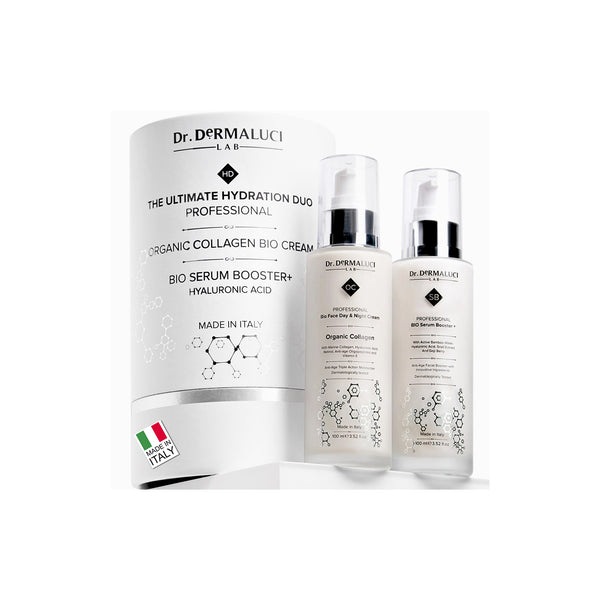


Complete Guide to Hyaluronic Acid for Skin

Pillar Guide
This is our definitive guide to hyaluronic acid — what it actually is, why molecular weight matters more than concentration, when it backfires and dries skin out, and how to use it so it does what every brand promises.
Hyaluronic acid is probably on more skincare labels than any other single ingredient. It is in cleansers, toners, serums, eye creams, moisturisers, sheet masks, mists, and — in injectable form — in cosmetic clinics worldwide. It is also one of the most misunderstood ingredients in skincare. Almost everyone has used it; very few people use it correctly.
The mismatch between hyaluronic acid's reputation and most users' results comes down to two things: molecular weight (which most product labels do not disclose) and application context (which most product instructions do not explain). Get those two right and hyaluronic acid is one of the most reliably useful ingredients in the routine. Get them wrong and it actively pulls water out of your skin.
This guide explains what hyaluronic acid actually is, how it works inside skin, why the molecular weight blend determines whether it hydrates or dehydrates, how to apply it correctly, who benefits most, and how to spot a hyaluronic acid product that is doing more for marketing than for your skin.
What hyaluronic acid actually is
Hyaluronic acid (also called hyaluronan) is a long-chain sugar-based molecule the body produces naturally. It lives mostly in the dermis, joint fluid, eye fluid, and connective tissue. Inside the skin, its main job is to bind water — up to one thousand times its own weight — and create the gel-like environment that gives skin its volume, suppleness and bounce.
Production peaks in your early twenties and declines steadily through life. By age 50, the skin contains roughly half the hyaluronic acid it had at 25. This decline is one of the major contributors to the visible drier, thinner, more crepe-like quality of mature skin.
Topical hyaluronic acid does not replace what your dermis produces. It works on the surface and just below — pulling water into the upper skin layers, holding it there, and creating a temporary plumping and smoothing effect. With consistent use, the cumulative hydration also supports barrier function and improves overall skin tone.
How hyaluronic acid actually works
Hyaluronic acid is a humectant — a molecule that draws and holds water. When applied to skin, it works through three overlapping mechanisms:
- It pulls water from the environment into the upper skin layers — from ambient humidity, from damp skin, from the product carrier itself.
- It holds that water in the stratum corneum, preventing the rapid evaporation that creates a tight, dehydrated feeling.
- It creates a smoothing film on the skin surface that softens the appearance of fine lines caused by dehydration.
The result, applied correctly, is immediate: skin looks plumper, smoother, and more rested within minutes. With daily consistent use, the cumulative hydration also supports barrier function and reduces the kind of dehydration-driven sensitivity that mimics actual sensitive skin.
The molecular weight question — the most important point
Not all hyaluronic acid molecules are the same size, and the size determines what the molecule actually does in the skin. The major weight categories:
- High molecular weight (HMW) hyaluronic acid (above 1,000 kDa) — too large to penetrate skin. Sits on the surface, forms a film, reduces water loss from the top. Great for surface hydration and immediate plumping effect.
- Medium molecular weight (MMW) (250-1,000 kDa) — partially penetrates the upper layers. Hydrates the stratum corneum more deeply than HMW alone.
- Low molecular weight (LMW) (50-250 kDa) — penetrates deeper into the epidermis. Hydrates beneath the surface, longer-lasting plumping.
- Very low molecular weight / oligo-HA (below 50 kDa) — penetrates deepest, has some signalling effects on cellular repair. Premium-formula ingredient.
A well-formulated hyaluronic acid product uses a blend of molecular weights — sometimes called "multi-weight" or "5D HA" — so different molecules hydrate at different depths simultaneously. A product that uses only one weight will hydrate at one depth only.
This is why a 0.5% multi-weight serum can outperform a 2% single-weight serum. The percentage on the label tells you almost nothing without knowing the weight composition.
The damp-skin rule — when hyaluronic acid backfires
The single most common hyaluronic acid mistake is applying it to bone-dry skin in a low-humidity environment. The mechanism is straightforward and surprising:
Hyaluronic acid is hygroscopic. It pulls water from wherever it can find it. In a humid environment with damp skin, it pulls water from the air and from the moisture on the skin surface into the upper layers — exactly what you want. In a dry environment with bone-dry skin, there is no water in the air or on the skin for it to pull from. So it pulls water from the deeper layers of your own skin — leaving you more dehydrated, not less.
This is why people in dry climates, on planes, or in heated/air-conditioned rooms sometimes complain that hyaluronic acid makes their skin worse. They are applying it correctly by label instructions and wrong by underlying chemistry.
Three rules to apply hyaluronic acid correctly:
- Damp skin only — apply within 30 seconds of rinsing or after a hydrating mist
- Seal with an occlusive — moisturiser, cream, or face oil immediately after, so the water hyaluronic acid pulled in does not evaporate
- Avoid in extremely low-humidity environments without sealing — planes, mountain climates, central heating in winter all need an extra occlusive layer
Get these three right and hyaluronic acid is one of the most reliable hydrators available. Skip them and it can actually make dry skin worse.
What hyaluronic acid does — and does not do
The realistic spread of what topical hyaluronic acid delivers:
What it does:
- Immediate visible plumping within minutes of application
- Long-term smoothing of dehydration-related fine lines
- Supportive barrier function through sustained hydration
- Better tolerance of other active ingredients (retinol, acids, vitamin C)
- Healing support during barrier recovery
- Better makeup application on hydrated skin
- Reduced visible inflammation by maintaining hydration in compromised barriers
What it does not do:
- Replace injectable hyaluronic acid filler — topical does not reach the dermis where filler is injected
- Address fine lines caused by collagen loss or muscle movement
- Brighten or address pigmentation
- Treat acne or inflammation directly
- Stimulate collagen production at the level retinol or vitamin C do
- Provide long-term anti-ageing on its own
Hyaluronic acid is a brilliant supporting player, not a primary anti-ageing active. It works best as the hydration foundation underneath everything else.
Who benefits most from hyaluronic acid
- Anyone with dehydrated skin (which is most people, regardless of skin type)
- Mature skin where natural production has declined
- Perimenopausal and menopausal skin where oestrogen drop reduces dermal HA
- Skin recovering from retinoid use or over-exfoliation
- Sensitive skin that needs hydration without irritation risk
- Compromised barriers during repair
- People living in dry climates or air-conditioned environments
- Frequent flyers and travellers
- Post-procedure skin (peels, laser, microneedling)
- Acne-prone skin using drying treatments
- Pregnant and breastfeeding women — fully safe
The only people who don't need it are those with naturally very oily skin in humid climates, who are already producing and retaining enough water on their own. Even then, adding hyaluronic acid usually does not hurt.
Pairing hyaluronic acid with other ingredients
- With retinol — essential pairing; hyaluronic acid buffers retinol's dryness without reducing its efficacy
- With vitamin C — fully compatible; apply vitamin C first to dry skin, follow with hyaluronic acid on damp skin
- With niacinamide — excellent combination; both support the barrier from different angles
- With acids (AHA, BHA, PHA) — apply hyaluronic acid after to calm irritation
- With peptides — complementary; both work without interaction
- With ceramides — the ideal moisturiser-step pairing; ceramides seal in the water hyaluronic acid pulled
- With SPF — always; layer hyaluronic acid first, SPF on top
One non-pairing rule: hyaluronic acid should generally not be the last step in the routine. Without an occlusive on top, the water it pulled in evaporates and leaves you drier than before.
Common hyaluronic acid myths
- "Hyaluronic acid is an exfoliant" — false. Despite the word "acid", hyaluronic acid is a sugar-based polymer with no exfoliating properties. It does not dissolve dead skin and has neutral pH.
- "Higher percentage is better" — false. Concentration matters less than the molecular weight blend.
- "It is the same as filler" — partially false. The molecule is similar but topical hyaluronic acid cannot reach the dermal layer where filler is injected.
- "It causes wrinkles by pulling water out" — true ONLY in dry conditions with no sealing layer. With proper application (damp skin + occlusive on top), this does not happen.
- "It is animal-derived and unsuitable for vegans" — false. Modern hyaluronic acid is almost universally bio-fermented from plant sources.
Realistic timeline of hyaluronic acid results
- Within minutes — visible plumping, smoother surface, reduced tightness
- Day 1-3 — skin holds hydration through the day; makeup applies better
- Week 1-2 — fewer episodes of midday dryness or tightness; barrier feels more comfortable
- Week 3-4 — fine lines from dehydration become less visible; overall tone looks rested
- Month 2-3 — cumulative barrier benefit shows up as better tolerance of other actives and faster recovery from minor irritation
- Long-term — sustained hydration supports overall skin quality but hyaluronic acid is not a primary structural anti-ageing ingredient. The deeper structural work comes from retinol, vitamin C, peptides, and SPF.
Frequently asked questions
Can I use hyaluronic acid every day?
Yes — twice daily is standard. It does not cause tolerance or sensitisation and works through a mechanical hydration mechanism that does not "wear out."
Why is my skin worse after using hyaluronic acid?
Almost always because of the damp-skin rule. Apply only to damp skin, follow immediately with a moisturiser or occlusive on top, and avoid extremely dry environments without sealing. If you fix the technique, the problem usually disappears within days.
Is hyaluronic acid safe during pregnancy?
Yes — one of the safest ingredients during pregnancy and breastfeeding. No systemic absorption, no hormonal interactions.
Can hyaluronic acid replace my moisturiser?
No. Hyaluronic acid pulls water in but needs an occlusive on top to keep it there. A serum + moisturiser combination delivers what a serum alone cannot.
What is the difference between hyaluronic acid and sodium hyaluronate?
Sodium hyaluronate is the salt form of hyaluronic acid, which is slightly more stable in formulation and slightly smaller in molecule size. Functionally the same. INCI labels use both terms.
Should I use a hyaluronic acid serum or a moisturiser with hyaluronic acid?
Both work, with different strengths. A dedicated serum delivers higher concentration; a moisturiser with hyaluronic acid is more convenient and includes the sealing occlusive in one step. For very dry or mature skin, layering both is reasonable.
Will hyaluronic acid plump fine lines like Botox?
No — topical hyaluronic acid softens fine lines caused by dehydration and surface texture. Lines caused by collagen loss, muscle movement, or volume loss are not addressed by topical hyaluronic acid.
How long does an opened bottle of hyaluronic acid last?
6-12 months once opened. Hyaluronic acid is stable and does not oxidise the way vitamin C does. Discard if the texture or smell changes.
Your hyaluronic acid checklist
- Choose a product that lists multiple molecular weights or "blend" / "multi-weight" / "complex" hyaluronic acid
- Apply only to damp skin — within 30 seconds of rinsing, or after a hydrating mist
- Follow immediately with an occlusive moisturiser or face oil — never leave hyaluronic acid as the last step
- Use twice daily — morning and night
- Add an extra hydrating mist + reapply during long flights or in very dry environments
- Layer between active ingredients (vitamin C, retinol) to buffer their irritation
- Pair with ceramides as the moisturiser step — they complement each other perfectly
- Do not expect anti-ageing structural change from hyaluronic acid alone — pair with retinol and vitamin C for that
- Store at room temperature; refrigeration is unnecessary
- Discard once texture or smell changes (rare; usually 6-12 months once opened)
- Bring it into pregnancy and breastfeeding routines — fully safe
- Make it the foundation of every other routine — almost every active works better on hydrated skin
Related reading
- Complete Guide to Niacinamide for Skin
- Complete Guide to Vitamin C for Skin
- Complete Guide to Retinol for Skin
- Low vs High Molecular Weight Hyaluronic Acid: Which Skin Needs Which?
- Hyaluronic Acid for Sensitive Skin: What to Know
- Why Skin Barrier Repair Is the Foundation
- Complete Guide to Skin Aging


