



 Verified by shop




Vitamin C Derivatives Compared: SAP vs Ascorbyl Glucoside vs L-Ascorbic Acid

Vitamin C is one of the most studied molecules in skincare, but the version on your ingredient list is almost never the textbook one. Pure L-Ascorbic Acid is the textbook version - and also the most fragile, the most acidic, and the form most likely to sting reactive skin. Formulators have built a family of derivatives that trade peak potency for stability, neutral pH, and daily tolerability. Choosing among them is not about hunting the strongest molecule. It is about matching the chemistry to the skin in front of you. This article maps that decision honestly.
This article is part of our Vitamin C pillar cluster. For the foundational framework on how vitamin C works in skin and what it actually does, see our complete guide to vitamin C for skin.
The stability problem at the heart of vitamin C chemistry
Pure vitamin C - L-Ascorbic Acid, or LAA - has a known weakness. It is water-soluble, oxidises rapidly in light, oxygen, heat, or trace metals, and needs a low pH (around 3.5 or below) to penetrate the stratum corneum in its active form. That low pH is exactly what irritates compromised barriers. So the molecule is most active under conditions most likely to provoke a sensitive face. A serum that smells metallic, looks dark amber instead of clear, or stings on application is already losing the chemistry it claimed to deliver. We cover this in our deep dive on stabilized vitamin C and why stability matters.
Derivatives were developed to solve four problems at once:
- Reduce oxidation in the bottle so the product still works at the end of its shelf life
- Allow neutral or near-neutral pH so the formula does not irritate the barrier
- Spread tolerance across more skin types, including reactive and acne-prone
- Permit cleaner pairings with niacinamide, peptides, and retinol without pH conflicts
The trade is real: most derivatives need enzymatic conversion in the skin to become active vitamin C, which means slower visible results. The question is not "which is strongest" but "which gets used consistently enough to actually work."
L-Ascorbic Acid (LAA): the gold standard, and its costs
LAA is the form nearly every clinical study on topical vitamin C has used. The evidence is strongest here - measurable improvements in pigmentation, fine lines, and collagen biomarkers at 10 to 20 percent, applied at pH 3.5 or lower.
- pH required: 3.5 or lower for active-form penetration
- Stability: Poor - oxidises in minutes once exposed to air
- Irritation risk: Moderate to high, especially on sensitive or compromised barriers
- Evidence strength: Highest - the molecule used in most published research
- Best for: Resilient skin with intact barrier, targeting visible dark spots and photoaging
The amber-to-brown colour shift in a clear LAA serum is the simplest at-home test of degradation. Once oxidised, LAA becomes dehydroascorbic acid and further breakdown products that no longer deliver antioxidant activity - and in some studies appear to drive mild oxidative stress of their own.
Sodium Ascorbyl Phosphate (SAP): the calm, acne-friendly derivative
SAP is a phosphate ester of vitamin C - water-soluble, stable at neutral pH, converted to active ascorbic acid in the skin by phosphatase enzymes. It is one of the few derivatives with published evidence on acne-prone skin specifically, where its mild antibacterial action against Cutibacterium acnes is a useful side effect.
- pH required: 6 to 7 (neutral, barrier-friendly)
- Stability: High - tolerates light and air far better than LAA
- Irritation risk: Low - among the gentlest vitamin C forms
- Evidence strength: Moderate, with specific data on inflammatory acne and pigmentation
- Best for: Acne-prone, reactive, or low-pH-intolerant skin
SAP will not deliver the rapid brightness of a 15 percent LAA serum. What it will do is sit on the skin every morning for months without provoking the stinging that drives people to abandon their routine. See our deep dive on vitamin C for sensitive skin.
Ascorbyl Glucoside (AG): the steady, gentle workhorse
Ascorbyl Glucoside is vitamin C linked to a glucose molecule. The bond protects the ascorbic acid from oxidation in the bottle, then is cleaved by alpha-glucosidase enzymes in the skin to release free vitamin C gradually. It is widely used in Japanese and Korean formulation, where gentleness and consistency are prized over peak potency.
- pH required: 5 to 7 (neutral to mildly acidic)
- Stability: Very high - excellent shelf life
- Irritation risk: Very low
- Evidence strength: Moderate - brightening and antioxidant effects over 8 to 12 weeks
- Best for: Normal to sensitive skin wanting daily, low-friction use over months
The slow-release profile is an advantage for sensitive skin. Instead of one acute hit, the skin sees a sustained dose. Visible results take longer - typically eight to twelve weeks - but arrive without the irritation cliff that derails so many vitamin C trials.
The wider derivative family: MAP, EAA, THDA, Ascorbyl Palmitate
Beyond the big three, several other derivatives appear on ingredient lists. They are not interchangeable, and a few are over-marketed relative to their evidence base.
- Magnesium Ascorbyl Phosphate (MAP) - close cousin of SAP, phosphate-based, stable at neutral pH. Good for sensitive and pigmentation-focused routines.
- Ethyl Ascorbic Acid (EAA) - lipophilic, penetrates well, stable. Converts more efficiently than glucoside-based derivatives. The chosen molecule when formulators want LAA-like results with better tolerance.
- Tetrahexyldecyl Ascorbate (THDA) - oil-soluble, exceptional stability, penetrates the lipid layers of the stratum corneum efficiently. Strong choice for dry, mature, or barrier-compromised skin.
- Ascorbyl Palmitate - the most controversial. Stable on the shelf, but conversion to active vitamin C in skin is weak and some studies suggest it can generate free radicals under UV. Useful as a formulation antioxidant, less convincing as a vitamin C delivery system.
"Contains vitamin C" on a label tells you very little. The specific derivative determines whether the formula behaves like a workhorse, a fast-acting active, or a marketing gesture.
How to pick the right derivative for your skin
The matching logic is more useful than a ranking. Start with the state of your barrier, not the strength of the molecule.
- Resilient skin, targeting dark spots: LAA at 10-15 percent with ferulic acid and vitamin E, in opaque packaging.
- Acne-prone skin, breakout-reactive: SAP. Neutral pH respects the acid mantle and mild antibacterial action is a bonus.
- Sensitive skin, barrier still rebuilding: Ascorbyl Glucoside or SAP. Both deliver vitamin C without low-pH provocation.
- Dry, mature, lipid-depleted skin: THDA or EAA. Oil-soluble derivatives integrate cleanly into richer textures.
- Pigmentation focus, sensitive baseline: EAA. Closest in efficacy to LAA with better tolerance.
- Maintenance and long-term defence: Any stable derivative applied daily under SPF. Consistency outperforms peak strength.
Sensitive skin is not a permanent state. It is a state of barrier disruption, and as the barrier rebuilds the tolerance window widens. Our guide on sensitive skin causes and triggers covers why the same molecule can sting in March and sit comfortably in June.
Concentration: what to look for on the label
Higher numbers are not always better, and the meaningful range varies by derivative.
- LAA: 10-20 percent. Below 8 percent clinical effect attenuates; above 20 percent irritation rises faster than benefit.
- SAP: 1-5 percent. Higher does not deliver linearly more benefit.
- Ascorbyl Glucoside: 2-5 percent, with measurable brightening over weeks.
- EAA: 1-3 percent is effective.
- THDA: 1-5 percent in lipid-rich formulas. Penetration is the limiting factor.
A serum advertising "30 percent vitamin C" of an unspecified form is usually a marketing flag, not a strength flag. Ask what derivative, at what pH, in what packaging.
Layering rules: what plays nicely with what
The pH of your vitamin C step determines what you can stack with it.
- Low-pH LAA serums conflict with niacinamide applied in the same minute - the pH gap pushes niacinamide toward nicotinic acid (the flushing form). Either separate by 15-30 minutes, or use SAP or AG, which sit at the same neutral pH as niacinamide.
- Vitamin C in the morning, retinol at night is the safest stacking pattern for most skin. Layering both in the same routine can compound irritation on sensitive or barrier-compromised skin.
- Vitamin C plus SPF is the highest-evidence morning pairing. Antioxidant catches what the filters miss. We cover the mechanism in why vitamin C and sunscreen work well together.
- Exfoliating acids and LAA together amplify the low-pH load. If you use AHA or BHA, schedule them on non-vitamin-C mornings, or move them to alternate evenings.
- Peptides and stable derivatives (SAP, AG, EAA) layer cleanly. Peptides do not need low pH and tolerate the neutral environment of these derivatives well.
For a fuller routine map, our piece on how to safely combine retinol, peptides and vitamin C walks through the timing logic.
Why the brand uses gentler derivatives
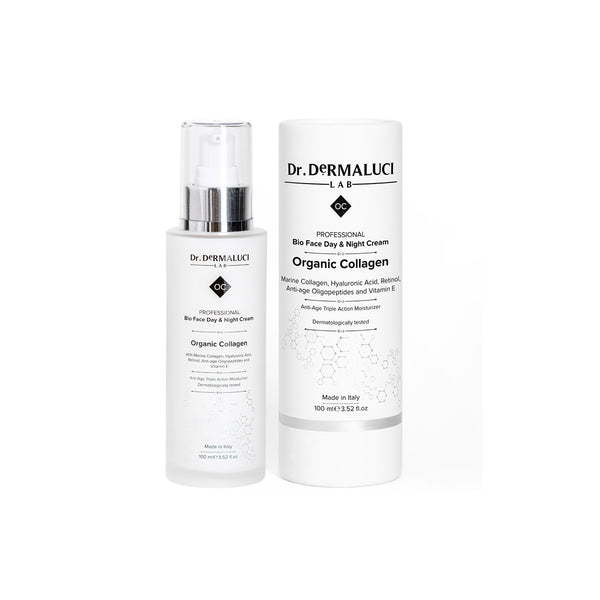
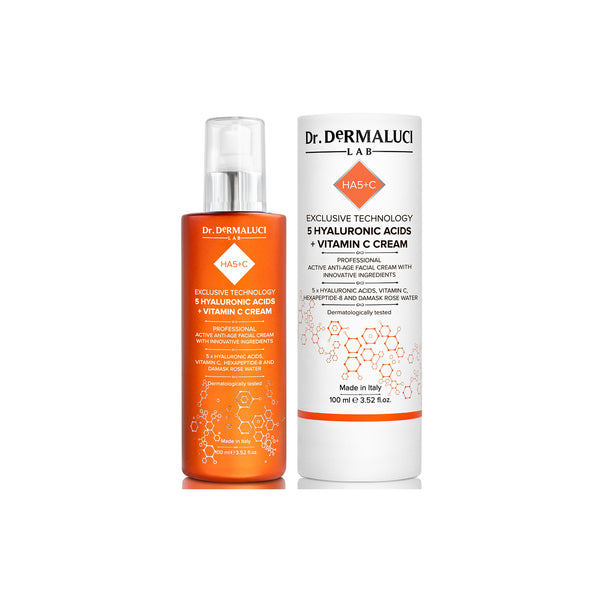
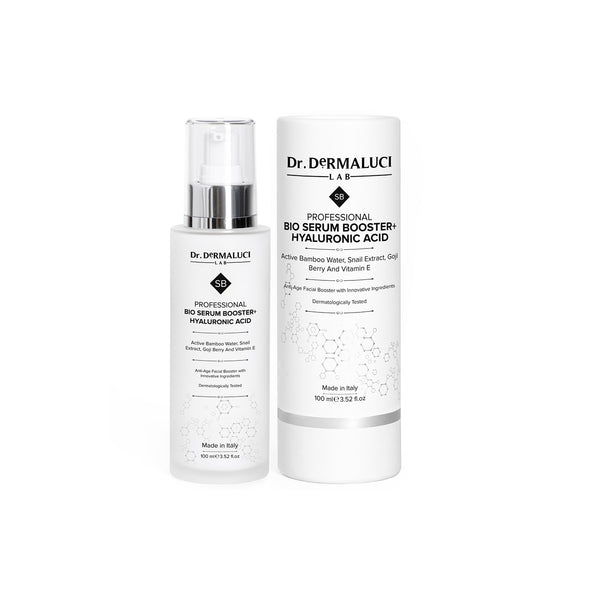
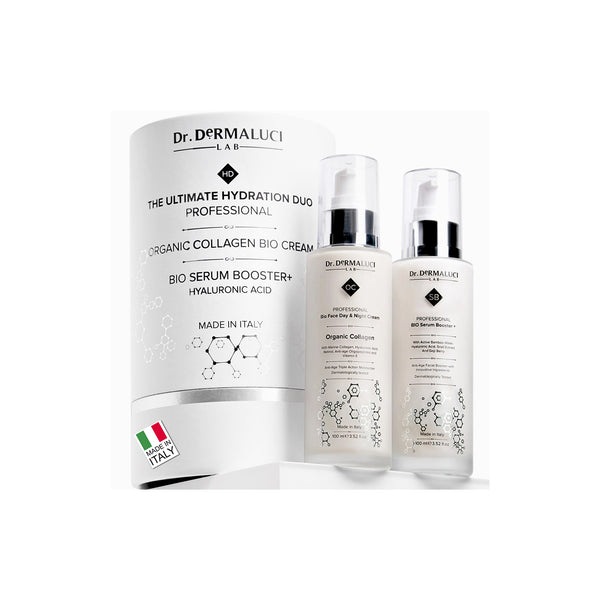
Dr. Dermaluci Lab was built around a founder who lives with Graves' disease and Hashimoto's thyroiditis, where the skin barrier is structurally more reactive. Formulating with lower concentrations and gentler derivatives is a calculated bet that consistency on sensitive skin beats peak potency that gets abandoned after three weeks of stinging. The deeper logic is covered in why skin barrier repair is the foundation of every skincare routine. A 15 percent LAA serum on a still-rebuilding barrier is not a stronger antioxidant intervention. It is a trigger that pushes the barrier further from baseline.
What this means for daily routine
Pick the derivative that matches your barrier, not the one with the biggest number on the label. Apply daily under SPF. Reassess after eight to twelve weeks, not after eight days.
- Sensitive or reactive skin: SAP or Ascorbyl Glucoside at 2-5 percent, neutral pH
- Acne-prone skin: SAP for its dual antioxidant plus mild antibacterial action
- Resilient skin chasing pigmentation: LAA at 10-15 percent with ferulic and vitamin E
- Dry, mature skin: THDA or EAA in oil-friendly formulas
- Maintenance and long-term defence: any stable derivative, used consistently
The combined antioxidant case is covered in our deep dive on antioxidants for skin health.
Quick action checklist
- ✓ Identify your skin state honestly - resilient, acne-prone, sensitive, dry, or barrier-rebuilding - before picking a derivative
- ✓ Check the INCI list for the specific form (L-Ascorbic Acid, Sodium Ascorbyl Phosphate, Ascorbyl Glucoside, Ethyl Ascorbic Acid, Tetrahexyldecyl Ascorbate) - "vitamin C" alone is not enough
- ✓ Match the pH to your barrier - LAA at pH 3.5 is for resilient skin, SAP and AG at neutral pH suit reactive skin
- ✓ Look at the colour - clear or pale yellow is fresh, deep amber or brown is oxidised and worth replacing
- ✓ Store all vitamin C in opaque or dark glass packaging, away from light and heat
- ✓ Pair vitamin C with morning SPF every day - the antioxidant catches what the filters miss
- ✓ Separate LAA from niacinamide by at least 15 minutes, or switch to a stable derivative for clean layering
- ✓ Give any vitamin C eight to twelve weeks of daily use before judging - none deliver overnight results
Frequently asked questions
Which vitamin C derivative is best for sensitive skin?
Sodium Ascorbyl Phosphate or Ascorbyl Glucoside at 2 to 5 percent. Both sit at neutral pH, so they do not provoke the barrier the way a low-pH L-Ascorbic Acid serum can, and they convert to active vitamin C in the skin gradually. Ethyl Ascorbic Acid is also a strong option for results closer to LAA potency with significantly better tolerance.
Is L-Ascorbic Acid actually stronger than the derivatives?
In a clinical comparison at peak conditions, yes. LAA is already the active molecule, and the evidence base for pigmentation and collagen effects is strongest here. But "stronger" only matters if your skin tolerates it daily for months. A derivative used consistently for six months will out-perform a high-percentage LAA serum abandoned after three weeks of stinging.
Why does my vitamin C serum turn yellow or brown?
That is oxidation. L-Ascorbic Acid converts to dehydroascorbic acid and further breakdown products when exposed to air, light, or heat. An oxidised serum no longer delivers antioxidant activity, and some research suggests the breakdown products can mildly contribute to oxidative stress on skin. Replace it. Stable derivatives like SAP and AG do not show this colour shift.
Can I use vitamin C every day on sensitive skin?
Yes, with the right derivative. SAP, Ascorbyl Glucoside, and EAA at low concentrations are well-tolerated daily by most sensitive skin. Start three mornings a week, watch for redness or tightness, build to daily over two to three weeks. With LAA, start two mornings a week and build cautiously - or switch to a derivative.
Does Ascorbyl Palmitate actually work?
The evidence is weak. It is oil-soluble and stable on the shelf, but conversion to active vitamin C in the skin appears limited, and some studies suggest it can generate free radicals under UV exposure rather than neutralising them. Useful as a formulation antioxidant, underwhelming as a true vitamin C delivery system. EAA or THDA are stronger oil-compatible choices.
Can I layer vitamin C with niacinamide?
Yes, with one caveat. Niacinamide and stable vitamin C derivatives (SAP, AG, MAP, EAA) layer cleanly because they share a neutral pH range. Pure L-Ascorbic Acid at pH 3.5 conflicts with niacinamide at pH 6 in the same minute - the pH gap pushes niacinamide toward nicotinic acid, the flushing form. Either separate by 15 to 30 minutes, or use a stable derivative.
How long until I see results from a vitamin C derivative?
Eight to twelve weeks of daily use for visible brightening, longer for pigmentation. LAA can show radiance shifts faster - some notice glow within two to four weeks - but real pigmentation change is a slow biological process regardless of derivative. Photograph your skin in consistent lighting at week zero and week twelve to see the change you would otherwise miss.
Is a higher concentration always better?
No. Each derivative has an evidence-backed range: LAA at 10 to 20 percent, SAP at 1 to 5 percent, Ascorbyl Glucoside at 2 to 5 percent, EAA at 1 to 3 percent. Beyond those ranges, irritation rises faster than benefit. A well-formulated 10 percent LAA serum in opaque packaging will outperform a poorly formulated 20 percent version in clear glass on a sunny shelf.
Related articles


