



 Verified by shop




Is Retinol Safe? The Science Behind Its Use

Retinol is one of the most studied skincare ingredients of the last fifty years. The clinical evidence for its benefits (cell turnover, collagen production, fine line reduction, hyperpigmentation correction) is among the strongest in cosmetic science. So why does retinol still carry a "use with caution" warning that scares many people away from it?
This article is part of our Retinol pillar cluster. For the foundational framework, see our complete guide to retinol.
The honest answer is that retinol IS safe when used correctly — but it has specific contraindications, dose-dependent side effects, and a learning curve that most product packaging glosses over. This article covers the real safety profile: who can use it, who cannot, what the side effects actually are, why pregnancy is an absolute contraindication, and how the modern low-dose retinol formulations differ from the prescription tretinoin most safety concerns are based on.
The Vitamin A Family
"Retinol" is one molecule in a family of vitamin A derivatives used topically:
- Retinyl palmitate — weakest, must convert twice before activating, gentle but slow
- Retinol — standard cosmetic-grade, must convert once to retinoic acid to work
- Retinaldehyde (retinal) — one conversion step away from active form, stronger than retinol
- Retinoic acid (tretinoin) — prescription-only, immediately active, strongest and most irritating
Most safety concerns in the public conversation are based on prescription tretinoin studies. Cosmetic retinol at 0.1-1% is several orders of magnitude weaker. Conflating the two creates safety scares that don't match the actual data.
Who Can Use Retinol Safely
The honest answer: most adults with intact skin barriers, given correct introduction protocol.
- Adults 25+ with no contraindications — standard yes
- Sensitive skin — yes, with lower concentration (0.1-0.3%) and slower ramp
- Rosacea-prone skin — cautiously, only during stable periods, never during flares
- Acne-prone skin — yes, often improves acne over months
- Mature skin — yes, retinol is one of the few interventions with strong evidence for visible aging reversal
- Oily skin — yes, often regulates oil production over weeks
Who Should NOT Use Retinol
- Pregnant women — absolute contraindication (see next section)
- Breastfeeding women — absolute contraindication (see next section)
- Active eczema, dermatitis or open skin — pause until barrier is restored
- People using prescription oral retinoids (isotretinoin) — redundant and additive
- Anyone who has had a documented retinoid allergy
- The 24 hours before or after waxing, threading, or laser treatments — risk of skin lifting
Why Pregnancy and Breastfeeding Are Absolute Contraindications
Vitamin A in high doses is teratogenic — it can cause birth defects when absorbed systemically. The evidence is strongest for oral high-dose vitamin A and prescription oral retinoids (isotretinoin), where the link to birth defects is documented and unambiguous.
Topical retinol is absorbed minimally through skin and the systemic dose from cosmetic use is far below teratogenic levels. So why the absolute contraindication?
- The teratogenic threshold is not precisely known — "minimal absorption" is not "zero"
- The downside risk (birth defect) is so severe that any uncertainty resolves in favour of avoidance
- Many topical alternatives exist that achieve similar goals without the unknown
- Pregnancy is finite — pausing retinol for 9-12 months is a small cost
The same logic applies to breastfeeding. Pause retinol for the duration. Resume after.
The Real Side Effects (and What They Mean)
Mild and Expected (First 2-4 Weeks)
- Light dryness and flaking — normal during the adjustment period, indicates the active is working
- Slight pinkness or warmth after application — common during ramp-up
- Increased sun sensitivity — expected, why daily SPF is non-negotiable on retinol
- "Purging" (initial breakout) — happens to some users, usually resolves within 4-6 weeks
Concerning (Stop and Reassess)
- Burning sensation that persists past application
- Significant peeling or rawness lasting more than 1-2 days
- Visible inflammation (redness with swelling)
- Itching or eczematous reaction (suggests an allergy)
- Increased acne that worsens over 8+ weeks (suggests irritation, not purging)
How to Use Retinol Safely
- Start with 0.1-0.3% retinol, twice weekly, in evening only
- Apply pea-sized amount to dry face, avoiding eye area and corners of mouth
- Follow with barrier-supporting moisturiser
- Daily broad-spectrum SPF in the morning (non-negotiable)
- After 2 weeks of tolerance, increase to 3 times weekly
- After another 2 weeks, increase to every other night
- After 6-8 weeks of tolerance, can go nightly if desired (most people maintain at 3-4x weekly)
The Sensitive Skin Approach
For users with reactive or compromised skin, the protocol shifts:
- Start at 0.05% or even lower (some sensitive-skin retinol formulas start at 0.025%)
- Apply once weekly only for the first month
- Buffer with moisturiser first (apply moisturiser, wait 5 minutes, then retinol)
- Consider retinaldehyde instead of retinol for sensitive skin — gentler conversion path
- Maximum frequency for sensitive skin: 2-3 times weekly, not nightly
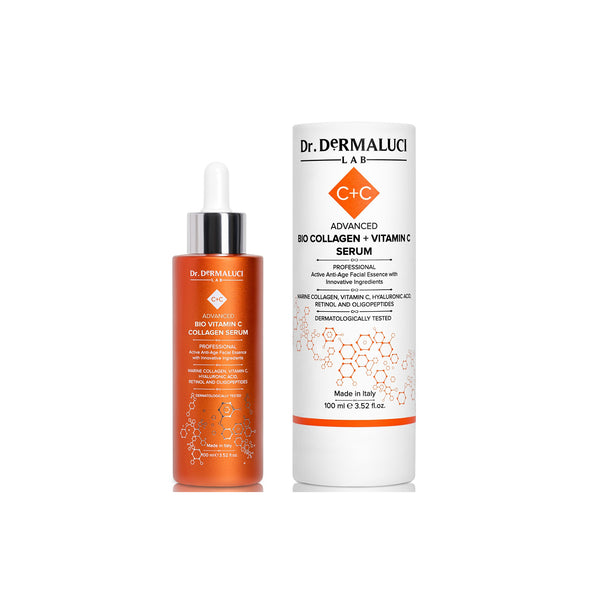
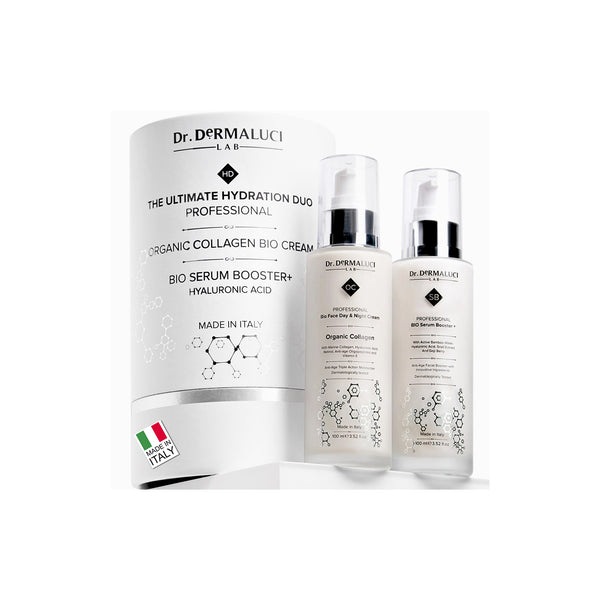
The Dr. Dermaluci Lab approach to retinol is intentionally low-dose (0.10%) for exactly this reason. The brand audience is sensitive and reactive skin, and a low-dose well-tolerated retinol produces better long-term results than a high-dose retinol the user abandons after irritation.
Quick Reference: Retinol Safety Checklist
- ✓ Not pregnant or breastfeeding (absolute contraindication)
- ✓ No active barrier compromise, eczema, dermatitis or open skin
- ✓ Start at lowest concentration (0.1-0.3% for normal, 0.05% for sensitive)
- ✓ Apply at night, never in the morning
- ✓ Daily SPF in the morning (non-negotiable)
- ✓ Build frequency slowly: 2x weekly → 3x weekly → alternating → nightly
- ✓ Pause for 24-48 hours before/after any salon procedure (waxing, laser, peels)
Frequently Asked Questions
Is over-the-counter retinol as effective as prescription tretinoin?
No. Prescription tretinoin is several times stronger and acts faster. Cosmetic retinol works through the same biological pathway but more slowly — visible changes at 8-12 weeks for retinol vs 4-6 weeks for tretinoin. The trade-off is tolerability: most users tolerate cosmetic retinol where prescription tretinoin would cause unacceptable irritation.
Can I use retinol if I have rosacea?
Cautiously, only during stable periods, never during flares. Some rosacea patients tolerate low-dose retinol well after a long ramp-up; others find any retinol triggers flares. Best to introduce under dermatologist guidance if rosacea is moderate or severe.
Will retinol make my skin look worse before it looks better?
Often, yes, during the first 4-6 weeks. Dryness, flaking, possible purging. This is the adjustment period. If it lasts longer than 8 weeks or worsens, the concentration is too high or frequency too aggressive — adjust the protocol, do not abandon the active.
Can I use retinol around my eyes?
Cautiously and at low concentration. Eye-area skin is thinner and more sensitive. Retinol formulated specifically for eye area is available and starts at 0.05-0.1%. Avoid getting near the corners and waterline. Stop at the orbital bone.
How long does retinol take to show results?
Smoother texture and improved tone at 4-6 weeks. Reduced fine lines at 12-16 weeks. Deeper line softening at 6-12 months. Pigmentation evening at 8-16 weeks. Like all skincare, sustained use is required — discontinuing returns skin to baseline over months.
Should I stop retinol in summer?
No. Retinol does not become unsafe in summer. The advice to "pause for summer" is dated — modern broad-spectrum SPF protects retinol-treated skin adequately. Continue retinol year-round, with strict daily SPF.
What is the difference between retinol and retinaldehyde?
Retinaldehyde is one conversion step closer to active retinoic acid, making it stronger and faster-acting than retinol at the same concentration. It is also generally better tolerated than retinol by sensitive skin, because the conversion is more efficient. A good alternative if standard retinol causes irritation.
→ Want a deeper guide to retinol mechanisms and protocols? Read our full retinol guide.
Read more


