



 Verified by shop


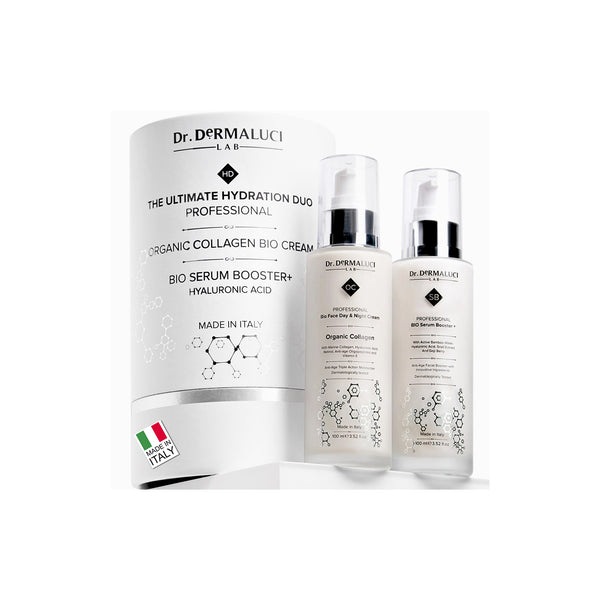


Multi-Weight Hyaluronic Acid: Deep Hydration for All Skin Layers

"Hyaluronic acid" is the most universally recognised hydrating ingredient in skincare, but the marketing rarely explains why a single-weight HA can leave skin feeling tight while a multi-weight HA delivers genuinely lasting hydration. The difference is biology. Hyaluronic acid is not one molecule - it is a class of molecules ranging across an enormous size spectrum, and each size interacts with skin at a different depth. Single-weight HA only works at one level. Multi-weight HA works at several levels simultaneously, which is why it consistently outperforms in clinical comparisons. This article explains the molecular weights of HA, why multi-weight delivers compounding hydration, and how to identify a genuinely well-formulated multi-weight HA product when you read an ingredient label.
This article is part of our Hyaluronic Acid pillar cluster. For the foundational deep-dive, see our complete guide to hyaluronic acid for skin.
What molecular weight actually means for hyaluronic acid
Hyaluronic acid is a long polymer chain - one molecule can be made of just a few repeating units or many thousands. The total chain length determines its molecular weight, measured in daltons (Da) or kilodaltons (kDa). Different weights behave fundamentally differently on skin.
- Ultra-high molecular weight HA (more than 1,800 kDa) - massive molecule, sits at the surface, forms a hydrating film that holds water at the outermost layer
- High molecular weight HA (1,000-1,800 kDa) - surface and immediate sub-surface; delivers visible plumping effect within minutes
- Medium molecular weight HA (200-1,000 kDa) - penetrates the upper stratum corneum; supports hydration in the cellular adhesion layer
- Low molecular weight HA (50-200 kDa) - penetrates deeper into epidermis; supports hydration in newer cell layers
- Ultra-low molecular weight HA (less than 50 kDa) - can reach the upper dermis; controversial because at very low weights HA can act as a pro-inflammatory signal
- HA fragments (oligosaccharides, less than 10 kDa) - smallest particles; primarily used in research contexts, can have unpredictable effects
The "all HA is the same" assumption is wrong. The molecular weight is the single biggest factor in what a hyaluronic acid product actually does to your skin.
Why single-weight HA disappoints over time
Most affordable HA serums use only one molecular weight, typically high molecular weight HA because it is cheaper and feels immediately plumping on application. The marketing focuses on the "instant glow" effect. The honest limitation: single-weight HA can only work at one depth, leaving the other layers untouched.
- Surface-only hydration - the dewy feeling fades within 2-3 hours as the surface film evaporates
- No deeper barrier support - lower skin layers remain unaddressed
- Limited barrier reinforcement - HA needs to reach multiple depths to support sustained hydration
- Inconsistent results across skin types - what works for normal skin often fails for dehydrated
- Vulnerability to environment - dry indoor air, AC, or low humidity quickly strip surface-only hydration
This is why people often report "HA does not work for me" when they have used only single-weight products. The molecule works fine; the formulation just was not addressing their actual hydration biology. Our companion article on low vs high molecular weight hyaluronic acid covers the comparison in more depth.
How multi-weight HA addresses skin at multiple depths simultaneously
Multi-weight HA formulations combine 3-5 different molecular weights in a single product. The result is hydration delivered to several layers at once, supporting both immediate visible results and longer-lasting underlying hydration.
- Ultra-high molecular weight forms the surface film for immediate plumping
- High molecular weight reinforces surface hydration and supports the first 2-3 hours of effect
- Medium molecular weight penetrates the upper stratum corneum for 8-12 hour hydration support
- Low molecular weight reaches the deeper epidermis and supports cellular hydration in newer skin layers
- Together they deliver immediate, mid-day, and overnight hydration from a single application
The compound effect is what no single weight can replicate. Clinical comparisons consistently show multi-weight formulations outperform single-weight at the same total HA concentration.
How to identify a quality multi-weight HA serum on the label
The ingredient list reveals whether a "multi-weight" claim is real or marketing. Look for specific markers.
- "Sodium hyaluronate" listed multiple times in the ingredient list (different molecular weights are usually listed as separate entries)
- Specific molecular weight mentions - good brands disclose at least one weight (e.g., "low molecular weight sodium hyaluronate")
- "Hyaluronic acid" plus "sodium hyaluronate" together indicate at least two forms
- Hydrolyzed hyaluronic acid - the broken-down form, typically lower molecular weight, paired with longer chains
- At least three "hyaluronic" or "hyaluronate" entries in the ingredient list suggests genuinely multi-weight formulation
- "Multi-weight HA complex" or "multiple molecular weights" - explicit claim worth verifying against the ingredient list
If the ingredient list shows only one "sodium hyaluronate" entry, the product is single-weight regardless of marketing claims. The transparency on this question is itself a brand-quality signal. Our article on how to choose the best hyaluronic acid serum covers product selection in more depth.
The application technique that maximises multi-weight HA effect
Even the best multi-weight HA fails when applied incorrectly. The right technique multiplies the biological effect significantly.
- Apply to slightly damp skin - HA needs available water to function as a humectant
- 3-4 drops for face and neck - more product does not deliver more hydration; the dose-response curve flattens
- Pat in gently rather than rub - rubbing disrupts the molecular distribution
- Allow 30-60 seconds for absorption before next product
- Seal immediately with moisturiser - emollients prevent the HA hydration from evaporating
- Twice daily application - morning before SPF, evening before night cream
- Reapply after long flights or sustained dry air exposure - HA mist or thin layer keeps the hydration sustained
The "damp skin + seal with moisturiser" combination doubles the effect compared to dry-skin application without sealing. Our deep dive on how hyaluronic acid supports skin barrier hydration covers the sealing principle in detail.
Multi-weight HA across different skin types
The same multi-weight formulation works across most skin types but with adjusted layering choices.
- Oily skin - use lightweight gel-cream moisturiser to seal; lightweight HA texture works well
- Dry skin - layer multi-weight HA under a rich emollient cream and occlusive at night
- Combination skin - lightweight base everywhere, richer cream on dry zones
- Sensitive skin - choose multi-weight HA in clean formulations (no fragrance, no alcohol); avoid ultra-low molecular weights that can cause inflammation
- Mature skin - multi-weight HA + peptide + ceramide cream is the gold standard hydration stack
- Acne-prone skin - HA is non-comedogenic; choose gel-cream moisturiser to avoid trapping sebum
The principle of "address every depth" applies universally. The texture and supporting cream change with skin type.
Multi-weight HA combined with other actives
HA pairs unusually well with virtually every other skincare active because it has no pH conflict and addresses a need (hydration) that complements other functions.
- Vitamin C + multi-weight HA - vitamin C in the morning is enhanced by HA's hydration base
- Retinol + multi-weight HA - HA addresses retinol-driven dryness; pairs especially well with sandwich method
- Niacinamide + multi-weight HA - both barrier-supportive; niacinamide accelerates ceramide production while HA holds water
- Peptides + multi-weight HA - peptides work better in well-hydrated skin
- AHA/BHA exfoliants + multi-weight HA - HA buffers post-exfoliation tightness
- Sunscreen + multi-weight HA - HA serum under SPF improves both feel and SPF absorption
The lack of conflicts is one of HA's strongest advantages. Our companion article on multi-step hydration: layering serums, creams and humectants covers the layering technique.
Realistic expectations from multi-weight HA
Setting clear expectations prevents disappointment and the urge to layer five different products in search of dramatic results.
- Immediate plump effect - visible within minutes from the surface film
- Sustained hydration through the day - 8-12 hours from a morning application if sealed properly
- Improved barrier function measurable within 2-4 weeks of consistent use
- Smoother makeup application - HA-hydrated skin holds makeup better
- Compound effect on signs of aging over months - HA does not erase wrinkles, but maintains the structural environment that protects against them
- Not a substitute for ceramides - HA hydrates; lipids seal; both are needed
- Not a substitute for retinol or vitamin C - HA is the foundation; other actives are the targeted layers
The realistic framing of HA's role is foundational rather than transformative. It is the layer that lets every other active work better, which is why it is the most universally recommended ingredient in modern skincare.
Quick action checklist
- ✓ Choose a multi-weight HA serum (3+ "hyaluronate" entries in ingredient list)
- ✓ Apply to slightly damp skin within 30 seconds of cleansing
- ✓ Use 3-4 drops for face and neck; more is not better
- ✓ Seal immediately with a moisturiser containing ceramides and emollients
- ✓ Use twice daily - morning and night
- ✓ Pair with niacinamide for compounding barrier support
- ✓ Avoid mixing with multiple new actives at once during HA introduction
- ✓ Use a humidifier in dry indoor environments
- ✓ Allow 2-4 weeks of consistent use before judging full hydration effects
Frequently asked questions
Can hyaluronic acid cause breakouts?
No - HA is non-comedogenic and well-tolerated by acne-prone skin. The exception is when HA serum is layered under heavy occlusive creams on acne-prone skin, which can trap sebum. The solution is a lightweight gel-cream moisturiser rather than rich creams, not avoiding HA itself.
Is multi-weight hyaluronic acid better than regular HA?
Yes for most users. Multi-weight HA delivers hydration at multiple skin depths simultaneously, producing both immediate and sustained effects that single-weight cannot match. The clinical comparisons consistently favour multi-weight at the same total HA concentration. For oily skin in humid climates, single-weight high molecular weight HA may be sufficient; for everyone else, multi-weight is meaningfully better.
How long until I see results from multi-weight HA?
Immediate plumping appears within minutes from the surface film. Sustained hydration becomes consistent at 1-2 weeks. Measurable barrier function improvement appears at 2-4 weeks. The compound effect on fine lines, texture, and overall skin tolerance appears over 8-12 weeks of consistent use.
Can I use multi-weight HA with retinol?
Yes - they pair particularly well. HA addresses the dryness retinol can cause; retinol drives the cellular renewal HA supports through hydration. Apply HA first to damp skin, then retinol after 30-60 seconds absorption, then barrier-rich moisturiser. The sandwich method (moisturiser, retinol, moisturiser with HA serum at the base) significantly improves tolerance.
Should I use HA morning and night?
Yes for sustained hydration. Morning HA application supports the day's hydration; evening application supports overnight skin repair. Both routines should include sealing moisturiser. The twice-daily protocol is the standard and produces measurably better results than once-daily.
What is the difference between hyaluronic acid and sodium hyaluronate?
Sodium hyaluronate is the salt form of hyaluronic acid. It is slightly more stable in formulations and absorbs marginally better. Both deliver the same biological effect on skin. Multi-weight HA formulations often combine both forms across different molecular weights for stability and absorption optimisation.
Does multi-weight HA replace moisturiser?
No. HA delivers water; moisturiser seals it in. Without an emollient or occlusive layer after HA, the hydration evaporates within 2-3 hours, especially in dry environments. Multi-weight HA + ceramide-rich moisturiser is the foundational combination, not HA alone.
How do I know if my HA is genuinely multi-weight?
Check the ingredient list for multiple "sodium hyaluronate" entries or specific molecular weight mentions. A genuine multi-weight formulation typically lists 3 or more HA-related ingredients. If the ingredient list shows only one "sodium hyaluronate" or one "hyaluronic acid" entry, the product is single-weight regardless of marketing claims.
Related articles


