



 Verified by shop




Why More Skincare Products Aren’t Better: The Law of Diminishing Returns

If you want the short answer, here it is: no, using more skincare products usually does not improve your skin more. After a certain point, each extra step adds less benefit and increases the chance of irritation, dryness, sensitivity, or breakouts. The American Academy of Dermatology recommends introducing one new product at a time, and Cleveland Clinic notes that the more products you use, the more likely side effects become. At Dermaluci Lab, we believe in a smarter routine: fewer layers, better tolerated, and used consistently.
This article is part of our Sensitive Skin pillar cluster. For the foundational framework on why reactive skin needs a simpler approach, see our Complete Guide to Sensitive Skin Causes, Triggers and How to Restore Balance.
What the "Law of Diminishing Returns" Means in Skincare
This is not an official dermatology law, but it is a useful way to explain something very real: the first well-chosen steps usually deliver most of the visible benefit, and after that, each extra addition offers less return.
In practice, three foundational steps deliver most of the visible result:
- Gentle cleansing - removes excess oil and surface debris without disrupting the barrier
- Proper moisturization - replaces lipids and water lost during cleansing and through transepidermal water loss
- Daily sun protection - prevents 80 percent of visible skin aging according to dermatology research
The American Academy of Dermatology even points out that sunscreen and moisturizer are two of the most effective anti-aging products you can buy. Beyond these three steps, returns diminish quickly. This matters because many people assume "more" means "better": more serums, more exfoliation, more actives, more frequency. But skin does not always work that way.
Once the skin barrier becomes compromised, ingredients that should help start to sting, redden, or dry the skin instead. The routine stops adding value and starts taking it away. Our deep dive on why skin barrier repair is the foundation of every routine covers the mechanism in detail.
Why a Longer Routine Stops Helping
Three distinct issues compound when routines get long. Each is small on its own; together they undo the benefit of a well-chosen routine.
- Cumulative irritation - Cleveland Clinic explains the skin barrier can be damaged by harsh soaps, over-exfoliation, friction, and lack of moisturizing
- Overlapping functions - several products promising brightness or smoother texture combine to double the irritation risk without doubling the benefit
- Excessive frequency - the logic of "if once helps, twice must help more" does not apply universally; NHS guidance on actives like benzoyl peroxide explicitly recommends reducing frequency when dryness or peeling appears
When the barrier is weakened, the signs are easy to recognize:
- Stinging when you apply products
- Tightness, especially after cleansing
- Fine flaking or patches of dryness
- Diffuse redness or "hot skin" feeling
- Sensitivity to water or familiar products
- Rough texture and dullness
- Unexpected breakouts in normally clear areas
A medical review on irritant contact dermatitis describes this state as inflammation caused by disruption of the skin barrier. Our article on how skincare can cause inflammation explains the cascade in detail.
The American Academy of Dermatology specifically warns that using multiple anti-aging products at the same time may irritate the skin and make signs of aging more noticeable. The same practical principle applies broadly: if your skin gets worse when you use more, then more frequency is not better frequency.
The Biggest Return Usually Comes From the Basics
When you look at which steps offer the most real value, the answer is often simple but strong: gentle cleansing, the right moisturizer, and daily sunscreen. The American Academy of Dermatology places sunscreen and moisturizer at the center of effective anti-aging care and recommends treating your main skin concern rather than trying to fix everything at once.
- Cleansing - once or twice a day with a gentle, non-stripping formula
- Moisturizer - matched to your skin type, applied to slightly damp skin for better absorption
- Sunscreen - SPF 30 to 50 every morning, regardless of weather, even on indoor days
For acne-prone skin specifically, the NHS explains that washing too much can make things worse. It does not recommend cleansing affected areas more than twice a day because excessive washing can irritate the skin. It is a useful lesson for any routine: once a basic step is already covered, repeating it or intensifying it without reason can disrupt the skin more than help it.
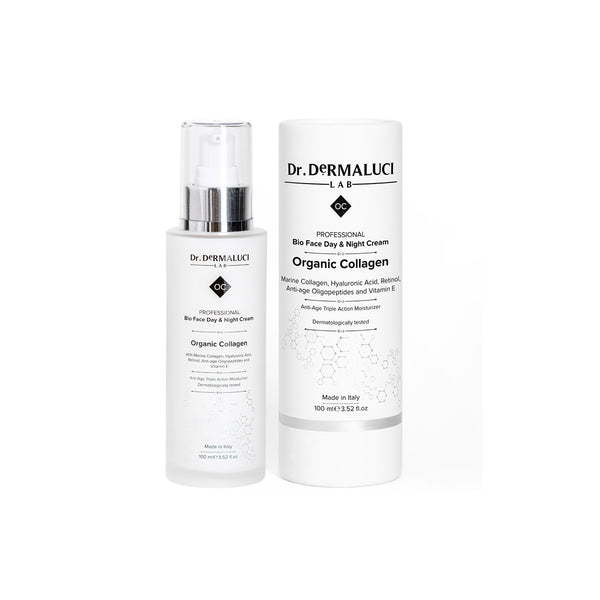
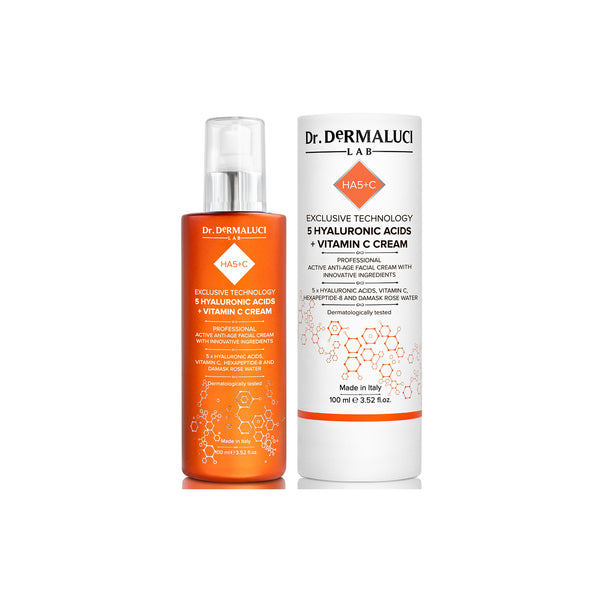
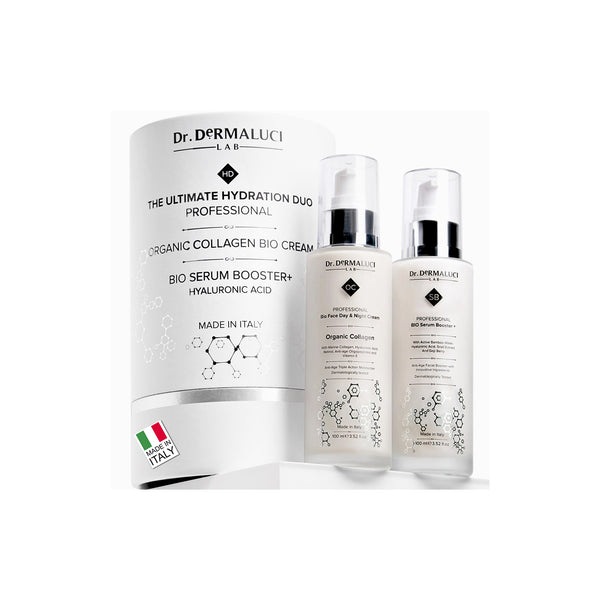
Dermaluci Lab's facial line is positioned around hydration, skin balance, antioxidant support, and barrier reinforcement. Our educational content emphasizes simple, consistent routines focused on recovery when skin becomes reactive. The companion guide on skin minimalism 2.0 covers the science of the low-step approach.
How to Tell If You Are Doing Too Much
There are several warning signs your routine is exceeding your skin's current tolerance.
- Skin stings when you apply products it used to tolerate
- Ongoing tightness that does not resolve with moisturizer
- Fine flaking that appears within hours of applying products
- Diffuse redness, especially on the cheeks
- "Hot skin" feeling after applying actives
- Unexpected breakouts in clear areas
- New sensitivity to water or familiar cleansers
Cleveland Clinic specifically lists symptoms such as inflammation, sensitivity, stinging, and peeling as common signs of barrier damage. Another important warning is introducing something new every week. The American Academy of Dermatology recommends testing a product on a small area before applying it fully and avoiding the addition of too many products at once, because if a reaction happens later, it becomes difficult to identify the trigger.
When your routine changes constantly, two things happen simultaneously:
- Irritation risk increases because each new product carries a tolerance unknown
- You lose the ability to tell what is actually working because you cannot isolate variables
The fix is patience. Our article on how to build a routine when everything irritates your skin walks through the slow reintroduction protocol.
A Shorter Routine Often Works Better
If your skin feels overwhelmed, the answer is almost never buying another "rescue" product. Usually, the answer is simplifying. Here is a useful base structure that covers most needs.
Morning Routine:
- Gentle cleanser, if needed (skip on dry-skin mornings)
- One treatment or hydrating product (vitamin C, niacinamide, or a hyaluronic acid serum)
- Moisturizer matched to your skin type
- Sunscreen SPF 30 to 50
Evening Routine:
- Gentle cleanser to remove SPF, makeup, pollution
- One active or hydrating serum (alternate retinol nights with hydrating nights for sensitive skin)
- A nourishing cream that supports overnight repair
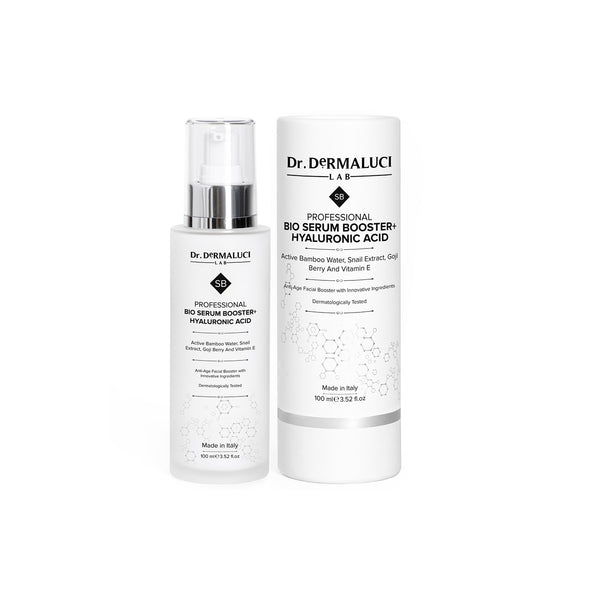
Within that approach, a multifunction product often makes more sense than several redundant layers. For example, Dermaluci Lab's 5x HA + Niacinamide Serum is a lightweight serum suitable for morning and night, even for sensitive skin, with niacinamide to support the barrier and a multi-level hyaluronic acid system for hydration. In a shorter routine, it makes more sense to use one well-formulated step than to stack three products trying to do the same thing.
Our guide on smart ingredient stacking covers how to combine the few actives you do use without provoking conflict. And our piece on how many skincare products you really need goes step by step through what to keep and what to drop.
What Recovery From Over-Use Actually Looks Like
If you suspect your routine has crossed the line into over-use, recovery follows a predictable timeline. Knowing the stages helps you avoid bailing out and adding more products in panic.
- Days 1-3 - drop everything except cleanser, moisturizer, and SPF; skin often feels worse on day 2 as inflammation surfaces
- Days 4-7 - barrier markers stabilize; redness reduces visibly; stinging on application disappears
- Days 8-14 - skin tolerates familiar moisturizer comfortably; texture starts to smooth
- Week 3-4 - reintroduce ONE active at the lowest frequency (e.g., retinol every third night)
- Week 5-6 - if stable, reintroduce a second active in the other slot (vitamin C in the morning)
- Week 7-8 - assess whether the routine is genuinely necessary or whether the simpler version was already enough
Most people who run this protocol discover their skin actually preferred the simpler version. Our article on the skin barrier and inflammation covers the biological repair timeline. The related article on why dehydrated skin can feel oily addresses one of the most common misreads during over-use cycles.
Quick action checklist
- ✓ Keep your core routine to three to four products: cleanser, treatment, moisturizer, sunscreen
- ✓ Do not overwash your face - twice daily maximum, gentler in the morning
- ✓ Introduce one new product at a time, with two to four weeks before adding the next
- ✓ Patch test on the jawline before full-face application
- ✓ Prioritize moisturizer and sunscreen over expensive actives
- ✓ Reduce frequency if any irritation appears - do not push through
- ✓ If skin reacts, return to a minimal three-product routine for two weeks before reintroducing anything
- ✓ One well-formulated multi-purpose product often beats three single-target products
- ✓ Track what you used and how skin responded - clarity beats complexity
FAQ (Frequently asked questions)
How many products does a skincare routine really need?
For most people, a reasonable base is a gentle cleanser, moisturizer, and sunscreen, with one active added only if there is a specific need. The American Academy of Dermatology recommends starting gradually and prioritizing sunscreen and moisturizer as the foundation.
Is it bad to use several serums at once?
Not always, but it does increase the chance of overlapping functions, irritating the skin, or making it hard to identify which product is causing a reaction. Cleveland Clinic and the American Academy of Dermatology both point out that too many products raise the risk of irritation and side effects.
Can I exfoliate every day?
Not every skin type can tolerate that. Over-exfoliation can damage the barrier and increase sensitivity or dryness. If you notice peeling or stinging, it is a clear sign to reduce frequency or review the formula you are using.
How do I know if my skin barrier is compromised?
The most common signs are redness, itching, stinging, peeling, sensitivity, rough texture, and discomfort when applying skincare. Cleveland Clinic describes these symptoms clearly.
What should I do if my skin suddenly cannot tolerate anything?
Reduce your routine to the basics: gentle cleanser, moisturizer, and sunscreen. Temporarily stop exfoliants and other irritating actives, patch test new products, and see a dermatologist if the reaction continues or worsens.
Can using too many products cause breakouts?
Yes. Using too many skincare products can increase the risk of clogged pores, irritation, and unexpected breakouts, especially if several formulas contain oils, exfoliating acids, fragrance, or strong active ingredients. A shorter routine can make it easier to identify what your skin actually tolerates.
How long should I wait before adding a new skincare product?
A good rule is to wait at least two to four weeks before adding another new product, especially if it contains active ingredients. This gives your skin enough time to show whether the product is helping, irritating, or causing breakouts.
Can a simple skincare routine still be effective?
Yes. A simple skincare routine can be very effective when it includes the right essentials: gentle cleansing, hydration, barrier support, and daily sunscreen. For many people, consistency with fewer well-chosen products gives better results than a long routine used irregularly.
What is the best way to rebuild my routine after irritation?
Start with the basics first: gentle cleanser, moisturizer, and sunscreen. Once your skin feels stable, reintroduce one product at a time and observe how your skin responds before adding another step. This makes it easier to avoid repeated irritation and identify possible triggers.
Related articles


