
 Verified by shop




Are “Natural” Skincare Products Always Safer?
Are “Natural” Skincare Products Always Safer Than Synthetic Ones?
For many people, “natural” automatically means safer, healthier, and better for sensitive skin. At the same time, “synthetic” sounds harsh or even “toxic.” But dermatology and cosmetic science tell a more nuanced story.
Studies show that products marketed as “natural” are not always fully natural, and some plant-derived ingredients (like essential oils or lanolin) are among the most frequent causes of contact allergy. Meanwhile, several lab-designed, “synthetic” ingredients are specifically created to be stable, gentle, and well-tolerated.
So the real question is not “natural or synthetic?” but rather: Is this ingredient well-studied, well-formulated, and appropriate for my skin?
What Does “Natural” Really Mean in Skincare?
There is no single global legal definition of “natural” cosmetics. Brands can use the word with very different standards.
One review that looked at “natural” skincare products sold online found that less than half of them were made only from natural ingredients; the rest still contained several synthetic components.
In practice:
· Natural usually means plant- or mineral-derived (botanical oils, extracts, butters, clays, ferment filtrates, etc.).
· Nature-identical ingredients are chemically identical to a molecule found in nature but produced in a lab for purity and consistency.
· Synthetic simply means “created or modified in a lab,” not “toxic by default.”
Even within natural ingredients, safety depends on dose, purity, and how the ingredient is processed and combined in the final formula.
When “Natural” Can Still Irritate the Skin
Many of the most common fragrance allergens in cosmetics are plant-derived, for example, components of essential oils such as limonene, linalool, citral and others. Regulatory scientific committees in the EU list these fragrance allergens because they are frequent causes of contact allergy in sensitive individuals.
Examples of “natural but not always gentle”:
· Essential oils (lavender, citrus, peppermint, tea tree, etc.) can trigger irritation or allergic dermatitis, especially if used undiluted or on compromised skin.
· anolin (from wool) is highly emollient but can be allergenic in some people with eczema.
· Certain plant extracts with strong fragrance or active constituents can be too stimulating for rosacea-prone or reactive skin.
This does not mean you must avoid all botanicals. It means that “from nature” ≠ automatically safe for everyone, and even organic ingredients must be dosed and tested with care.
The Truth About “Synthetic” Ingredients
On the other side, many synthetic or nature-identical ingredients are widely used because they are:
· Highly purified
· Consistent from batch to batch
· Tested in controlled concentrations for tolerance and safety
For example, large safety reviews of cosmetic preservatives show that, when used within regulated limits, some synthetic preservatives (like certain parabens) present low average allergy rates compared with many alternative preservatives.
That doesn’t mean all synthetic ingredients are harmless, or that every brand uses them responsibly. It simply shows that “lab-made” can be both safe and well-tolerated when regulations and science are respected.
How Dr. Dermaluci's Lab Balances Nature and Cosmetic Science
Dr. Dermaluci Lab was created precisely to bridge this gap: organic, AIAB-certified botanical formulas combined with dermatologically tested, evidence-based actives, designed for sensitive skin.
The brand’s philosophy:
· Certified organic (AIAB) and nickel-tested
· Free from parabens, silicones, microplastics, mineral oils and PEGs
· Dermatologically tested for sensitive skin
· Focus on Smart Beauty: fewer products, multitasking actives, backed by science
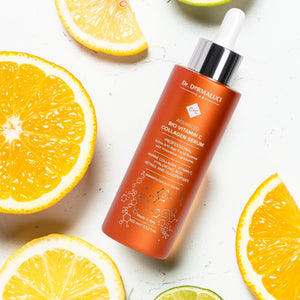
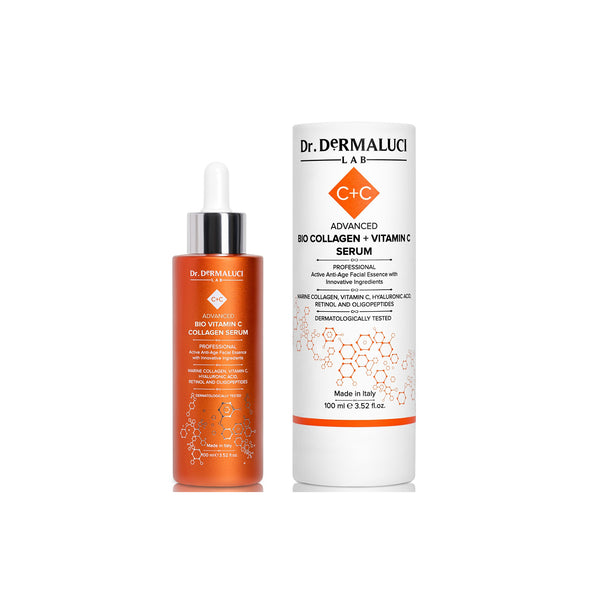
A good example is the Vitamin C + Collagen Serum, which combines:
· Organic aloe vera and chamomile extract (soothing botanical base)
· Hydrolyzed collagen and low-molecular-weight hyaluronic acid (hydration and elasticity)
· Sodium ascorbyl phosphate (a stabilized, nature-identical form of vitamin C)
· Peptides and antioxidants for additional support
Here, natural and lab-perfected ingredients work together to maximize benefits and minimize irritation risk.
How to Decide if a Product Is Truly “Safer” for Your Skin
Instead of asking, “Is it 100% natural?”, ask:
1. Is the formula dermatologically tested?
2. Is it certified or independently assessed (e.g., AIAB, nickel-tested)?
3. Are the percentages and pH adapted to sensitive skin, not just trends?
4. Does the brand publish educational content and transparent INCI lists?
Dr. Dermaluci Lab, for instance, regularly shares articles about barrier repair, microbiome health, and clean beauty standards, helping you understand why each ingredient is there.
Recommended Smart-Beauty Routine (Example)
For someone who wants safe, effective, and gentle care:
1. Cleanser – Gentle Facial Cleanser with Aloe & Niacinamide
Respectful, pH-balanced, and ideal for removing sweat, pollution, and SPF without stripping the barrier.
2. Serum – Vitamin C + Collagen Serum
Antioxidant, brightening, and firming support with organic botanicals, stabilized vitamin C, and peptides.
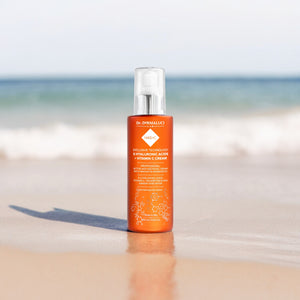
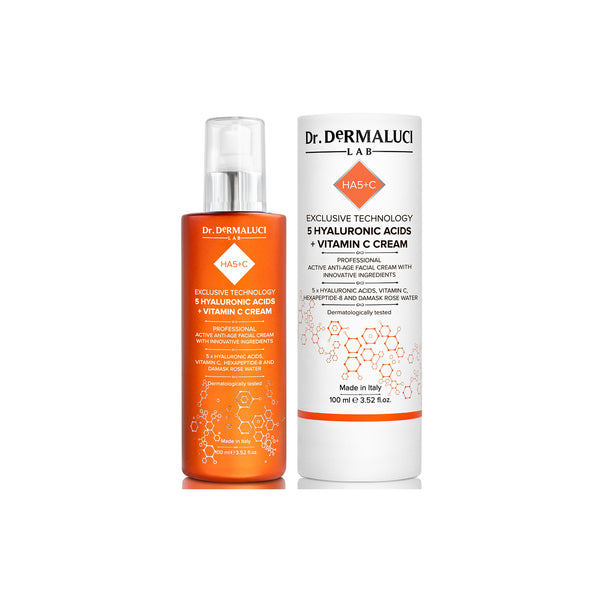
3. Moisturiser – 5x Hyaluronic Acid + Vitamin C Cream
Five molecular weights of HA, vitamin C, and hexapeptide-8 for multi-level hydration and visible glow in an organic cream base.
4. Daily Protection (AM)—Broad-spectrum SPF 50 (face)
Any well-formulated sunscreen you tolerate; UV protection is non-negotiable for long-term skin health.
FAQs
Q: If a product is 100% natural, can it still cause allergies?
Yes. Many fragrance allergens and essential oil components are 100% natural. Sensitive or atopic-prone skin can react to both natural and synthetic molecules.
Q: Are synthetic ingredients always bad for sensitive skin?
No. Several synthetic or nature-identical ingredients were developed to be less irritating and more stable. Safety depends on dose, formulation, and testing, not just origin.
Q: Does Dr. Dermaluci Lab use any synthetic ingredients?
Formulas are AIAB-certified organic and focus on botanical actives but may include carefully selected nature-identical molecules (like stabilized vitamin C or peptides) when they offer better stability, tolerability, and results for sensitive skin.
Q: How can I know if a product is suitable for my skin?
Patch test first, especially if you have eczema, rosacea, or a history of allergies. Start with a minimalist routine and introduce new products one at a time.
Quick Benefits Checklist ✅
· ✅ Respects sensitive and reactive skin
· ✅ Balances organic botanicals + nature-identical actives
· ✅ AIAB-certified, nickel-tested, cruelty-free
· ✅ No parabens, silicones, microplastics, mineral oils or PEGs
· ✅ Supported by dermatological and regulatory science, not marketing slogans
Coming next: Are organic face serums better for sensitive skin?


