



 Verified by shop




Holistic Skin Health: The Inside-Out Framework

What shows up on your skin is the visible chapter of a longer story that started somewhere inside the body. Redness reflects inflammation that often began in the gut. Dullness reflects hormonal shifts or sleep debt. Reactive flares track stress, hidden food intolerances, and immune dysregulation that has been quietly running for months. The most effective skincare in the world cannot outrun a body that is sending the wrong signals to the skin every day. That is the foundation of holistic skin health: not a vague wellness slogan, but a precise way of looking at what causes the mechanisms we usually try to treat at the surface. This guide explains the framework.
This is our Holistic Skin Health pillar cornerstone. Every article in this cluster connects back to this framework, looking at one of the body systems that writes itself on skin: gut, hormones, sleep, stress, nutrition, circulation, and immune regulation. For the related cluster on the mechanism downstream of all of this, see our Complete Guide to Skin Inflammation as the Root Cause of Aging, Sensitivity and Skin Damage.
What "holistic" actually means in skin science
Holistic skin health is often misused as a marketing word that means almost nothing. We use it specifically. Holistic means looking at skin as the visible output of a connected system — gut, immune, hormones, nervous system, circulation — rather than as an isolated organ that can be optimized purely from the outside.
- Topical skincare treats the surface signal — redness, dehydration, breakouts, fine lines
- Internal physiology creates the conditions that produce or prevent those signals in the first place
- Both layers matter — well-formulated topical care matters, but it works far better when the internal signal is calm
This brand was built around this conviction. One of our founders has lived with autoimmune thyroiditis for over 20 years and has watched, in detail, how internal physiology determines what shows up on her face long before any cream gets the chance to act. That lived experience shaped every formulation choice our lab has made.
The gut-skin axis: how your microbiome writes itself on your face
The most consequential discovery in skin science in the last two decades is the gut-skin axis. The bacteria that live in your intestine do far more than digest food.
- They produce short-chain fatty acids (SCFAs) that signal to immune cells throughout the body
- They train regulatory T-cells (Tregs) — the immune cells that decide what to attack and what to tolerate
- They regulate the inflammatory tone of the entire body, which skin reflects directly
- They modulate histamine, a major driver of skin reactivity and flares
- They affect nutrient absorption (B vitamins, magnesium, fatty acids) that skin barrier function depends on
When the gut microbiome is balanced and diverse, skin tends to be calm and resilient. When key bacterial groups are absent or depleted, the downstream effects show up as everything from low-grade redness to autoimmune flares to "mysterious" reactivity that no topical product seems to fix.
The specific bacteria that matter most for skin via the immune axis include:
- Prevotella — produces SCFAs that signal Treg production; its absence is associated with under-regulated immune responses
- Ruminococcus — a major butyrate producer; butyrate is the fuel the colon uses to maintain barrier integrity
- Bacteroides — foundational for fibre digestion and immune education
- Bifidobacterium — central to immune regulation and anti-inflammatory signalling; histamine moderation
- Lactobacillus — gut barrier integrity and histamine breakdown support
Our deep dive into the microbiome / autoimmune connection is the founder's personal story, told through her own recent microbiota testing and clinical response. It is published as a separate cluster article you can read alongside this framework.
The hormone-skin axis: when chemistry shapes appearance
Hormones do far more than determine reproductive cycles. They shape skin every day through several distinct mechanisms.
- Estrogen supports collagen production, skin thickness, lipid synthesis in the barrier, and hyaluronic acid retention; declining estrogen in perimenopause changes skin visibly within weeks
- Thyroid hormones (T3, T4) regulate cell turnover; under-active thyroid produces dry, thickened, slow-healing skin and hair changes
- Cortisol rises with stress and drives inflammation, collagen breakdown, and increased sebum production
- Progesterone influences sebaceous activity and skin reactivity through the menstrual cycle
- Insulin affects skin through systemic glycation and inflammatory signalling, especially when chronically elevated
The hormone-immune connection matters too. Estrogen is mildly immunomodulatory; many women with autoimmune conditions experience flares when estrogen drops sharply (postpartum, hormonal contraceptive changes, perimenopause). What looks like a "skin problem" can be a hormonal cascade that the immune system is reflecting. Our article on how stress accelerates skin aging covers the cortisol-collagen axis in detail.
Sleep, circadian rhythm, and overnight repair
Skin does the majority of its repair while you sleep, and the repair process depends on a coordinated set of overnight signals.
- Growth hormone peaks during deep sleep and drives collagen synthesis
- Melatonin acts as an antioxidant at the skin level, not just a sleep regulator
- Cortisol normally drops overnight, giving inflammation a window to settle
- Stratum corneum permeability changes through the night, affecting how products and toxins move through the barrier
- Cell turnover accelerates in early hours of sleep
Sleep loss collapses all of this. The visible result — duller complexion, slower healing, more visible aging signs over time — is downstream of an interrupted repair cycle, not just "tired skin." Our article on why lack of sleep shows up on your skin first covers the mechanism in detail.
Stress, autoimmune triggers, and viral reactivation
Stress is not just psychological — it is a coordinated physiological state with measurable effects on skin and immune function. The pathway runs through several levels.
- Acute stress raises cortisol and adrenaline, briefly suppressing inflammation but then triggering rebound inflammatory activity
- Chronic stress dysregulates cortisol rhythm, weakens skin barrier, slows wound healing, and shifts the immune system toward inflammatory tone
- Latent viral reactivation — Epstein-Barr virus (EBV), herpes simplex, and others can reactivate under sustained stress, triggering both visible skin signals and autoimmune cascades
- Sleep architecture degrades, compounding the overnight repair issue described above
- Microbiome changes — chronic stress alters the gut microbiome composition, feeding back into the gut-skin loop
For people with existing autoimmune conditions, stress is often the trigger that converts a stable state into an active flare. The connection to skin is direct: every autoimmune flare has a skin signal somewhere — rash, sensitivity, dryness, slow healing.
Nutrition signals: not just what you eat, but how your body processes it
What you eat affects your skin through multiple pathways, and the most useful framing is not "eat clean" but "watch what creates inflammation and intolerance signals."
- IgG food sensitivities can drive low-grade chronic inflammation that shows on skin long before any digestive symptom appears
- Histamine intolerance (DAO enzyme deficiency) means fermented foods and certain "healthy" foods like aged cheese, spinach, and tomatoes can cause skin flares
- Refined sugars and glycation create permanent collagen cross-links over years, accelerating visible aging
- Resistant starch (cooled potatoes, oats, green banana) feeds the butyrate-producing bacteria essential to gut and skin health
- Omega-3 to omega-6 ratio shapes the systemic inflammatory tone
- Polyphenols from colourful plants directly support antioxidant defence in skin
The "right diet for skin" is not the same for everyone. It depends on individual microbiome composition, enzyme function (like DAO), genetic factors, and current immune state. This is why generic anti-inflammatory food lists deliver inconsistent results, while individually-mapped nutrition produces visible change.
Circulation, lymphatic drainage, and body-level inflammation
Skin needs blood flow and lymphatic drainage to deliver nutrients and clear waste. When circulation slows, you see it.
- Reduced microcirculation shows as dullness, slow healing, and cold/pale skin
- Lymphatic stagnation shows as facial puffiness, heavy legs, eye-bag swelling, and visible water retention
- Venous insufficiency increases lower-body skin changes (heaviness, swelling, mottled patterns)
- Movement is the primary pump for both blood return and lymph; sedentary life slows both
- Hydration plus balanced electrolytes keeps the fluid moving rather than stagnating in tissues
The circulation cluster has three dedicated cluster articles: our complete guide to lymphatic drainage, our piece on why heavy legs feel worse in summer, and our deep dive on the science behind drainage body treatments.
Inflammation: the through-line that connects all of these
Gut imbalance, hormonal shifts, sleep loss, chronic stress, food sensitivities, and lymphatic stagnation share one downstream pathway: low-grade chronic inflammation. Inflammation is the through-line of the holistic framework.
- Acute inflammation is protective — it heals wounds, fights infection, resolves quickly
- Chronic low-grade inflammation is destructive — it accelerates skin aging, compromises the barrier, drives sensitivity, contributes to autoimmune cascades
- Symptoms are non-specific — fatigue, brain fog, dry skin, sensitivity, slow healing, joint stiffness, mood changes
- Markers help track it — CRP, ESR, ferritin, fibrinogen offer a clinical view; visible skin signals are often the first reliable home indicator
Working on the holistic levers (gut, sleep, stress, nutrition, movement) is, in effect, working on inflammation regulation. The skin signal calms because the body underneath calms. This is why our companion article on why skin breaks down during illness or recovery belongs in this pillar — the same physiology applies in both directions.
Why the Dermaluci approach is intentionally simple
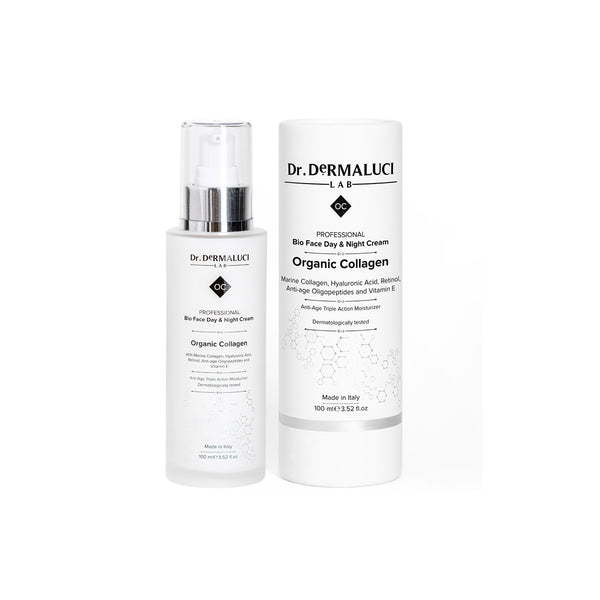
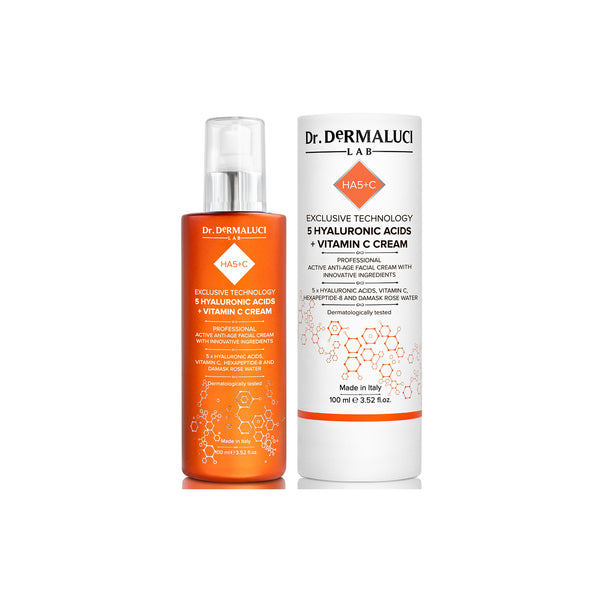
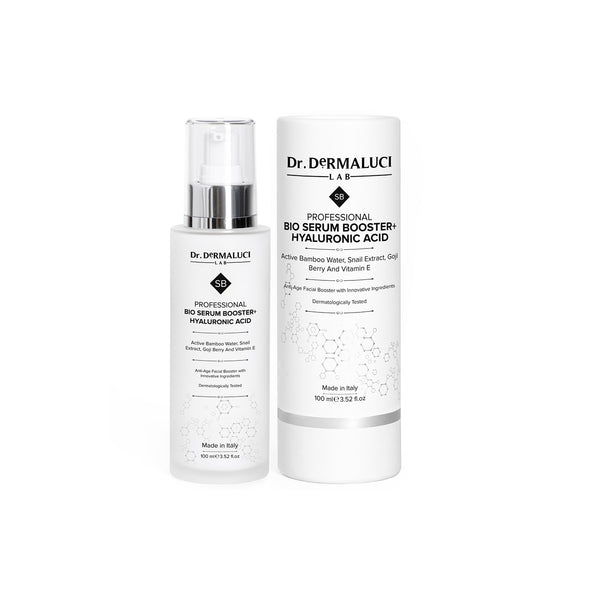
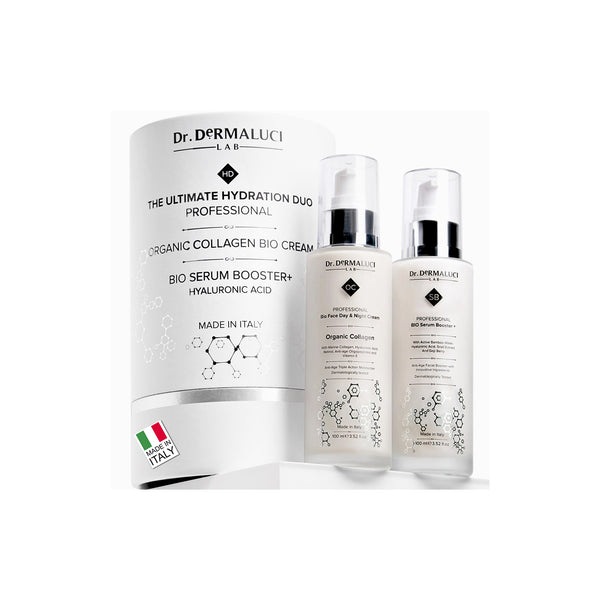
Our brand's formulation philosophy reflects this framework. Our products are intentionally low-concentration, sensitive-skin friendly, and built to support — not override — the body underneath.
- Retinol at 0.10% — low enough for sensitive autoimmune-aware skin to use nightly without barrier disruption
- Niacinamide at 5% — supports barrier and tone without provoking the irritation seen at 10%+
- Stable vitamin C derivatives instead of pure L-Ascorbic Acid — antioxidant defence without low-pH sting
- Multi-weight hyaluronic acid — hydration at multiple depths, supporting overnight repair rather than fighting it
- Drainage support through body care — the Pant Salino salt-based system addresses the lymphatic side
- No fragrance overload, no high-concentration acids, no aggressive exfoliants — formulations designed for skin already carrying inflammatory load
The brand was born from a founder's lived experience with autoimmune disease. Sensitive skin is not a niche we target as marketing — it is the default we assume, because that lived experience taught us that everyone with a reactive immune system needs gentler chemistry than the industry generally provides. Aggressive skincare on already-inflamed skin makes the visible signal worse, not better.
How to apply the framework: start where it shows
You do not need to overhaul every body system at once. The framework is most useful when you start with the most visible signal and work backward.
- Persistent redness or sensitivity — start with gut + stress; look for the inflammatory trigger
- Recurring "I cannot tolerate anything" cycles — almost always barrier compromise + chronic inflammatory tone
- Puffiness, heavy face on waking — circulation + sleep + sodium balance
- Dullness, slow healing — sleep + nutrition + circulation
- Hormonal acne or flares timed to cycle — hormone axis; look at progesterone and stress overlap
- Mysterious flares that seem random — IgG food sensitivities or histamine intolerance very common
- Accelerated aging signs in a short period — sleep + cortisol + sun + maybe thyroid worth checking
For each entry point, our cluster articles cover the underlying physiology in detail and offer specific protocols.
Quick action checklist
- ✓ Sleep is the single highest-leverage intervention — 7 to 8 hours, consistent timing, protect the early-night deep sleep
- ✓ Move every hour you are awake; the calf-muscle pump moves both blood and lymph
- ✓ Add resistant starch (cooled potato, oats, green banana) to feed butyrate-producing gut bacteria
- ✓ Track histamine-rich foods if you suspect intolerance (fermented, aged, leftovers, certain vegetables)
- ✓ Hydrate at room temperature, 2 to 3 litres daily; balance with adequate salt
- ✓ Manage stress as a physiological priority, not a lifestyle preference — breathwork, walks, time in nature, sleep
- ✓ Address autoimmune or chronic inflammatory conditions through medical care plus the gut-microbiome work that supports immune regulation
- ✓ Keep skincare simple, sensitive-skin friendly, and supportive of the barrier — let internal physiology do the heavy lifting
- ✓ Check the most visible signal on your face first; that is your fastest feedback loop on whether the framework is working
FAQ (Frequently asked questions)
Is "holistic skin health" just an alternative-medicine concept?
No. The framework is grounded in established physiology — gut-skin axis research, endocrinology, sleep science, immunology. The shift from "topical only" to "topical plus systemic" reflects how dermatology and integrative medicine have both evolved over the last 20 years. The science is mainstream; the framing as a unified approach is newer.
How long before I see results from working on the inside-out levers?
Some markers move quickly. Hydration and sleep optimisation show in skin within 7 to 14 days. Gut microbiome shifts take 4 to 12 weeks. Hormonal interventions usually need 8 to 16 weeks to show. Autoimmune improvements can take 6 to 18 months and often show up in adjacent signals first (allergy reduction, mood, energy) before the primary condition's lab numbers move.
Do I still need topical skincare if I do the internal work?
Yes. Topical skincare matters — it provides daily barrier support, SPF, hydration, and targeted active ingredients. The framework does not say "skincare doesn't matter." It says "skincare works better when the system underneath is calmer." Both layers, together, deliver compounding results over years.
What if I have a diagnosed autoimmune condition?
Your situation needs medical care, and the holistic framework supports that care — it does not replace it. Working on gut microbiome, sleep, stress regulation, and inflammation supports immune regulation in ways that often help the medication work better. Discuss any major dietary or supplement changes with your doctor, especially around medication timing and absorption.
Is microbiome testing worth doing?
For people with autoimmune conditions, persistent reactive skin, or "mysterious" gut symptoms, yes — it can reveal specific bacterial gaps that explain otherwise unclear patterns. For healthy people without symptoms, the data is interesting but less actionable. Choose a lab that reports clinically relevant findings, not just diversity scores.
How do I know which lever to start with?
Start with the lever you can change easiest. For most people, that is sleep, then movement, then stress. These three improve gut, hormones, inflammation, and circulation simultaneously through downstream effects. Nutrition changes are more powerful but take more sustained energy to implement, so they often follow.
Can I do this without testing?
Yes. Testing helps, but the framework works without it. Most people see meaningful improvement in skin signals within 8 to 12 weeks of consistent attention to sleep, movement, stress, and basic dietary cleanup. Testing is most valuable for specific puzzles (autoimmune patterns, mystery flares, prolonged plateau).
Related articles


