



 Verified by shop




Benefits of Vitamin C Serum for Skin

If you’re considering a vitamin C serum, it’s probably because your skin looks dull, uneven, or tired. At Dr. Dermalucilab, we see vitamin C as a reliable active when properly formulated: it delivers visible radiance and antioxidant support and fits a long-term, mindful routine. As a European brand, we communicate realistic cosmetic benefits, not medical promises.
This article is part of our Vitamin C pillar cluster. Foundational read: our vitamin c cornerstone. Related: ingredients that truly fade dark spots.
Yes, a vitamin C serum can brighten, improve the appearance of uneven tone, support collagen-related processes, and help skin look fresher and more even with steady use. It doesn’t replace sunscreen or medical treatments.
Vitamin C helps skin look more radiant in several ways: it acts as an antioxidant, helps counter environmental oxidative stress, and may modulate melanin formation, which can improve the appearance of dark spots and uneven tone over time. Visible changes require consistency and a good formula.
Real-life take: you’re not trying to “treat a condition”—you want to stop looking tired. That’s where a solid vitamin C serum shines.
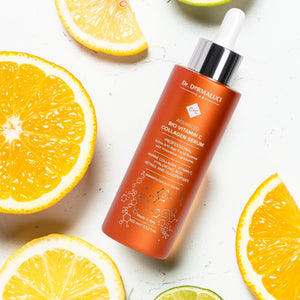
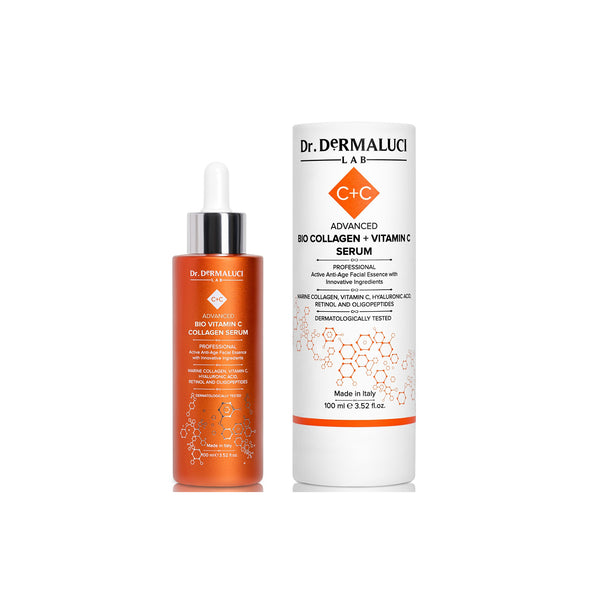
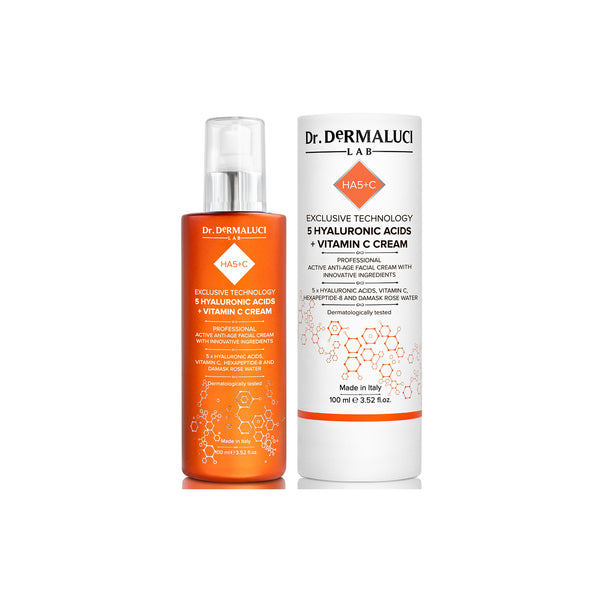
Dermalucilab’s Vitamin C + Ferulic Serum combines stabilized vitamin C, ferulic acid, turmeric, centella asiatica, and multi-molecular-weight hyaluronic acids to promote radiance, hydration, and antioxidant support without harsh concentrations.
Honest note: Vitamin C won’t erase all spots on its own, and results vary by skin. Noticeable improvements typically take several weeks.
Collagen support (no overclaims)
Vitamin C participates in processes linked to collagen synthesis and helps protect existing collagen from oxidative stress. In skincare terms: with ongoing use, skin can look firmer, less fatigued, and show smoother texture.
Responsible communication (EU): we talk about supporting skin processes and appearance improvements, not medical-level changes.
“Anti‑aging” benefits (used wisely)
While the term is overused, it applies here: topical vitamin C may visibly soften fine lines, support elasticity, improve a photoaged look, and act as a daily antioxidant against UV and pollution. It does not replace SPF or medical treatments, but it’s a reliable cosmetic ally.
How to use it so it works
Morning:
- Gentle cleanse
- Apply 3–5 drops of vitamin C serum on dry skin
- Follow with moisturizer (as needed)
- Finish with broad‑spectrum sunscreen
sensitive skin: start every other morning for 1–2 weeks. Prefer stabilized forms or gentler derivatives.
Realistic tip: clearer changes in glow, texture, and tone appearance usually come with steady use over several weeks.
Dermalucilab’s view
We don’t treat vitamin C as a trend but as an active that makes sense when it’s stable, tolerable, hydrating, and friendly to sensitive skin. It matches our Italian formulation approach and responsible cosmetic use.
Product recommendation
Dermalucilab Vitamin C + Ferulic Serum
Featuring stabilized vitamin C, ferulic acid, centella, turmeric, and multi‑weight hyaluronic acids: created for radiance, hydration, and antioxidant support without unnecessary irritation—great for sensitive skin.
Read also: Vitamin C and Collagen: Why This Combination Matters for Skin.
FAQs
What does a vitamin C serum do?
Provides antioxidant support and radiance, helps the appearance of uneven tone, and contributes to a more even, well‑rested look. It also supports processes related to collagen.
Does it help with dark spots?
It can improve the appearance of spots and uneven pigmentation with consistent use. It doesn’t replace sunscreen, and results vary by skin.
Does vitamin C stimulate collagen?
It participates in processes tied to collagen synthesis and helps protect against oxidative stress. In cosmetics, we frame it as support for firmness and texture.
When should I apply it?
Typically in the morning, after cleansing and before moisturizer and SPF.
Is it suitable for sensitive skin?
Yes, prefer stabilized formulas and introduce them gradually.
Checklist
- Choose stable, well‑tolerated vitamin C
- Apply in the morning on clean skin
- Follow with moisturizer if needed
- Finish with sunscreen
- Be consistent for several weeks
- Go slow if your skin is sensitive
About Dr. Dermaluci Lab
Dr. Dermaluci Lab is a skincare research and formulation brand focused on high-performance organic cosmetic formulations developed and produced in Italy. The brand focuses on clinically studied active ingredients such as retinol, peptides, niacinamide, and vitamin C, combined with certified organic ingredients suitable even for sensitive skin.
Quick action checklist
- ✓ Apply vitamin C serum in the morning, after cleansing
- ✓ Always follow with broad-spectrum SPF — vitamin C boosts UV protection
- ✓ Look for stabilized forms (SAP, Ascorbyl Glucoside) for sensitive skin
- ✓ Allow 8-12 weeks of daily use before judging tone improvements
- ✓ Pair with niacinamide or hyaluronic acid for layered benefits
- ✓ Store away from light — vitamin C degrades on UV exposure
- ✓ Discontinue if persistent stinging occurs; rebuild barrier first
Frequently asked questions
What does vitamin C serum actually do for skin?
It brightens dull skin, supports collagen-related processes, defends against oxidative stress, and helps fade the appearance of dark spots. Results require 8-12 weeks of consistent use.
Is vitamin C serum safe for sensitive skin?
Yes, in stabilized forms like Sodium Ascorbyl Phosphate or Ascorbyl Glucoside. Pure L-ascorbic acid at low pH can irritate reactive skin types.
Can I use vitamin C and retinol together?
Generally yes — use vitamin C AM and retinol PM. Combining them in the same step is not recommended for most skin types.
How long until I see results from vitamin C serum?
Hydration and radiance can appear in 2-4 weeks. Tone improvements and dark spot fading need 8-12 weeks of daily consistent use.
Does vitamin C replace sunscreen?
No. Vitamin C boosts UV defense but does not block UV rays. Always pair with broad-spectrum SPF in the morning.
What concentration of vitamin C works best?
10-20% pure L-ascorbic acid is the studied range. Derivatives work at lower concentrations (2-5%) with better tolerability for sensitive skin.
Related articles


