



 Verified by shop


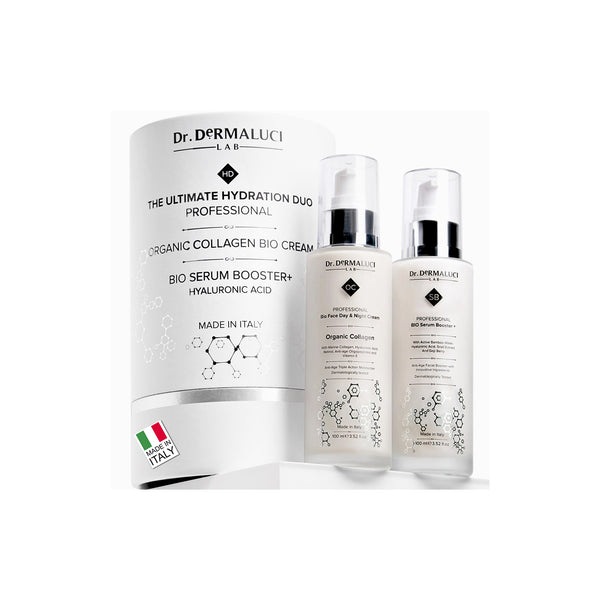


Multi-Step Hydration Routine: Layering Serums, Creams & Humectants

"Drink more water" is the most common skincare advice and one of the most incomplete. Skin hydration is not just about how much fluid your body holds - it is about how that fluid is held in the right tissue layers, by the right molecules, and protected by an intact barrier. You can drink three litres of water a day and still have skin that looks dehydrated if your topical routine is wrong. You can also have well-hydrated skin on relatively modest internal water intake if the topical layer is doing its job. This article unpacks how skin hydration actually works at the cellular level, why layering multiple products targets different aspects of moisture biology, and how to build a routine that holds hydration through the day instead of losing it within hours of application.
This article spans two of our pillar clusters: Hyaluronic Acid and Skin Barrier. For the foundational deep-dives, see our complete guide to hyaluronic acid and our complete guide to why skin barrier repair is the foundation of every routine.
Hydration is not moisturisation - and the difference matters
The two words are often used interchangeably but they describe different biology. Mixing them up leads to routines that target the wrong problem.
- Hydration refers to water content in the skin. Hydrated skin is plump, dewy, and bounces back when pressed
- Moisturisation refers to the lipid layer that prevents water loss. Moisturised skin is soft, supple, and protected against environmental drying
- Dehydrated skin is a temporary state - low water content - and can affect any skin type including oily skin
- Dry skin is a chronic skin type - low lipid production - typically genetic or constitutional
- You can be oily AND dehydrated at the same time; the oil glands keep working while the water layer is depleted
This is why the right routine matters more than the right diagnosis. Our companion article on dry vs dehydrated skin and the barrier connection covers the distinction in detail.
The four layers of moisture biology
The skin holds water at multiple depths through different molecular systems. A good routine addresses each layer rather than dumping all the moisture in one spot.
- The stratum corneum - outermost layer, holds water via natural moisturising factor (NMF), free amino acids, sodium PCA, lactates
- The lipid matrix - ceramides, cholesterol, free fatty acids form the "mortar" between skin cells that prevents transepidermal water loss
- The viable epidermis - below the dead-cell layer, contains the cells that produce barrier lipids and shed in turnover
- The dermal hyaluronic acid reservoir - bound water held by HA molecules in the deeper dermis; this layer determines firmness and plumpness
A single moisturiser cannot reach all four layers. A multi-layer routine targets each one with the molecule best suited for that depth. The result is sustained hydration throughout the day rather than the brief comfort of a single product.
The three categories of hydrating ingredient
Every skincare hydration ingredient falls into one of three functional categories. Understanding which is which lets you build a routine that covers all three.
- Humectants attract and hold water - hyaluronic acid, glycerin, urea, sodium PCA, panthenol, betaine, propanediol; they pull water from the air OR from deeper skin layers depending on humidity
- Emollients soften and smooth the surface, fill in the cracks between cells - squalane, jojoba oil, shea butter, fatty alcohols, ceramides
- Occlusives form a sealing layer that prevents water from evaporating - dimethicone, petrolatum, beeswax, lanolin, plant butters
A complete routine uses all three. The classic structure: humectant serums first to deliver water, emollient cream to soften and fill, light occlusive overnight to seal the whole thing. Our deep dive on how hyaluronic acid supports skin barrier hydration covers the humectant + barrier connection.
Multi-weight hyaluronic acid: why one HA is not enough
Hyaluronic acid is the most important humectant in modern skincare, but not all HA is the same. The molecular weight determines what the HA actually does on your skin.
- High molecular weight HA (1000-1500 kDa) - large molecule, stays on the surface, forms a moisturising film, delivers immediate plump appearance
- Medium molecular weight HA (200-1000 kDa) - penetrates the upper epidermis, supports elasticity at intermediate depth
- Low molecular weight HA (50-200 kDa) - penetrates deeper into epidermis, supports cellular hydration where new cells form
- Ultra-low molecular weight HA (less than 50 kDa) - reaches the upper dermis, can signal to fibroblasts; controversial because at very low weights HA can act as a pro-inflammatory signal
- Sodium hyaluronate - the salt form of HA, more stable in formulations, similar effects
Multi-weight formulations combine 3-5 different HA molecular weights so the product hydrates at multiple depths simultaneously. This is meaningfully more effective than a single-weight HA serum, which can only work at one layer. Our companion article on low vs high molecular weight hyaluronic acid covers the comparison in detail. Our guide to how to choose the best hyaluronic acid serum covers product selection.
The correct order for layering hydration
Application order matters more than people realise. The wrong order means humectants are blocked from reaching skin or that occlusives trap nothing useful underneath them.
- Step 1: Gentle cleanser - removes overnight buildup without stripping the natural moisturising factor
- Step 2: Hydrating toner or essence (optional) - prepares skin and adds the first water layer; lightweight humectants like glycerin or HA
- Step 3: Hyaluronic acid serum applied to slightly damp skin - HA needs water to function as a humectant; applying to dry skin can actually dehydrate further by pulling moisture from deeper layers
- Step 4: Antioxidant or treatment serum (optional) - niacinamide, vitamin C derivative, peptides - whichever your routine includes
- Step 5: Moisturiser with ceramides and emollients - softens, fills in surface texture, supports barrier
- Step 6: Occlusive overnight if needed - oil, balm, or rich cream to lock everything in during sleep
- Step 7: SPF in the morning - protects everything below it
The single most important detail: apply HA to slightly damp skin. This is not optional. Dry-skin application reverses the humectant effect. Our broader guide on in what order to apply skincare products covers the wider routine architecture.
Why "damp skin" application is non-negotiable for humectants
Humectants pull water toward themselves. The direction of that water depends on what is available.
- If the surface is dry and the air is dry, humectants can pull water UP from deeper skin layers, paradoxically dehydrating the skin
- If the surface is damp from recent cleansing or a toner spray, humectants pull water from the available surface moisture into the skin
- If the air is humid, humectants pull from the atmosphere and work more efficiently
- Sealing humectants with an emollient and/or occlusive lock the water in place
- Without sealing, humectants can lose effect within 1-2 hours, especially in dry indoor environments
The practical implication: after cleansing, do not towel-dry completely. Pat the face lightly so it remains slightly damp, then apply HA serum within 30 seconds, then immediately follow with a moisturiser. This sequence locks moisture in and delivers visibly plumper skin within minutes. Our piece on whether you can over-hydrate skin covers the question of doing too much.
Common mistakes that ruin hydration routines
The biggest problem is not undersupply of products - it is sequence and technique errors that prevent good products from working.
- Applying HA to completely dry skin - reverses the humectant effect; worsens dehydration
- Using only humectants without sealing - water added is water lost; results disappear within 2 hours
- Skipping moisturiser on oily skin - oily skin can be dehydrated; the lack of water actually triggers more oil production
- Layering 6 different actives - barrier compromise prevents any single hydration product from working
- Using cleansers that strip the natural moisturising factor - sulfate-heavy or foaming cleansers can leave skin permanently struggling to retain hydration
- Hot showers and hot water washing - degrades barrier lipids quickly; cool to lukewarm water is the right temperature
- Skipping hydration in summer - heat and AC are dehydrating; the routine should ramp up, not down
- Treating "hydration" as the morning routine only - skin needs equal hydration support overnight when most repair happens
Hydration for different skin types
The principles of hydration are universal but the formulation choices differ by skin type.
- Dry skin - emphasise emollients and occlusives heavily; rich creams, oil-based serums, butter masks
- Dehydrated skin (regardless of base type) - emphasise humectants (HA, glycerin, panthenol) layered with moderate emollient
- Oily skin - lightweight humectant serums + gel moisturiser; avoid heavy occlusives that trap sebum
- Combination skin - lightweight humectant base everywhere, richer cream on dry areas only
- Sensitive skin - simple formulations, fewer ingredients, ceramide-rich barrier creams; pair hydration with calming actives like centella, panthenol, niacinamide
- Mature skin - multi-weight HA + peptides + emollients + occlusive overnight; the most demanding hydration profile
- Acne-prone skin - non-comedogenic humectants (sodium PCA, glycerin) + lightweight gel moisturiser; avoid heavy occlusives near active blemishes
The same routine architecture (humectant -> emollient -> occlusive) applies. The texture of each step adjusts to skin type. Our pillar guide on sensitive skin causes, triggers and how to restore balance covers the reactive-skin angle in detail.
Why hydration is an anti-aging strategy, not just a comfort intervention
Hydrated skin looks younger because the underlying biology actually IS younger when it is well-hydrated. The connection is not cosmetic - it is structural.
- Well-hydrated skin plumps fine lines mechanically - the surface is supported from beneath by water-bound tissue
- Barrier function depends on hydration - dehydrated barriers fail faster, allowing inflammatory triggers in
- Wound healing accelerates in well-hydrated tissue
- Cell turnover normalises when hydration is adequate
- Dehydrated skin shows photoaging more visibly - the same UV damage looks worse on dry skin
- Collagen and elastin function better in a hydrated dermal environment
The compounding effect over decades is significant. People who maintain hydration discipline across years show measurably slower visible aging compared to chronically dehydrated peers. Our deep dive on skin aging: causes, prevention and science-backed anti-aging places hydration in the broader anti-aging framework.
Quick action checklist
- ✓ Apply hyaluronic acid serum to slightly damp skin, not dry skin
- ✓ Use a multi-weight HA serum rather than a single-weight one when possible
- ✓ Layer humectant -> emollient -> occlusive in that order, every time
- ✓ Use ceramides in your moisturiser to support the barrier lipid matrix
- ✓ Do not skip moisturiser on oily skin - dehydrated oily skin produces MORE oil
- ✓ Avoid hot water on the face; lukewarm is the right temperature
- ✓ Drink water consistently through the day; sips not chugs
- ✓ Use a humidifier in dry indoor air (winter heating, summer AC)
- ✓ Don't over-cleanse; twice daily max with a gentle non-stripping cleanser
- ✓ Patch test new occlusives before applying to full face if you are acne-prone
Frequently asked questions
Should I apply hyaluronic acid on damp skin?
Yes - this is essential. Hyaluronic acid is a humectant that pulls water toward itself. On damp skin, it pulls from the available surface moisture into the skin. On dry skin in low-humidity air, it can pull water from deeper layers UP through the skin, paradoxically worsening dehydration. After cleansing, pat the face dry only partially, then apply HA serum within 30 seconds.
Can I layer multiple serums?
Yes, in the right order. Apply from thinnest to thickest texture: water-based serums first, oil-based or cream-based serums after. Allow 30-60 seconds between layers for absorption. Do not exceed 3-4 layers total - more than that creates an occlusive film that prevents new products from reaching skin and can cause pilling.
What is the role of occlusives in a hydration routine?
Occlusives form a sealing layer that prevents transepidermal water loss. They do not add hydration themselves; they protect the hydration delivered by humectants and emollients underneath. Without an occlusive on a dry day, even a perfect humectant routine can lose half its moisture content within 2-3 hours. Common occlusives include dimethicone, petrolatum, beeswax, and rich plant butters.
Is layering suitable for oily skin?
Yes, but with adjustments. Use lightweight humectant serums (HA, glycerin, panthenol) and a gel-cream moisturiser instead of rich emollients. Skip heavy occlusives like petrolatum and butters that trap sebum. Oily skin still needs hydration - dehydrated oily skin actually produces MORE oil as a compensation mechanism, making the underlying problem worse.
How do I know if my skin is hydrated enough?
Hydrated skin appears plump and smooth, bounces back quickly when gently pressed, and feels comfortable without tightness. Specific signs of dehydration: fine lines that disappear when you apply moisturiser, persistent tightness after cleansing, makeup that clings to dry patches, and a dull appearance even when skin is otherwise healthy. The "pinch test" on the back of your hand is a rough proxy - the skin should snap back instantly when released.
Can I overhydrate my skin?
Yes, but it is harder than people think. The classic over-hydration symptom is "skin slugging gone wrong" - excessive occlusive use that traps sweat, sebum, and inflammatory factors leading to breakouts. The other form of overhydration is using humectants without sealing, which actually dehydrates over time. The principle is balance: enough water, sealed in by adequate (but not excessive) emollients and occlusives.
Does drinking more water hydrate the skin?
Hydration from within and topical hydration are complementary but not interchangeable. Adequate water intake supports systemic hydration which affects skin appearance. But you cannot drink yourself out of a poor topical routine, and you cannot top-up skin hydration via diet if the topical barrier is broken. Both layers matter. Most adults need around 2L of water daily, more in heat or with exercise.
How often should I do a hydration mask?
For most skin types, once or twice a week is sufficient. Daily masking can become counterproductive - the occlusive backing of a sheet mask combined with active ingredients can compound exposure. The exception is overnight hydrating creams which can be used nightly because they support the natural overnight repair cycle. Use intensive masks before special events or after a flight, not as routine maintenance.
Related articles


