
 Verified by shop




Are Natural Oils Enough for Skin Hydration?
Are Natural Oils Enough for Skin Hydration? Why Oils Don’t Replace Water in the Skin
Facial oils are often marketed as the ultimate solution for dry or dehydrated skin. Many people replace creams or serums entirely with oils, believing that “natural oils hydrate better.”
But from a skin physiology perspective, this belief is incorrect.
To understand why, we need to clarify one essential concept:
Hydration and nourishment are not the same thing.
Hydration vs Moisture: A Critical Difference
Hydration = Water Content
Hydration refers to the amount of water inside the skin, especially within the stratum corneum.
Water is essential for:
- Enzyme activity
- Cell renewal
- Skin flexibility
- Barrier function
Moisture (or Nourishment) = Lipids
Moisture refers to oils and lipids that soften the skin and reduce water loss.
Both are important—but they serve different roles.
What Natural Oils Actually Do
Natural oils (jojoba, argan, almond, olive, etc.) are primarily emollients and occlusives.
They:
- Soften the skin surface
- Improve smoothness
- Reduce transepidermal water loss (TEWL)
- Support the lipid portion of the barrier
What they do not do:
- ❌ Add water to the skin
- ❌ Increase hydration levels by themselves
- ❌ Correct dehydration
Applying oil to dehydrated skin is like sealing an empty container—it prevents further loss but does not refill it.
Why Oil-Only Routines Often Fail
Clients who rely solely on oils often report:
- Persistent tightness
- Dull appearance
- Dehydration lines
- Increased oiliness over time
- Sensitivity or congestion
This happens because:
- The skin remains dehydrated
- Sebum production increases to compensate
- Barrier balance becomes unstable
This is especially common in oily yet dehydrated skin.
What the Skin Actually Needs to Hydrate
To truly hydrate skin, you need humectants—ingredients that bind and hold water.
Key humectants include:
- Multi-weight hyaluronic acid
- Glycerin
- Panthenol
- Betaine
These ingredients pull water into the skin and keep it available where cells need it.
Only after hydration is restored do oils become beneficial—by sealing that water in.
The Correct Order: Hydration → Seal → Protect
A scientifically sound routine follows this sequence:
- Hydrate – water-binding ingredients
- Seal – lipids, creams or light oils
- Protect – antioxidants and SPF
Skipping hydration and jumping straight to oils leaves the skin functionally dehydrated.
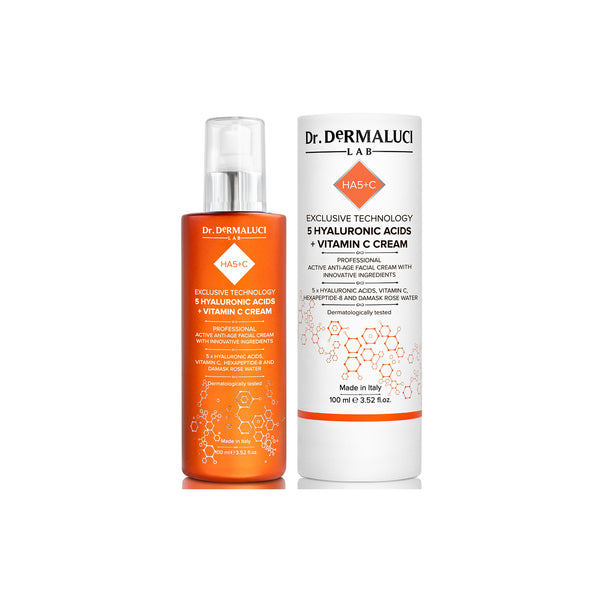
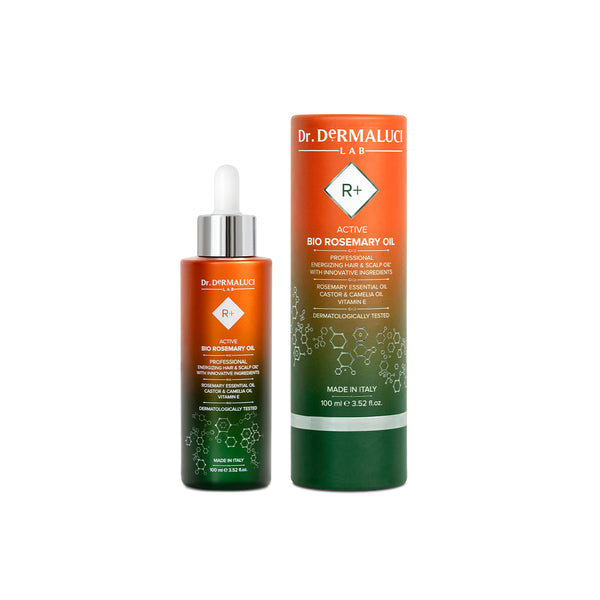
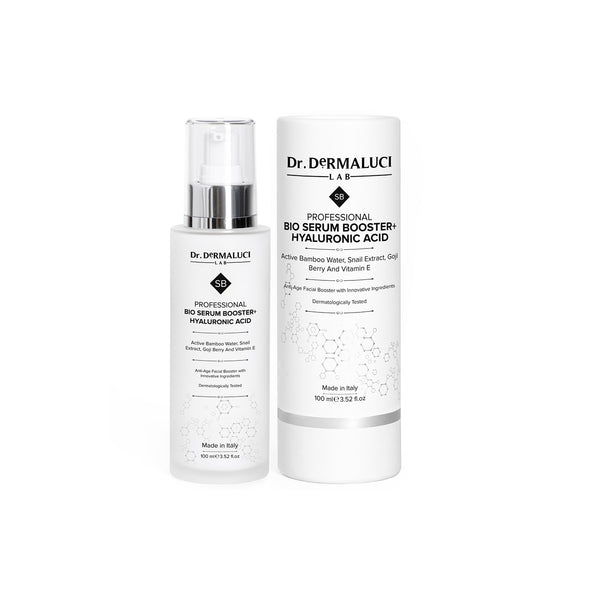
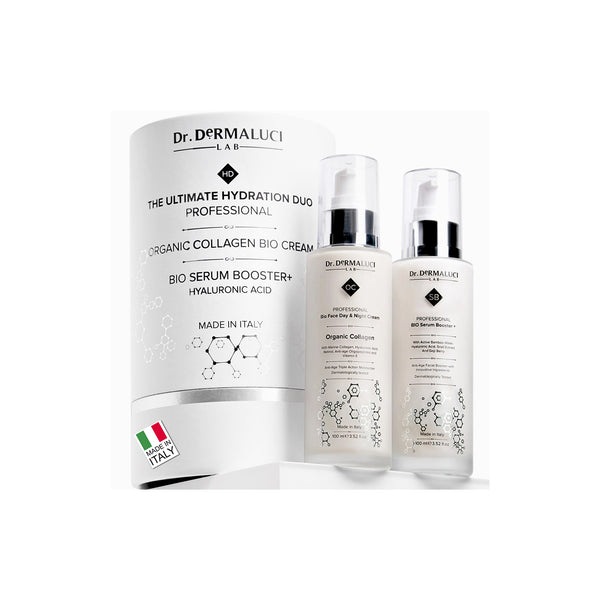
Dermalucilab’s Balanced Hydration Philosophy
Dr. Dermaluci Lab formulates based on skin physiology, not trends.
Key principles include:
- Multi-weight hyaluronic acid to hydrate at different skin depths
- Niacinamide to support barrier lipid synthesis
- Peptides & collagen to improve comfort and elasticity
- Organic aloe & chamomile to calm and hydrate
- Nickel-tested, AIAB-certified organic formulations
This allows hydration and nourishment to work together, rather than compete.
When Oils Can Be Helpful
Natural oils can be beneficial when:
- Used after hydration
- Applied to very dry or lipid-deficient skin
- Used sparingly as a sealing step
- Chosen carefully to avoid comedogenicity
They are a supporting step, not a replacement for hydration.
Coming next:
👉 Dry Skin Solutions – Hydration?
👉 What’s the best hyaluronic acid for dry, aging skin?
❓ FAQs
Q: Can oils hydrate dehydrated skin?
No. Oils reduce water loss but do not add water.
Q: Why does my skin feel tight after using oils?
Because dehydration hasn’t been addressed.
Q: Should oily skin avoid oils completely?
Not necessarily—but hydration must come first.
Q: Are Dermalucilab products oil-free?
They are formulated to balance hydration and lipids without overloading the skin.
Checklist
✅ Hydration = water, not oil
✅ Oils seal—they don’t hydrate
✅ Humectants are essential
✅ Dehydrated skin needs water first
✅ Dermalucilab balances hydration & lipids


