



 Verified by shop




Clean, Organic, Non-Toxic: What These Beauty Claims Actually Mean (And What They Don't)

"Clean." "Organic." "Non-toxic." Three of the most-used buzzwords in modern beauty marketing. They sound reassuring. They suggest something specific. But two of those words have NO legal definition in cosmetics, one has a partial definition that varies by region, and most products using them are using them as marketing tools rather than describing meaningful product properties. Here is what each actually means.
This article is part of our Sensitive Skin pillar cluster (with strong fit into the brand-transparency theme). For the foundational read on what genuinely matters for skin tolerance, see our cornerstone on sensitive skin: causes, triggers and how to restore balance. The label-reading skill is built on how to read a skincare label.
"Clean" — unregulated, brand-defined
There is no legal definition of "clean beauty" anywhere in the world. The term was created by retail and brands, not regulators. What "clean" includes varies wildly:
- Sephora's "Clean at Sephora" excludes ~50 ingredients of their choosing
- Credo Beauty has a longer "dirty list"
- Some brands using "clean" simply exclude parabens and sulfates
- Others use "clean" to mean "natural-leaning marketing" with no specific exclusions
The word "clean" tells you almost nothing about the actual ingredients. Useful only as one signal among many, never on its own. A product can claim "clean" with synthetic silicones, synthetic fragrances and modern preservatives in the formula, because none of those are universally excluded from any "clean" standard.
"Organic" — partially regulated, varies by region
Unlike "clean," "organic" has actual regulatory frameworks — but they apply at the ingredient level, not the product level, and not every market enforces them the same way.
What "organic" means at the ingredient level
An ingredient certified organic was grown without synthetic pesticides, herbicides, or genetic modification, and was processed without certain chemical treatments. Real organic certifications include:
- AIAB (Italian Association for Organic Agriculture) — used by Dr. Dermaluci Lab
- COSMOS — European organic and natural cosmetic standard
- Ecocert — European certification with rigorous standards
- NATRUE — international natural and organic certification
- USDA Organic — US organic certification for cosmetics
The catch with "organic" product claims
A product can claim "organic" if a small percentage of ingredients is certified organic — the rest can be synthetic. EU rules under COSMOS require a high percentage; US rules vary. Always look for the named certification body, not just the word "organic." If a brand claims "organic" without naming AIAB, COSMOS, Ecocert or USDA, the claim is marketing.
"Non-toxic" — meaningless and misleading
This is the most problematic of the three. "Non-toxic" implies that other products ARE toxic. In reality:
- All cosmetics sold in regulated markets (EU, UK, US, Japan, etc.) must pass safety assessments before sale
- "Toxicity" depends on dose — water is toxic at high enough doses
- No legal definition of what makes a product "non-toxic"
- The term plays on chemophobia rather than describing real ingredient profiles
A brand using "non-toxic" as a claim is using fear-based marketing. The implied comparison ("our product is safe, theirs is not") is rarely supported by ingredient analysis. This pattern is part of why our label-reading guide emphasizes ingredient lists over front-of-box claims.
What actually matters for ingredient safety
If you genuinely want to choose products with safer ingredient profiles, ignore "clean," "organic," "non-toxic" front-of-box claims and look at:
The INCI ingredient list (in order of concentration)
The first 5 ingredients make up most of the formula. If the actives you want are there in the first 5-8 positions, the product is delivering them. If they appear after the preservative line (around position 8-15), they are trace and the product is mostly cosmetic.
Named certifications (not generic claims)
- Certified by AIAB, COSMOS, Ecocert, NATRUE, USDA Organic — these mean something
- Cruelty-free verified by Leaping Bunny or Cruelty Free International
- Vegan certified by The Vegan Society or V-Label
- Nickel-tested with specific threshold stated
Specific testing claims with details
"Dermatologically tested" + specifying how (panel size, conditions) is meaningful. Generic "dermatologically tested" is just marketing.
The few ingredients with real evidence-based concerns
Most "clean beauty" exclusion lists are not evidence-based. The shorter list of ingredients with real, evidence-supported reasons to avoid:
- Formaldehyde releasers (Quaternium-15, DMDM Hydantoin) — sensitization risk over time
- Prostaglandin analogues in lash serums — see our lash serum guide
- High concentrations of synthetic fragrance if you are reactive — known irritant
- Sodium Lauryl Sulfate (SLS) in face cleansers — too stripping
Beyond these, most "avoid" lists circulating online are not evidence-based. Parabens, for example, are heavily demonised but have decades of safety data at cosmetic concentrations.
Why the "clean / organic / non-toxic" framing matters less than you think
If you have sensitive or reactive skin, the actual question is not "is this product clean" — it is "does this product cause MY skin to react?" Two clean-certified products can have wildly different reactions on the same person. Two products with one "non-clean" ingredient may behave identically because the ingredient in question is in trace amounts.
The signals that actually predict tolerance:
- Short ingredient list (fewer things to react to)
- Known-tolerated actives at appropriate concentrations
- Patch test on a small area before full use
- One change at a time when troubleshooting
The deeper principle: tolerance is individual, not regulatory. See our piece on why skin improvements stall for related principles on tolerance and adaptation.
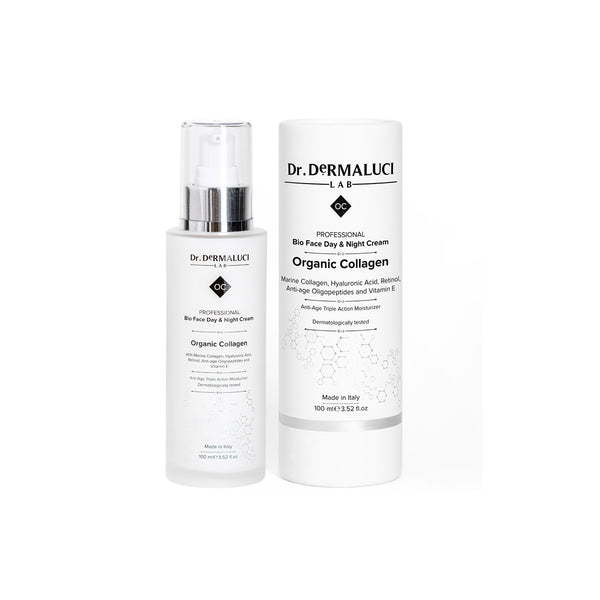
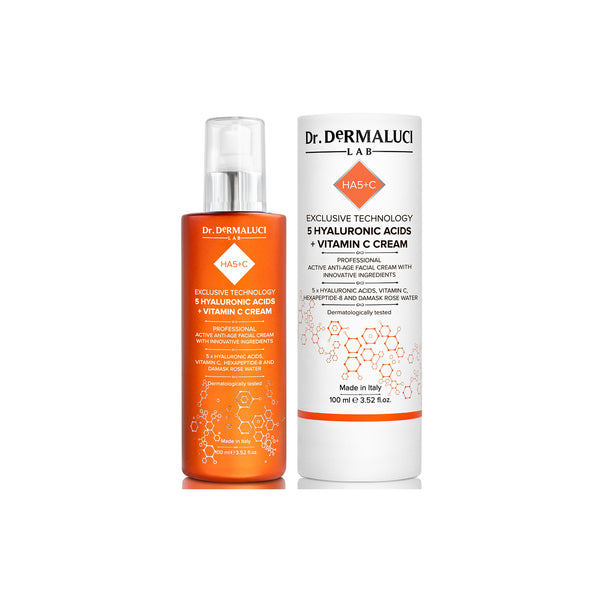
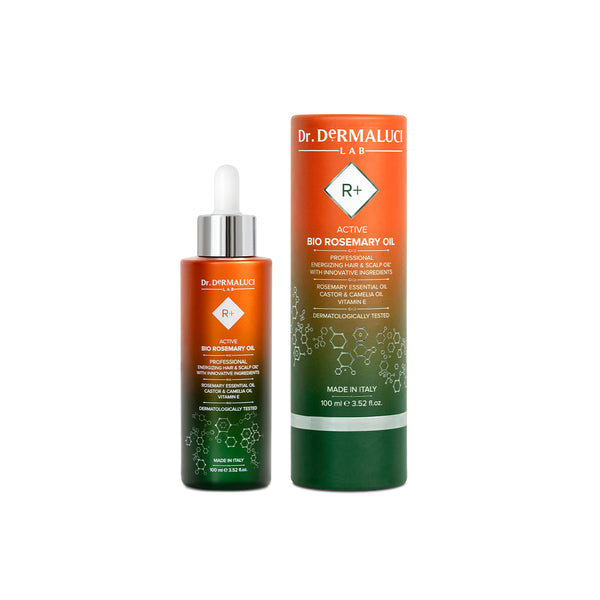
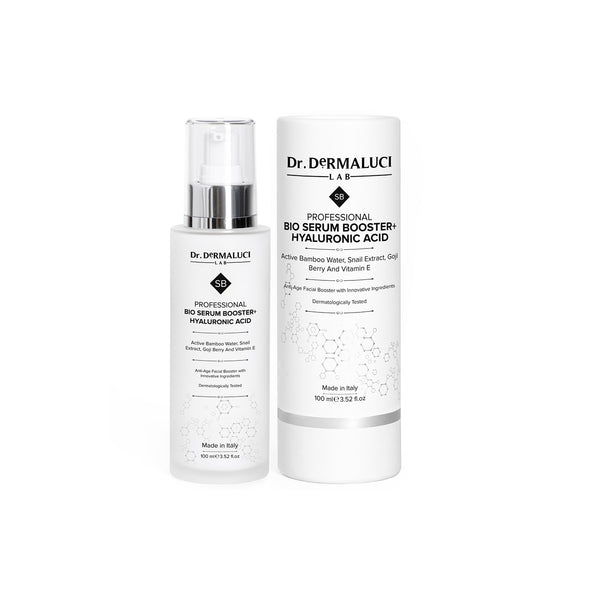
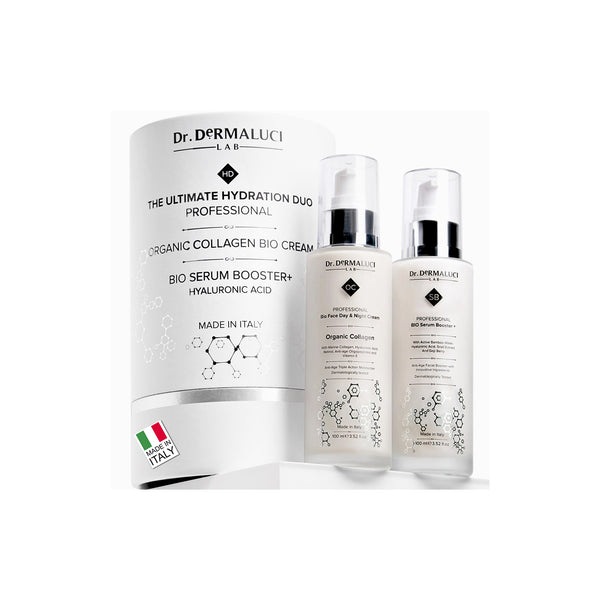
How Dr. Dermaluci Lab handles these claims
We deliberately do not market our products with the words "clean," "non-toxic," "free-from," or generic "organic." Instead:
- Full INCI on every product, online and on the box
- Named certification (AIAB) on skincare line — not generic claims
- Specific testing (dermatologically tested, nickel-tested with threshold)
- No "vegan" claim unless certified (we are not, even if formulas qualify)
- No "fragrance-free" claim where natural aroma persists honestly
- Made in Italy in our own lab — verifiable origin, the same lab origin discussed in our retinol cornerstone and vitamin C cornerstone
Quick action checklist
- ✓ Ignore "clean," "non-toxic," generic "organic" front-of-box claims
- ✓ Read the INCI ingredient list — first 5 ingredients carry most of the formula
- ✓ Verify any certification by name (AIAB, COSMOS, Ecocert, USDA) — not just the word
- ✓ Treat "dermatologically tested" as meaningful only when specifics are stated
- ✓ Patch test new products on a small area before full-face use
- ✓ Use the named-active concentration (e.g., niacinamide 5%, retinol 0.10%) as the meaningful signal
- ✓ Trust your own skin's reactions over any front-of-box claim
Frequently asked questions
Is "clean beauty" actually safer than regular beauty?
No, not inherently. "Clean" has no legal definition and means whatever the brand or retailer says it means. A product can be "clean-certified" by one retailer and excluded by another. Use it as one weak signal among many, never as the deciding factor.
What does "organic" really mean on a skincare label?
It means specific ingredients were grown without synthetic pesticides or GMOs, processed without certain chemicals, and certified by a named body (AIAB, COSMOS, Ecocert, USDA, NATRUE). A product claiming "organic" without naming the certification body is using marketing language with no enforced meaning.
Is "non-toxic" a regulated term?
No. There is no legal definition and no enforcement. The term plays on chemophobia rather than describing meaningful ingredient differences. All cosmetics legally sold in regulated markets pass safety assessments — "non-toxic" claims do not add information about that.
Are parabens actually dangerous in skincare?
The evidence does not support widespread concern. Parabens have decades of safety data at concentrations used in cosmetics. They are effective preservatives that prevent microbial contamination — which is a real, demonstrated safety issue. The barrier-disruption risk from constantly switching to "cleaner" alternatives is often greater than parabens' actual risk.
Should I avoid silicones in skincare?
Only if you have a personal reaction. Silicones are well-tolerated by most skin, do not absorb into deeper layers, and provide useful smoothing/protective functions. The "anti-silicone" movement is largely aesthetic preference, not safety-based.
What ingredients DO have evidence-based concerns?
A short list: formaldehyde releasers (sensitization), prostaglandin-based lash serums (pigmentation side effects), high-concentration synthetic fragrance in reactive individuals, and SLS in facial cleansers (too stripping). Most other "avoid" lists are not evidence-based.
How can I tell if a "clean" claim is real or marketing?
Look for: specific named certifications, full INCI disclosure, transparent ingredient sourcing, lab location stated, specific exclusion lists with reasoning. If a brand uses "clean" alongside vague claims and no certification names, it is marketing.
Is "natural" the same as "organic" or "non-toxic"?
None of those terms are synonymous and none of them are regulated in cosmetics. A product can be "natural" with 0.1% of one botanical extract and 99.9% synthetic. Always read the ingredient list to verify.
Related articles


