



 Verified by shop


What My Microbiome Test Revealed About My Autoimmune Disease, Allergies, and Skin

The number that broke open the rest of the story was 22 pg/mL. That was where my estradiol landed after I switched contraceptives last year. Twenty-two is the level you would expect in a post-menopausal woman. I was nowhere near menopause. I had no idea, until I saw that number, that the contraceptive I had been put on was a progestogen-only formulation, and that it had quietly suppressed my own oestrogen production to nearly nothing. Within months, my thyroid antibodies climbed. My TSH peaked above 50. The Hashimoto's thyroiditis I had managed for over 20 years through diet, discipline, and self-knowledge moved from a stable background condition into an active flare. Something I had not asked for and could not undo had tipped me off the edge of compensation.
This article is a personal story. It is part of our Holistic Skin Health pillar cluster, sitting alongside the framework article that describes the model in general. For the inside-out framework that this story illustrates in lived form, see our cornerstone on the inside-out approach to skin.
The 20 years before the cascade
I have lived with Hashimoto's thyroiditis and a Graves' arm for over two decades. Two autoimmune conditions, opposite ends of the thyroid spectrum, both attacking the same gland from different angles. For most of that time, I managed them without medication.
What I had instead was a set of habits that, in hindsight, were doing a lot of immunological work I did not fully appreciate:
- A clean, anti-inflammatory diet built around vegetables, lean protein, and minimal sugar
- A 19-year choice to be dairy-free, which I believed was helping my immune system and my skin
- Consistent sleep, daily movement, and disciplined stress management
- An oestrogen-containing contraceptive patch, used for years, that I did not realise was doing immunological work in the background
That last point matters because oestrogen is mildly immunomodulatory. For some women — especially those with autoimmune patterns — adequate oestrogen helps keep the immune system from over-reacting. When I switched to a different contraceptive option, I lost that protection without anyone explaining the trade-off. The estradiol crash to 22 pg/mL was the visible part. The autoimmune cascade was the hidden cost.
What the cascade looked like
Over six months, the numbers told a precise story. TSH climbed steadily, then sharply. Anti-TPO antibodies rose from 60 to 357 IU/mL. Anti-TG antibodies sat at more than twice the reference threshold. Vitamin D dropped. Folate fell. The fatigue I had managed for years started cutting through everything else.
The body's signals stacked up:
- Persistent cold intolerance beyond what climate explained
- Hair shedding at a rate I had not seen since childhood
- Brain fog in the afternoons
- Skin that felt drier and more reactive despite no change in routine
- Worsening seasonal allergies, with hayfever symptoms starting earlier each year
At the peak of the cascade, TSH was 51.20. For context, the normal range tops out around 4.2 ( which is also considered already on the high end). Synthetic thyroid hormone replacement became unavoidable. I started a low dose in late January. The thyroid number began to descend. But I knew that simply replacing the hormone was treating the downstream symptom, not addressing why my immune system had been overrun in the first place.
The decision to test the microbiome
Conventional medicine is excellent at giving you a hormone replacement when you need one. What it rarely answers is: why did the immune system reach the threshold in the first place, and what is the actual mechanism that allowed it to break through?
The answer for autoimmune conditions, increasingly, involves the gut microbiome. Specifically, the bacteria that live in your intestine produce molecules called short-chain fatty acids (SCFAs) that signal directly to a population of immune cells called regulatory T-cells (Tregs). Tregs are the immune system's brakes. When you have enough of them and they are working properly, the immune system can mount a response and then stand down. When Tregs are low or dysfunctional, the immune response keeps escalating, and what should be transient inflammation becomes chronic. Chronic autoimmune attack on the thyroid is one consequence. Chronic seasonal allergies, food intolerances, and reactive skin are others.
I had reasons to suspect my microbiome had something to do with this. I decided to test.
The kind of test I did was a comprehensive microbiome analysis that maps out which bacterial groups are present in the gut, in what proportions, and how they compare to a healthy reference range. I cannot recommend a specific lab in this article because the right choice depends on country and what the test actually measures — but the principle is straightforward.
What the results revealed
The results were not subtle. Several of the most important bacterial groups for immune regulation were either profoundly depleted or completely absent from my microbiome.
- Prevotella: 0% — the bacteria responsible for producing the SCFAs that directly signal Treg production. Absent. Reference range was about 6%. The absence directly mapped to my low Treg count.
- Ruminococcus: depleted by nearly 80% — a major butyrate producer. Butyrate is what the colon uses as fuel and is critical for both gut barrier integrity and Treg induction.
- Bacteroides: depleted by 66% — foundational for fibre digestion and immune education
- Bifidobacterium: 0% — completely absent. This is one of the two main genera responsible for histamine moderation and immune regulation.
- Lactobacillus: 0% — also completely absent. The other half of the histamine-barrier-Treg story.
At the same time, two other findings stood out:
- One bacterial family was overgrown by more than 1,000% above reference — filling the space the depleted bacteria had left behind, but without the immunological function
- Oral bacteria were appearing in the gut at extreme levels — a sign that the gut barrier had become permeable enough for mouth bacteria to colonise places they should not be
And separately, a blood test showed my DAO enzyme — the enzyme that breaks down histamine — at less than half the reference level. This explained why "healthy" foods like fermented vegetables, salads and even raw spinach had been triggering reactions I could not explain for years.
The 15-year dairy-free piece
One finding made immediate sense. Lactobacillus and Bifidobacterium are heavily seeded and maintained by dairy fermentation — yogurt, kefir, aged cheese, fermented milk products. I had been dairy-free for 15 years, by choice, originally because I believed it was helping my skin and my immune system. For the first decade or so, that may have been true. By year 15, the cost showed up clearly in my microbiome map: complete absence of both genera, leaving no buffer against histamine and no support for barrier integrity.
This is the kind of detail that personal microbiome testing surfaces in a way that general dietary advice cannot. It was not that dairy-free was wrong. It was that, in my body, after that long, the trade-off had become structural. I needed to reseed those bacteria through other means.
The protocol — what changed
The plan that emerged was not glamorous and not extreme. It was targeted, gradual, and based on what was missing.
- Specific Lactobacillus probiotic strains chosen to be histamine-safe (some strains produce histamine, others don't — given my DAO deficiency this mattered)
- A specific Bifidobacterium probiotic strain chosen for its evidence base in gut barrier and immune regulation
- Direct butyrate supplementation to provide the SCFA support my missing Ruminococcus could not make
- Resistant starch in daily food — cooled cooked potato, cooled cooked rice, green banana, oats — to feed the bacteria that remained
- An oral probiotic targeting the oral-gut bacterial translocation
- Selenium and vitamin D optimisation for thyroid support
- Medicinal mushroom support for immune modulation under medical supervision
- Identification of IgG food intolerances — most importantly egg yolk and a few other specific foods that were contributing to low-grade inflammation
- Reduction of high-histamine foods until DAO function began to recover
None of this replaced the thyroid medication. The medication remained, doing what it does. The microbiome work was about addressing why the immune system was attacking the thyroid, which the medication does not touch.
The early signals
Autoimmune work is multi-year. Tregs do not rebuild in a month, and antibody titres take time to descend. I did not expect dramatic visible change in the first weeks. What I have noticed, 5 months in, are three specific markers that suggest the immune regulation is starting to work.
Marker one: antibody titres are trending down. Not feelings. Lab numbers. The same anti-TPO and anti-TG that had been climbing for years are reversing direction for the first time. That is the most important objective sign that the underlying autoimmune attack is calming.
Marker two: hayfever did not come this year. I have had seasonal allergies for years. They typically run for six months — from February through August. This year, they started briefly in February, stopped completely by March, and have not returned since. For someone who has had to manage hayfever every spring and summer of her adult life, this is the most striking change. It is not subtle. It is not nothing.
Marker three: I can eat fruit again in the afternoon without bloating. For years, fruit later in the day had been a reliable trigger for digestive distress. As of a few weeks in, that has resolved.
The hayfever one matters more than it might seem at first. Regulatory T-cells regulate both autoimmune AND allergic responses. They are the same brakes on two different runaway systems. When Tregs start working again, both autoimmune symptoms and allergic symptoms calm down. Allergic symptoms tend to calm first because they are more responsive to short-term immune regulation, while autoimmune antibody titres take longer to reverse.
So the hayfever disappearing is, in practical terms, the earliest objective sign that the gut work is changing the immune system. The antibody titres trending down is the confirming sign that the change is reaching the deeper system. Both are happening simultaneously, which is exactly what the framework would predict.
What this teaches me about skin
I run a skincare brand. The story I have just told is, on the surface, about autoimmune disease and gut microbiome — not about skin. But everything in it shapes how we formulate.
- Skin sensitivity is downstream of immune regulation. When Tregs are low and inflammation is chronic, skin will be reactive regardless of how good your skincare routine is
- The barrier reflects systemic state. A leaky gut barrier and a fragile skin barrier are not unrelated phenomena — they are the same biology playing out in two surfaces
- Histamine intolerance shows on skin as flushing, hives, itchy patches, and "mysterious" reactions to products that "should" work
- Low-grade chronic inflammation accelerates visible aging long before any single product can compensate
- Aggressive skincare on inflammation-load skin makes the visible signal worse, not better
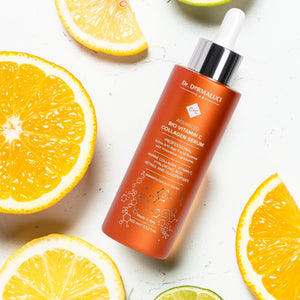
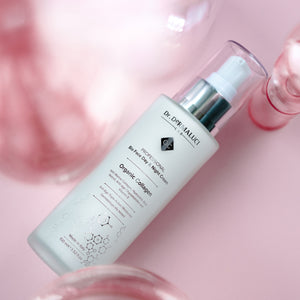
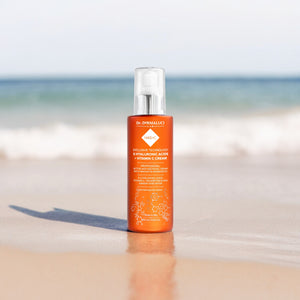
This is the philosophical reason Dermaluci Lab formulations are intentionally gentle, low-concentration, and barrier-supportive. We assume the person using them has some inflammatory load. Either undiagnosed autoimmune tendencies, food intolerances, sleep debt, perimenopausal hormonal shifts, or just modern stress — most adults are carrying something. Aggressive formulations make that worse. Gentle, well-formulated ones support the skin while the system underneath does its slower work. Our deep dive on skin inflammation as the root cause of aging, sensitivity and skin damage covers the mechanism in detail.
What is still to come
I am at the beginning, not the end. The thyroid number is descending and the medication dose will be adjusted as it stabilises. The microbiome retest is planned for autumn — I want to see, in the same map format, what the gut has actually rebuilt. The antibody trend needs another 6-12 months to know if it can normalise without medication. Some of this work is multi-year by nature.
What is clearer now than it was six months ago is the direction. The mechanism makes sense. The early markers are showing up. The story I would tell anyone navigating similar terrain is:
- Test what you cannot see. Symptoms are unreliable. Lab data is the only honest mirror.
- Look at the systems underneath the symptom. A thyroid attack is downstream of immune dysregulation, which is downstream of microbiome state, which is shaped by years of diet, stress, hormones, and lifestyle.
- Be specific. Generic "gut health" advice — eat fermented foods, take a probiotic — can be wrong for you. Targeted choices based on your test are different from advice based on the average person.
- Trust the early signals. Allergy reduction is the first sign that Tregs are recovering. Better digestive tolerance is the second. Antibody titres are the deeper third. Visible skin improvement is the fourth.
- Do not try to outrun the system through topical skincare. Skincare matters and helps. But the body underneath is what produces the visible skin you see in the mirror.
Quick action checklist
- ✓ If you have autoimmune patterns, chronic reactive skin, or unexplained allergies, consider a comprehensive gut microbiome test
- ✓ Choose a test that reports specific bacterial gaps and clinically relevant findings, not just "diversity scores"
- ✓ Work with a practitioner who can interpret the results in context with your broader picture
- ✓ Be open to the possibility that long-held dietary choices have produced trade-offs you cannot see without testing
- ✓ Track concrete objective markers, not just feelings (antibody titres, vitamin D, key minerals, and one or two body signals you can observe over time)
- ✓ Build a stress and sleep practice as if it were medical treatment, because for autoimmune work it effectively is
- ✓ Choose skincare that supports rather than challenges a system carrying inflammatory load
- ✓ Stay patient with the timeline — visible change in autoimmune work comes in waves, with early signals first and deeper change months later
Frequently asked questions
Should everyone test their microbiome?
Not necessarily. For people with no symptoms, no autoimmune patterns, and no chronic skin or digestive issues, the data is interesting but rarely actionable. For people with autoimmune conditions, mysterious skin reactivity, histamine-related symptoms, chronic allergies, or persistent gut symptoms, testing can reveal specific gaps that explain otherwise unclear patterns. The right question is: is there something I cannot answer about my body that a test might illuminate?
What kind of microbiome test is worth doing?
A comprehensive gut microbiome test that maps bacterial groups against a reference range, ideally with clinical interpretation. The cheaper at-home kits often report "diversity scores" without actionable detail. The more thorough tests are more expensive but produce data that a practitioner can use to design a specific protocol. The choice depends on country, availability, and what you plan to do with the results.
How long does it take to see microbiome change?
Bacterial population shifts begin within weeks of consistent dietary and probiotic intervention. Functional changes — like improvement in histamine tolerance, allergy reduction, or skin reactivity — usually show within 8 to 16 weeks. Deeper immune system effects, including changes in autoimmune antibody titres, typically take 6 to 18 months of consistent work.
Can I just take a probiotic from the pharmacy and get the same effect?
Sometimes, partially. Most off-the-shelf probiotics are broad-spectrum and may not match your specific gaps. Some contain strains that produce histamine and can make symptoms worse for people with DAO deficiency. The targeted choice — specific strains for specific gaps in your microbiome — is the principled approach, but not always the cheapest. Generic probiotics are not useless, but they are a guess. Targeted ones are a plan.
Why did my dairy-free or other restrictive diet show up as a microbiome problem if it felt right for years?
Many restrictive diets feel right for a long time before their trade-offs become structural. Reducing one food group reduces the bacteria that thrive on it. Over years, that absence shapes the entire ecosystem. It does not mean the diet was wrong. It means the diet had consequences that need to be addressed through other means — supplements, targeted reintroduction, or specific probiotic strains — once the trade-offs become visible.
Is this story relevant to me if I don't have autoimmune disease?
Yes. The mechanisms — microbiome shaping immune regulation, immune regulation shaping inflammation, inflammation shaping skin — apply to everyone. The intensity is different in autoimmune disease, but the framework is the same for "I have reactive skin," "I get inflamed easily," "my skin won't calm down no matter what I use," and "I want to age more gracefully than my genetics suggest." The lever is the same.
How does this connect to skincare specifically?
The visible state of your skin is the downstream output of the systems described above. Topical skincare provides daily support — barrier care, antioxidants, SPF, hydration — but it cannot override a body sending strong inflammatory signals. The two work together. Skincare gets dramatically more effective when the system underneath is calmer. That is why we formulate the way we do: gentle, supportive, and aware that the person reading the label is probably carrying inflammatory load of some kind.
Related articles


