



 Verified by shop




Ingredients That Truly Fade Dark Spots

The Real Ingredients That Fade Dark Spots (Scientifically Proven)
This article is part of our Vitamin C pillar cluster. Foundational read: our vitamin c cornerstone. Related: benefits of vitamin C serum.
Dark spots are one of the most common skin concerns — and one of the most misunderstood.
Sun exposure, acne marks, inflammation, age-related pigmentation, and hormones all contribute to uneven tone.
Customers often ask:
“What ingredients actually work to remove dark spots?
No myths. No marketing. Just science.”
Here's the answer: only certain ingredients have real dermatological backing for treating hyperpigmentation.
Vitamin C (Ascorbic Acid Derivatives)
One of the most researched antioxidants for brightening and fading pigmentation.
How it helps:
• Reduces melanin production
• Increases radiance
• Improves skin tone uniformity
• Protects against UV and oxidative damage
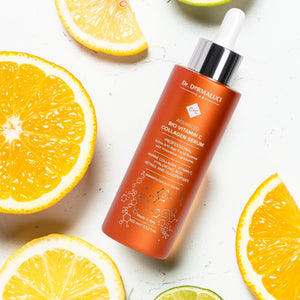
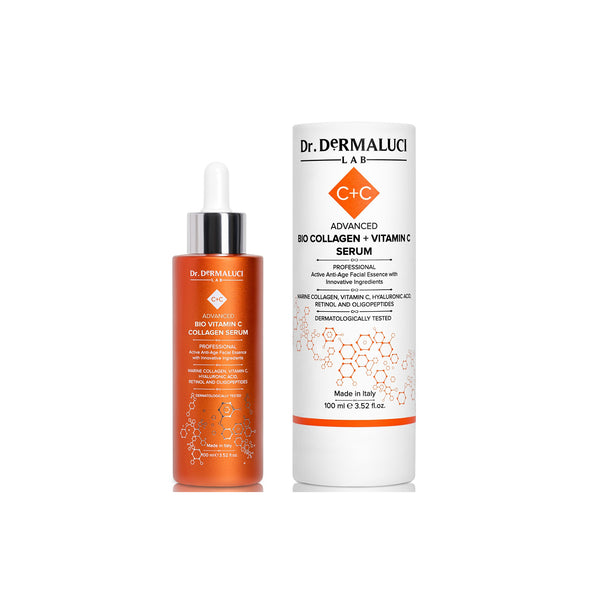
Dermalucilab uses stabilized forms of vitamin C in products like the Vitamin C + Collagen Serum, making them more tolerable for sensitive skin.
Niacinamide (Vitamin B3)
One of the most versatile and safest ingredients for dark spots.
Benefits
- Reduces the transfer of melanin to the skin's surface
- Decreases redness and post-inflammatory marks
- Regulates sebum production
- Improves the skin barrier
- Ideal for oily, sensitive, or breakout-prone skin.
AHAs (Glycolic, Lactic, Mandelic Acid)
By exfoliating the surface, helps remove pigmented cells.
Effects:
- They improve texture
- Soften superficial blemishes
- Increase radiance
They should not be used on the same night as Retinol.
Retinol (Vitamin A Derivative)
- Perfect for deep spots, sun damage, and aging.
- How it works:
- Speeds up cell renewal
- Fades accumulated pigmentation
- Improves wrinkles and texture
- Stimulates collagen
- Requires gradual introduction.
SPF is mandatory.
Peptides (for Post-Inflammatory Healing)
Peptides help repair skin after inflammation, reducing post-acne marks and restoring evenness.
Adaptogens (for Stress-Induced Pigmentation)
Stress = inflammation = pigmentation.
Adaptogens help modulate the skin's stress response, reducing reactivity and irritation.
Zinc PCA (Sebum + PIH Control)
Helps oily skin or skin prone to dark spots after acne.
Alpha Arbutin (Safe Brightening Agent)
Inhibits tyrosinase, which is responsible for melanin production.
Safe even for sensitive skin.
The Non-Negotiable Ingredient: SPF
There is no ingredient for dark spots that will work unless you use sunscreen. UV exposure activates melanocytes, even when you are indoors.
Dermalucilab details this in: Why Skin Barrier Repair Is the Foundation of Every Skincare Routine
Dark Spot Treatment Checklist
- I use vitamin C in the morning
- I use niacinamide during the day and/or at night
- I use retinol at night (if appropriate)
- I exfoliate with AHAs 1–3 times per week
- I apply SPF daily
- I avoid mixing retinol with AHAs
FAQs
1. What ingredient works fastest for dark spots?
Vitamin C + AHAs + SPF.
2. Can sensitive skin treat pigmentation?
Yes, with niacinamide, PHAs, and adaptogens.
3. Are acne marks the same as sun spots?
No, but they share effective ingredients.
4. Can retinol remove dark spots?
Yes, especially for deep spots.
5. How long until I see results?
4–12 weeks of consistent use.
Quick action checklist
- ✓ Look for one or more of: vitamin C, niacinamide, retinol, arbutin, kojic acid, licorice extract
- ✓ Combine AM antioxidant (vitamin C) with PM treatment (retinol or niacinamide)
- ✓ Daily SPF is non-negotiable — no fading without sun protection
- ✓ Allow 8-12 weeks before judging fading progress
- ✓ Avoid harsh exfoliating acids if your skin is reactive
- ✓ Don't combine multiple actives in the same routine without barrier support
- ✓ For melasma or stubborn pigmentation, consult a dermatologist
Frequently asked questions
What is the most effective ingredient for fading dark spots?
Vitamin C and niacinamide have the strongest evidence base for cosmetic fading. Combining them with daily SPF gives the best results for most types of hyperpigmentation.
How long does it take to fade dark spots with skincare?
8-12 weeks of consistent use for surface pigmentation, longer for deep or hormonal pigmentation like melasma. Faster results often mean harsh products that risk irritation.
Does vitamin C alone fade dark spots?
Yes, gradually. Vitamin C reduces melanin production and protects against UV-induced pigmentation. Combining with niacinamide accelerates visible results.
Are botanical ingredients effective for dark spots?
Some are — licorice (glabridin), arbutin from bearberry, and kojic acid all have clinical evidence. Generic 'plant extracts' without named active are usually marketing.
Can I use retinol and vitamin C together for dark spots?
Yes, but separately: vitamin C AM, retinol PM. They both target pigmentation through different mechanisms — combined daily use can overwhelm sensitive skin.
Do dark spots ever come back after fading?
Yes, if sun exposure continues without SPF. Pigmentation is a chronic process; maintenance with daily SPF and gentle topicals is essential to prevent return.
Related articles


