



 Verified by shop


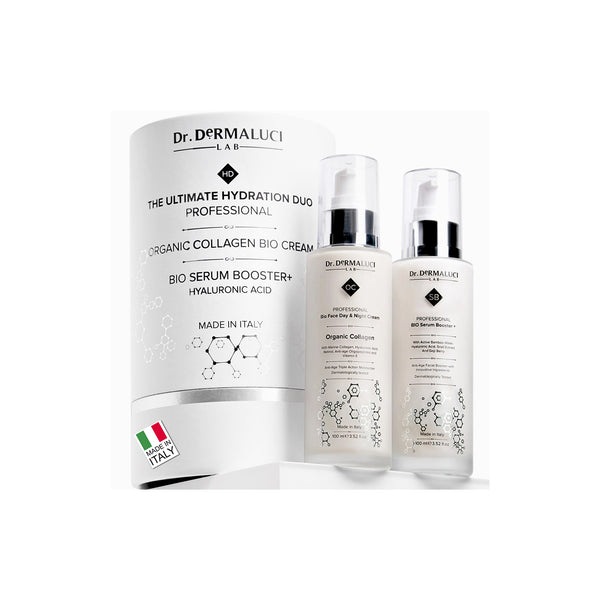


Can Hyaluronic Acid Be Used with Retinol?

Part of two of our pillars
This article sits across two foundational guides: Hyaluronic Acid: The Complete Guide and Retinol: The Complete Guide.
Hyaluronic acid and retinol are the two ingredients most people end up using at some point in their skincare life. One is the gold-standard hydrator. The other is the gold-standard anti-ageing active. They show up in almost every premium routine — and yet, surprisingly often, people are unsure whether they should be using them in the same routine at all.
The short answer is yes. Not only can you combine hyaluronic acid and retinol — you probably should. The two ingredients address different problems, work through unrelated mechanisms, and actively support each other when layered correctly. Retinol's biggest weakness is dryness and irritation; hyaluronic acid's main job is to deliver and hold water. The combination is one of the most useful pairings in modern skincare.
This article walks through why the pairing works, how to layer the two ingredients correctly, who benefits most from combining them, and the small mistakes that turn a great combination into a frustrating one.
What hyaluronic acid actually is
Hyaluronic acid is a long-chain molecule the body produces naturally. Inside the skin it lives mostly in the dermis, where it binds water — up to a thousand times its weight — and gives skin volume, suppleness and bounce. Production peaks in our early twenties and declines steadily through life, which is why thinner, drier, more crepe-like skin is one of the first visible signs of ageing.
Topically applied hyaluronic acid does not replace the dermal hyaluronic acid your skin makes. It works on the surface and just below, pulling water into the upper skin layers and holding it there. The result is plumper, softer, more comfortable skin within minutes of application — and, with consistent use, a measurable improvement in skin hydration over time.
Modern hyaluronic acid products typically use a mix of molecular weights: high-molecular-weight molecules sit on the surface and reduce water loss, low-molecular-weight molecules penetrate deeper and hydrate the underlying layers. This blend is what makes a well-formulated hyaluronic acid product feel different from a basic one.
What retinol actually does
Retinol is a vitamin A derivative. Inside skin cells it converts into retinoic acid, the form your skin can actually use. Retinoic acid binds to receptors inside the cell nucleus and changes which genes are switched on. This is a fundamentally different mechanism from hyaluronic acid, which works mechanically on the water content of the upper skin.
The gene-level effects of retinol include:
- Accelerated skin cell turnover — the upper layer renews faster, which is why texture improves.
- Increased collagen production in the dermis, which is why fine lines soften over months.
- Reduced melanin transfer — pigmentation patches lighten as new uncoloured cells reach the surface.
- Normalised pore lining — pores look smaller and feel less congested.
- Reduced sebum oxidation — fewer of the kind of breakouts that come from oil sitting too long.
- Better organisation of the dermal extracellular matrix — the structural improvements that make mature skin look "lifted" rather than just hydrated.
These changes take months. Retinol is the slowest-build active in mainstream skincare, with most studies measuring results at 12, 24 and 52 weeks. The catch is that the same accelerated turnover that produces results also produces the well-known retinol side effects: dryness, peeling, redness, stinging and barrier disruption — particularly in the first 6–8 weeks.
This is where hyaluronic acid earns its place in the same routine.
Why the two ingredients complement each other
Retinol's mechanism produces a dry, sometimes uncomfortable skin surface. Hyaluronic acid's mechanism delivers and holds water in exactly that surface. The pairing addresses retinol's main weakness directly:
- Hyaluronic acid restores comfort on the dry, tight skin that retinol can produce, especially in the first weeks of use.
- It reduces visible flaking by keeping the upper layer hydrated enough to shed evenly rather than in patches.
- It supports barrier function by keeping water in the corneocytes, which helps the barrier do its job while retinol is remodelling underneath.
- It buffers stinging by maintaining hydration in the skin's outer layers, which reduces nerve sensitivity to the retinol underneath.
- It improves makeup application through the retinol transition period, which is when most people get tempted to abandon retinol because their skin looks worse.
- It does not interfere with retinol's chemistry — they work on different molecules in different parts of the skin.
- It does not reduce retinol's efficacy — hydrated skin actually responds to retinol slightly better than dehydrated skin in some studies.
This is unusual in skincare. Most pairings have a trade-off; this one is genuinely additive.
How to layer them correctly
The order and timing matter more than people think. The most reliable approach for combining hyaluronic acid and retinol is:
- Evening routine. Retinol is typically a night ingredient — it is light-sensitive and works best with overnight repair.
- Cleanse, then dry the skin completely. Wet skin lets retinol penetrate faster and increases irritation.
- Apply hyaluronic acid first, on slightly damp skin. The water on the surface is what the hyaluronic acid pulls into the skin. Apply it to bone-dry skin and it can actually pull water out of the skin.
- Wait 1–2 minutes for the hyaluronic acid to settle.
- Apply retinol next, in a thin even layer. Pea-sized amount for the whole face is enough.
- Top with a basic moisturiser if your skin tends to dryness.
- Skip other actives in the same routine for the first 8–12 weeks — no acids, no vitamin C in the same session, no exfoliants.
The alternative order — retinol first, hyaluronic acid second — also works, especially for skin that finds retinol very drying. Applying retinol to dry skin and then layering a hyaluronic acid serum on top creates a hydration cushion that softens the retinol's edge. Both orders are legitimate; pick whichever feels better on your skin.
Frequency matters more than concentration
The biggest mistake people make with retinol is starting at too high a concentration too often. The combination with hyaluronic acid does not change this rule.
A reliable retinol introduction protocol:
- Weeks 1–2 — apply retinol two nights per week, with hyaluronic acid layered alongside.
- Weeks 3–4 — increase to three nights per week if there is no significant irritation.
- Weeks 5–8 — move to four or five nights per week, with one or two "barrier nights" of just hyaluronic acid and moisturiser.
- Weeks 9–12 — settle into nightly retinol if tolerated, or stay at five nights per week.
- Throughout — use hyaluronic acid every night, including the non-retinol nights, to keep the barrier strong.
This is a slower introduction than most retinol products suggest, and it produces better long-term results. Skin that has been gradually trained to retinol tolerates it for decades; skin that is pushed too fast usually quits after a few months of irritation.
Who benefits most from combining them
Almost everyone using retinol benefits from adding hyaluronic acid. But some specific scenarios make the combination particularly valuable:
- People starting retinol for the first time who want to minimise the introduction-period irritation
- Mature skin that already has lower natural hyaluronic acid levels alongside thinner barriers
- Sensitive skin types who would otherwise struggle to tolerate retinol at all
- People in dry climates or air-conditioned offices where ambient moisture is low
- People in winter conditions where central heating dries the air
- Perimenopausal and menopausal skin where oestrogen decline reduces both hyaluronic acid production and barrier strength
- People returning to retinol after a break who want to avoid restarting from scratch
- Anyone using a higher-strength retinol or moving up a concentration step
If any of those describe you, hyaluronic acid is essentially a non-negotiable companion to your retinol — not an optional add-on.
The mistakes that derail the combination
Pairing hyaluronic acid and retinol is forgiving, but a few small mistakes can cancel out the benefit:
- Applying hyaluronic acid to bone-dry skin in a low-humidity environment — the molecule pulls water from wherever it can find it, including from deeper layers of your skin. Damp skin first.
- Skipping the moisturiser on top — hyaluronic acid pulls water in but does not lock it in. Without an occlusive layer, that water evaporates and the skin ends up drier than before.
- Using both ingredients alongside acids in the same routine — too many active steps overwhelm the barrier even with hyaluronic acid support.
- Choosing fragranced versions of either ingredient — retinol-irritated skin is more reactive to fragrance and essential oils.
- Skipping SPF the next morning — retinol increases UV sensitivity; SPF is non-negotiable while using it.
- Starting at too high a retinol concentration in the hope that hyaluronic acid will buffer everything. It will not buffer everything.
- Quitting at week four — both ingredients need consistent use over months to show their full effect.
Frequently asked questions
Should I apply hyaluronic acid before or after retinol?
Either works. Apply hyaluronic acid first if you want it to settle deeper before retinol; apply it after if you find retinol too drying and want an extra hydration cushion. Many people layer it both before and after as their skin gets used to retinol.
Does hyaluronic acid reduce retinol's effectiveness?
No. The two work through completely different mechanisms — retinol is a gene-signalling molecule that works inside skin cells, hyaluronic acid is a humectant that holds water. They do not compete or cancel each other out.
Can I use both in the morning?
Hyaluronic acid yes, retinol no. Retinol breaks down in sunlight and increases UV sensitivity, so it belongs in the evening routine. Use hyaluronic acid both morning and night.
How long until I see results?
Hyaluronic acid shows visible results immediately — within minutes. Retinol takes 8–12 weeks for early visible changes, and 6–12 months for the deeper anti-ageing effects.
What concentration of each should I start with?
For retinol, start at 0.1% or 0.2% if it is your first time, or 0.3–0.5% if you have used it before. For hyaluronic acid, the percentage on the label is less important than the formulation — a blend of molecular weights with supporting humectants will outperform a high-percentage single-weight product.
Can I use this combination if I have rosacea or very sensitive skin?
The hyaluronic acid is almost always safe; the retinol needs careful discussion with a dermatologist. Some rosacea-prone skin tolerates very low-dose retinoids; other types should avoid them entirely. Hyaluronic acid alone or paired with niacinamide is often a better choice for very reactive skin.
Can I use a hyaluronic acid moisturiser and a retinol serum together?
Yes. The principle is the same — apply the lighter, more watery product (the hyaluronic acid moisturiser, if it is light) underneath, or layer them in whichever order feels comfortable. What matters is that both ingredients reach the skin.
Do I still need a regular moisturiser if I am using hyaluronic acid?
Yes — hyaluronic acid pulls water in but needs something occlusive on top to keep it there. A simple ceramide or shea-butter-based moisturiser as the last step is the standard approach.
Your combined routine checklist
- Use hyaluronic acid morning and night, on damp skin, every day.
- Use retinol only at night, on dry skin, starting two nights per week.
- Apply hyaluronic acid before retinol, after retinol, or both — whatever feels comfortable.
- Always finish with a basic ceramide moisturiser to lock in hydration.
- Skip other actives — acids, vitamin C, exfoliants — for the first 8–12 weeks.
- Use mineral or chemical SPF every morning without exception.
- Start at a low retinol concentration (0.1–0.2%) and increase only after 12 weeks of consistent tolerance.
- Increase retinol frequency before increasing retinol strength.
- Give the combination a minimum of 12 weeks before evaluating results.
- Take "barrier nights" once or twice a week, with hyaluronic acid and moisturiser only, to let the skin reset.
Related reading


